


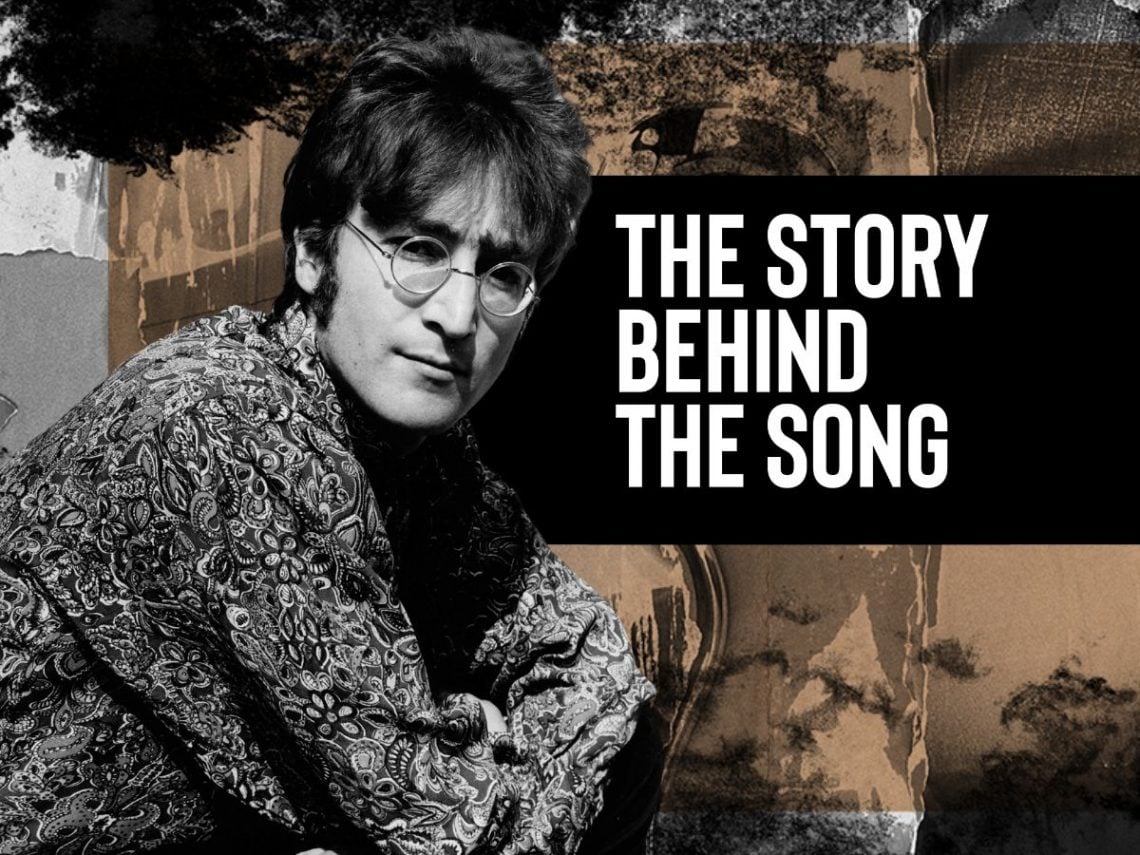
The Story Behind The Song: John Lennon explores his past, present and future on ‘Mother’

The first track from his debut solo album, ‘Mother’, by John Lennon, is a song with one eye on the past and another on the future. Heavy with the solemn nostalgia of a man in the midst of intense therapy, it’s an undulating, faintly groovy and introspective number which stands out for its vulnerability and sincerity.
The song is essentially a crystallisation of Lennon’s Primal Therapy with experimental psychotherapist Dr Arthur Janov. The sessions, which Lennon underwent in 1970, required him to participate in screaming sessions as a way of uncovering deep-rooted traumas from childhood. In Lennon’s case, this meant coming to terms with his mother’s death and the neglect he felt subjected to by his absent parents.
Lennon sings about his mother, Julia Lennon, on The White Album track ‘Julia’, but ‘Mother’ is far more explicit in its portrait of her: “Mother, you had me/ But I never had you/ I, I wanted you/ You didn’t want me.” Lennon’s father, a merchant seaman, was away at the time of his birth and remained absent throughout his early years, sending cheques to Julia in the post, which she used to pay for child costs. Eventually, the money stopped. When Alf Lennon suddenly reappeared six months later and asked to look after John, Julia, who by that time was pregnant with another man’s child, showed him the door. Julia’s sister, Mimi, was subsequently given custody of John, who lived with her until he left Liverpool.
Lennon started writing ‘Mother’ in England, but it wasn’t until he arrived at Janov’s Primal Institute in Los Angeles in the April of 1970 that he could complete it. During his treatment, Lennon recorded several demo versions of ‘Mother’, including a couple on guitar. The track was then taken to Abbey Road, where bassist Klaus Voormann and Ringo Starr recorded an initial rhythm track. Lennon had intended to use an electric guitar for the main chord changes but switched to the piano during the session, playing single sustained chords to a slowed-down backing track.
“I express myself best in rock, and I had a few ideas to do this with ‘Mother’ and that with ‘Mother’, but the piano does it all for you,” Lennon told Jann S. Wenner in 1970. “Your mind can do the rest of it. I think the backings on it are as complicated as the backings on any record you’ve ever heard. If you’ve got an ear, you can hear. Any musician will tell you, just play a note on a piano, it’s not a lot of harmonics in it. So it got to that. What the hell, it didn’t need anything else.”
After a day’s work slowly double-tracking his vocal part, Lennon had the idea of adding the sound of funereal bells to the start of the track. “I was watching TV as usual in California, and there was this old horror movie on,” John recalls in Lennon Remembers. “I just heard the bells, which sounded like that to me. But they were probably different ’cause those that I used on the album were actually other bells slowed down. I just thought, ‘That’s how to start ‘Mother’.” And with that, the song was complete.
The track would go on to ignite Lennon’s solo career and give credence to his long-held desire to leave The Beatles behind. It may not have had the huge impact that his former band had delivered with every release, but the song was significantly a step towards Lennon achieving artistic purity.

Never Miss A Beat
The Far Out Beatles Newsletter
All the latest stories about The Beatles from the independent voice of culture.
Straight to your inbox.