


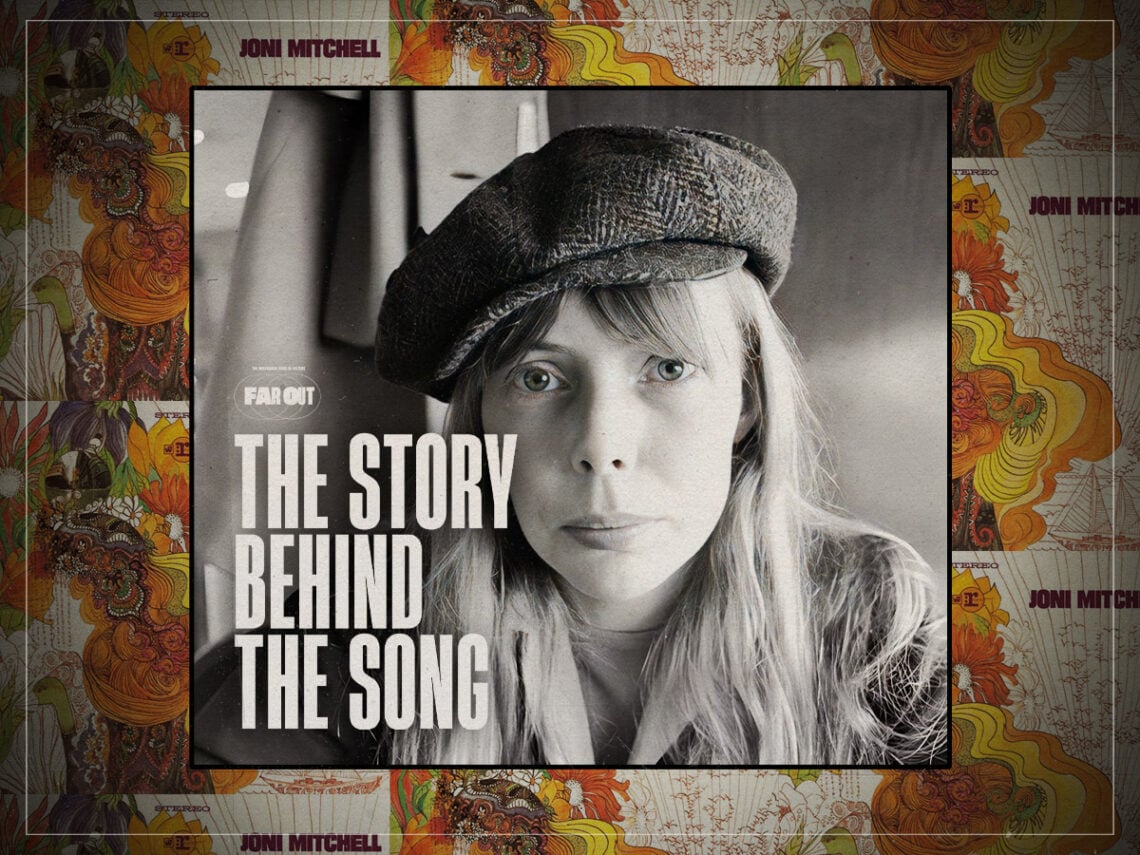
The Story Behind The Song: How Joni Mitchell captured the yearn for freedom in ‘Cactus Tree’

1968 was a difficult year for any singer-songwriter to cut through the noise. Joni Mitchell wasn’t entirely new to the game, but she hadn’t quite made it to feeling like she belonged. Not yet.
Her debut, Song to a Seagull, should have been the moment she found her place. In many ways, it was, but in other ways, it also perpetuated the lingering feeling that she was a little out of place, pitted against those who were already major names in the folk rock arena. Mitchell later said that the entire scene was “very cliquish and very exclusive”, making her feel expelled from a friend group she hadn’t even entered yet.
This is also what makes her debut such an impressive and powerful listen. Mitchell wasn’t pandering to anybody, nor was she trying to fit into something she already knew didn’t welcome her. She simply sang about matters of the heart, about that which she already knew about, sprinkling in facets of her own heroes where necessary to build something entirely different while also mirroring the world around her.
A lot of what makes it so special is how much it already felt mythologised when it came out. Mitchell has always had a penchant for twisting her memories and experiences into fantastical poetry, and on Song to a Seagull, she brought those elements in from the off, with songs that emerge from real places and end up somewhere in the stars.
This was the case with the final song on the record, ‘Cactus Tree’. Through the making of the record, Mitchell experienced some lingering tensions with David Crosby, who wanted the record to sound natural yet ambient, resulting in her singing into the piano microphones. There was a little too much background noise, however, leaving some of the songs with a constant hiss that hindered the fullness of the sound.
Mitchell and Crosby clashed in other ways, too. Much of the album, and Mitchell’s reflections later on, feel like she was ruminating on the freedom she felt as a woman in the industry and the frustrations of people (men) who get in the way. On ‘Cactus Tree’, this comes forward more prominently, with a story about a woman with men lining up to pursue her, and she thinks she loves them, but in the end, she’s “too busy being free”.
The song captures both the tensions between her and Crosby and the general idea of being tied to a relationship, and how she longs for love but is also pulled towards the desire for freedom. Later, Mitchell would say that around this time, she was “trying to maintain the freedom to be myself”. In the song, it comes across in the various men she entertains – Crosby being the first.
In the first verse, Crosby is the man who “treats her like a queen” and “has heard her off to starboard in the breaking and the breathing of the water weeds”. But of course, Mitchell is too busy chasing her own liberation, a theme through each verse as Mitchell meets and is charmed by every single man but never stays for fear of being held back.
The song itself feels like a prerequisite for the rest of Mitchell’s artistic journey and quest for validation in an elite genre. It casts the same kind of visceral and inward-looking imagery you mind have found in early Bob Dylan, which, despite her later qualms, wouldn’t have been too stretch to assume since Mitchell said she’d been inspired around the same time after watching Dont Look Back.
But it also typifies that complex stubbornness in almost all of Mitchell’s masterpieces, the one that’s both defiant and unwilling to pander to expectations (especially as a woman) and that also takes those uncertainties and spotlights them with unwavering confidence. Song to a Seagull wasn’t remastered officially until 2021, but even before then, through the jarring scratchy hiss thanks to Crosby, the songs still held up. And ‘Cactus Tree’ feels just as special now as it did then.
