


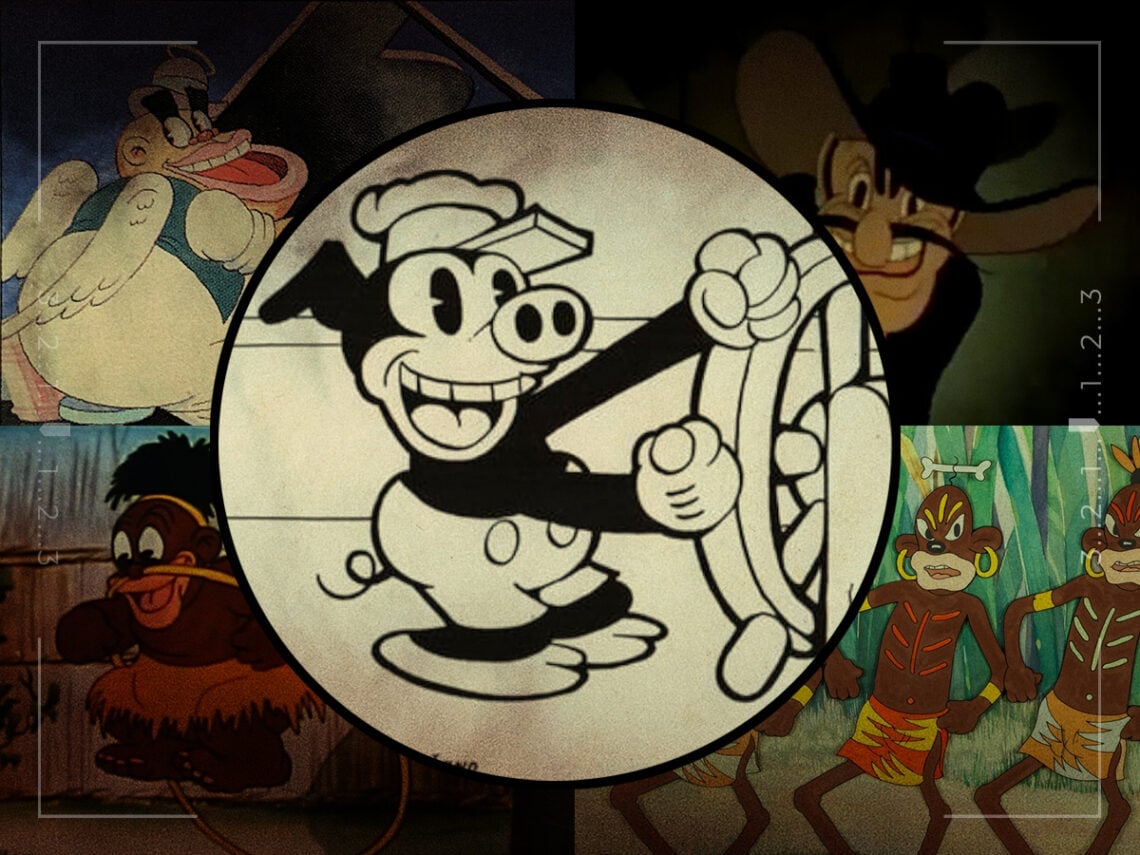
What’s the story behind the ‘Censored Eleven’ banned cartoons?

Throughout the golden age of American animation, a long and ignoble tradition of deploying blackface minstrelsy served as a perennial punchline amid the classic cartoon theatre shorts from the silent era toward the late 1940s.
Animation was born from the vaudeville tradition. As early as the 1830s, white performers entertained a majority of fellow white, working-class audiences with a crude caricature of the eternal ‘Jim Crow’ stereotype during the era of slavery among the country’s southern plantations. Blacking their faces with shoe polish and daubing a thick white or red smile around the lips, the minstrel act offered a dehumanised trope of enslaved Africans as ignorant, subservient, hypersexual, and intellectually limited, as a means of rationalising the brutal subjugation and violent oppression meted out on the Black community.
Following the Civil War and into the turn of the century, the emerging Blackface characters, be it the feral pickaninny children, deferential Uncle Tom, and the domestic Mammy worker, happy in her servitude, further entrenched themselves in populist entertainment across the US and around the Western world, as Black Americans were gaining further rights and economic standing.
After the minstrel became a fixture of the stage and even a minor industry of its own, Hollywood’s glittering A-listers would eventually indulge in the heritage of racial parody, Judy Garland, Mickey Rooney, and Bing Crosby all sporting blackface on the big screen early in their careers.
It’s this culture where all the major animation houses were forged. Warner Bros, Walt Disney’s Silly Symphonies, and Fleischer Studios all shaped their character canon from the blackface features so prevalent in the entertainment industry a century ago.

White gloves, exaggerated lips, and loose-limbed body movements all pervaded the cartoons of the black-and-white era, from early Mickey Mouse, Bosko, and Betty Boop cartoons. For decades after, racial gags still persisted in animationland, bombs regularly exploding in characters’ faces, yielding a blackface effect in the aftermath, and the floor-level Mammy infamously reprimanding the mouse-hungry cat in MGM’s celebrated Tom and Jerry series.
As the years passed, shifting public attitudes and greater racial sensitivity prompted the major TV networks to scrub out and excise the offending blackface gags for syndication from the early 1960s. However, several cartoon shorts in the Looney Tunes and Merry Melodies series were so centred on racial stereotypes that United Artists was forced to pull 11 entire episodes from broadcast for their harmful portrayal of African and Black American characters:
- Hittin’ the Trail for Hallelujah Land (1931)
- Sunday Go to Meetin’ Time (1936)
- Clean Pastures (1937)
- Uncle Tom’s Bungalow (1937)
- Jungle Jitters (1938)
- The Isle of Pingo Pongo (1938)
- All This and Rabbit Stew (1941)
- Coal Black and de Sebben Dwarfs (1943)
- Tin Pan Alley Cats (1943)
- Angel Puss (1944)
- Goldilocks and the Jivin’ Bears (1944)
Across the so-called ‘Censored Eleven’, there are plays on minstrel belief in the superstitious, a supposed taste for gambling, crude slapstick vignettes on slavery, plus an Elmer Fudd vehicle depiction of his travels to an African island of simple-minded savages and cannibal tribespeople on The Isle of Pingo Pongo. All are directed by animation titans of the era, the bulk of the work directed by future Pink Panther’s Friz Freleng, plus shorts from Droopy’s Tex Avery, Daffy Duck master Bob Clampett, and Chuck Jones, the creator of Roadrunner’s greatest cartoons.
The most notable in profile and controversy is All This and Rabbit Stew. Now in the public domain, Bugs Bunny’s sixth appearance swaps his usual dim-witted Elmer Fudd hunter for “Tex’s Coon” as per the character model sheet.
Voiced by Looney Tunes legend Mel Blanc, the Black hunter speaks in a Sambo drawl oozing the rank racism of the era, shocking in its ignorant wallow in the day’s ethnic prejudices. Clampett’s Coal Black and de Sebben Dwarfs and Tin Pan Alley Cats, however, was claimed by their director to have been brought about by the all-Black musical off-Broadway Jump For Joy cast members.

“They asked me why there weren’t any Warner’s cartoons with Black characters, and I didn’t have any good answer for that question,” Clampett once stated. “So we sat down together and came up with a parody of Disney’s ‘Snow White’, and ‘Coal Black’ was the result. They did all the voices for that cartoon, even though Mel Blanc’s contract with Warner gave him sole voice credit for all Warner cartoons by then.”
He added, “There was nothing racist or disrespectful toward Blacks intended in that film at all, nor in Tin Pan Alley Cats, which is just a parody of jazz piano great Fats Waller, who was always hamming into the camera during his musical films. Everybody, including Blacks, had a good time when these cartoons first came out. All the controversy about these two cartoons has developed in later years merely because of changing attitudes toward Black civil rights that have happened since then.”
Despite an affectionate if misguided depiction of the hot jazz music scene exploding in Black musical culture, the zoot-suited caricatures and oversexualised ‘Coal Black’ nevertheless incurred protestations from the NAACP and are mired in all the stereotypes that had dogged the minstrel act since its inception, stained by all of the ignorance that plagued the animation studios’ embrace of blackface vaudeville at the time.
To this day, Warner Bros has kept the ‘Censored Eleven’ firmly in their vaults, refusing to issue the withdrawn cartoons on any future LaserDisc or DVD collection, save a uniquely restored 35mm event in 2010 at Hollywood’s famed Egyptian Theatre. Yet the public domain cartoons have found themselves featured on a number of shoddy and unofficial VHS and DVD releases via unscrupulous media distributors.
The question as to what to do with the ‘Censored Eleven’ continues to prompt debate. Many of the cartoons formerly syndicated with edits have been issued in their original versions for a 2005 Looney Tunes box set, accompanied by an introduction from Whoopi Goldberg setting the shorts in their historic context. It could be that the ‘Censored Eleven’ is afforded a similar kind of disclaimer for Blu-ray or streaming services, yet, against the backdrop of a potent racist reawakening in contemporary politics, such cultural revaluation feels increasingly less possible 20 years on.
