


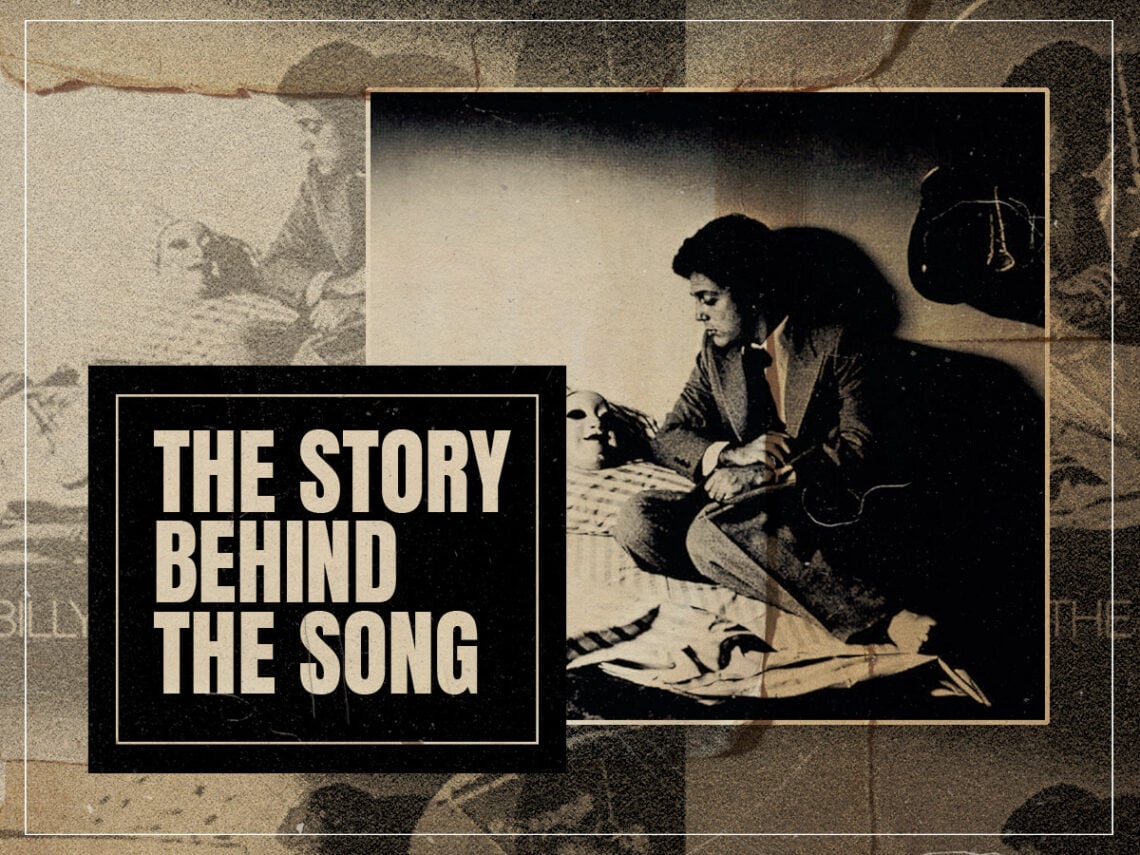
The Story Behind The Song: Billy Joel’s message from his estranged father on ‘Vienna’

The second ‘Vienna’ starts up; I’m 21 and heartbroken again, wandering around my university town, listening back to the song an old love showed me. To my friend, ‘Vienna’ is her mother’s favourite song, sung so regularly in the kitchen. For another, the track will forever be the moving number that made her fall in love with her favourite film, Uptown Girls. There’s something in ‘Vienna’ that seems to get to the heart and hook onto it. Even for Billy Joel himself, the song means something more.
The second those keys start up, and the simple, gentle beat joins in, Joel sets the tone on ‘Vienna’. Walking a delicate tightrope between cinematic and intimate, anthemic and introspective, it’s no wonder that it has gone down as one of the most beloved ballads ever penned.
In contrast to his primarily jovial hits like ‘Uptown Girl’ or ‘Piano Man’, or his characterful tracks like ‘Movin’ Out’ or ‘Scenes From An Italian Restaurant’, anyone can tell that there’s something different here. While his lyrics still take you on a journey and move through a story, the tale it tells feels personal. Unlike in other songs, Joel doesn’t bring the listeners into a place or time or a distinct scene. Instead, he seems to bring us into his heart. Even that central lyric, “Vienna waits for you,” feels like a door shutting on the outside world for a moment, letting all that stay outside while he deals with the emotions at hand.
It’s hard to put a clear finger on what those emotions are. ‘Vienna’ captures a distinct melancholia that’s not quite sadness but mixes up a tricky cocktail of hope, disappointment, fear and inspiration. Even for Joel himself, he couldn’t figure it out for a while. “This was one of those quickly written songs,” he said. “I don’t remember where it came from or why it came out the way it did.”
The track, however, has a clear grounding. While the addition of Vienna as a place might feel random, that’s where Joel’s estranged father lived after he divorced his mother. On one trip, a throwaway conversation with his old man seemed to hit a nerve.
After seeing an old woman working as a cleaner, the story goes that Joel expressed sadness about it to his father. In response, as a memorable nugget of wisdom passed down, his father challenged that belief, suggesting that working goes hand in hand with dignity and respect, so why should working be a young man’s game? As he visited his Dad and dealt with all the tricky feelings that were brought up, at once making him feel like a young boy again and making him aware that he was getting older quickly, the advice stuck with him.
“Where’s the fire, what’s the hurry about? / You better cool it off before you burn it out,” Joel sings, questioning his own inner belief that success has to be quickly earned as if it would age out. As he repeats “you crazy child,” he seems to adopt a fatherly voice, stating later that he realised he used the song to process his feelings towards his dad by trying to capture his advice and spread it further.
“It was an observation that you have your whole life to live,” Joel told Howard Stern. “A lot of people in their 20s think that they have to get it all together by the time they’re 30, and they kill themselves trying to get the golden right. But you have an entire life to live. The lyrics ‘slow down you crazy child’ are, in other words, you have a whole life.”
In many ways, the song feels like a comforting pat on the back. It’s a tight hug, and the big exhale you do when you get one from someone exactly when you need it. For so many of us, it’s exactly what we needed to hear; “You’re doing fine.”
At the time, it was what Joel needed to hear as well, working on two levels. On one plane, the song was a beautiful moment amidst a difficult relationship as he connected with his father on the deeper levels he felt he’d missed out on as a young child. On the second, whether his dad knew it or not, it was exactly the advice he needed for his career too. As he worked on The Stranger, desperately trying to make a worthy follow-up to the success of ‘New York State Of Mind’ and striving perhaps too hard to keep his fame and career on an upward path at 28, this simple reminder that he had plenty of time was needed.
Joel is now 74. In many ways, he is now that old lady, still working away in his older years. As he plays the song at every show, letting more and more people and newer generations connect with the track, its message, borrowed from his father’s advice, has matured beautifully with him into a reminder that life is a marathon, not a sprint.
