


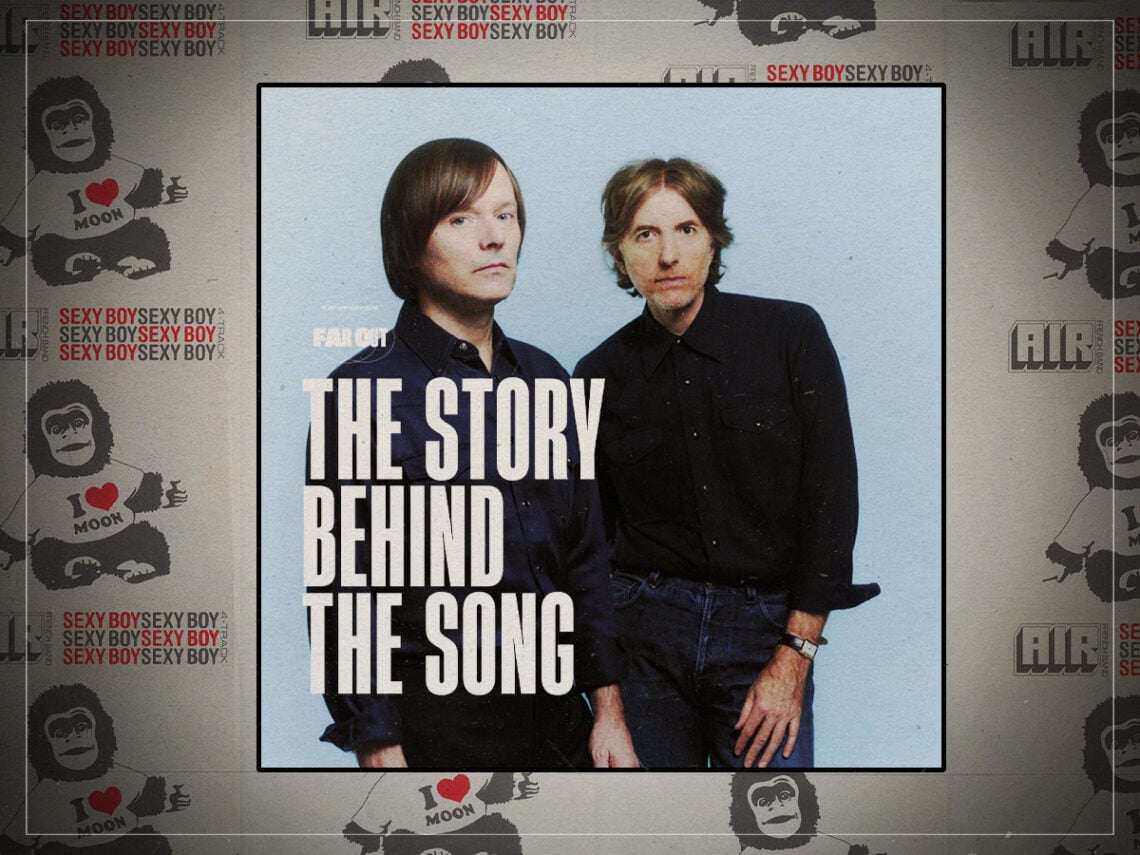
The Story Behind The Song: How Air very nearly deleted ‘Sexy Boy’ from history

It’s tough to imagine a world in which Air‘s biggest song isn’t a part of their most impactful album, yet it almost happened.
Great songs exist in large numbers, but only a handful of them transcend classification by virtue of their inimitability. Just like ‘Feel Good Inc’ by Gorillaz, ‘Your Woman’ by White Town or ‘Bohemian Rhapsody’ by Queen, there’s really no other entity in music that compares to the French duo’s seminal classic, ‘Sexy Boy’. The timing and placement of its release made the tune a centrepiece of the ambient domain, which it played a pivotal role in cultivating during the 1990s, and today, you won’t get into any trouble for hailing it as one of the most influential songs of its time and kind.
Its one-of-a-kind status in music history and far-reaching influence belie the backstory attached to it, which poses a ‘what if’ that could’ve changed everything. In a 2024 interview with Stereogum regarding their career-defining debut Moon Safari, which would thankfully become home for ‘Sexy Boy’, Nicolas Godin revealed they “didn’t know how to include it inside the rest of the music, which is more mellow and atmospheric. This track is more upbeat”. It’s true; the 1998 record is gentle and serene for the most part, which makes the song quite noticeably stand out in the tracklist for carrying too much oomph.
Though most fans aren’t surprised by the song’s colossal popularity, Godin was caught off guard as he witnessed it become the most successful track from the album after it was nearly left off the final draft. Over time, it started showing up in spaces far beyond the one Air existed in, most notably, making its way to Hollywood when it was featured in the 1999 teen romance, 10 Things I Hate About You. Given the broad radius of its appeal, it’s almost surprising that said composition hasn’t been overused in cinema.
About the song’s extension into popular culture, Jean-Benoît Dunckel said that he was flattered to see it transcend into rooms it wasn’t intended for, while simultaneously also believing that the context of its usage is of paramount importance since people keep misunderstanding the idea behind it.
Referring to it as a ‘seduction song’, he noted that “it’s about how heterosexual men can be happy to look at other men because they want to check [out how] they are dressed. It’s more about a fashion thing”.
Dunckel further explained that the classic is somewhat of a retort against the notion that men can’t be erotic, insisting that wanting to look sexy for those you’re attracted to isn’t restricted to any particular gender. To that point, he also clarified that it’s not about any particular sexuality either, with the emphasis simply being on ‘looking good’ and being ‘well-dressed’. All in all, the thought behind it all is actually quite straightforward and wholesome, as he mentioned, “In 1998, it was taboo to speak about men’s sexuality. ‘Sexy Boy’ is not a very male-attitude song. It’s a bit borderline, and it creates a strange feeling. We liked that. It was disturbing, and we like disturbed.”
The French two-piece has previously discussed the making of ‘Sexy Boy’, with Godin recalling how he was playing a riff on a 1960s Höfner bass guitar, which Paul McCartney popularised during his time with The Beatles. Responding to the ‘cool and dry’ sound the instrument produced, Dunckel commented, “sexy boy”, which is basically how the piece got its title. He even highlighted that the song was essentially about who the pair wanted to be, since they didn’t consider themselves to be good-looking in their younger days, unhappy with how unsuccessful they were with women.
Clearly, their plans to seduce with looks alone took a backseat when they realised they had the sonic chops to do it all and more.
