


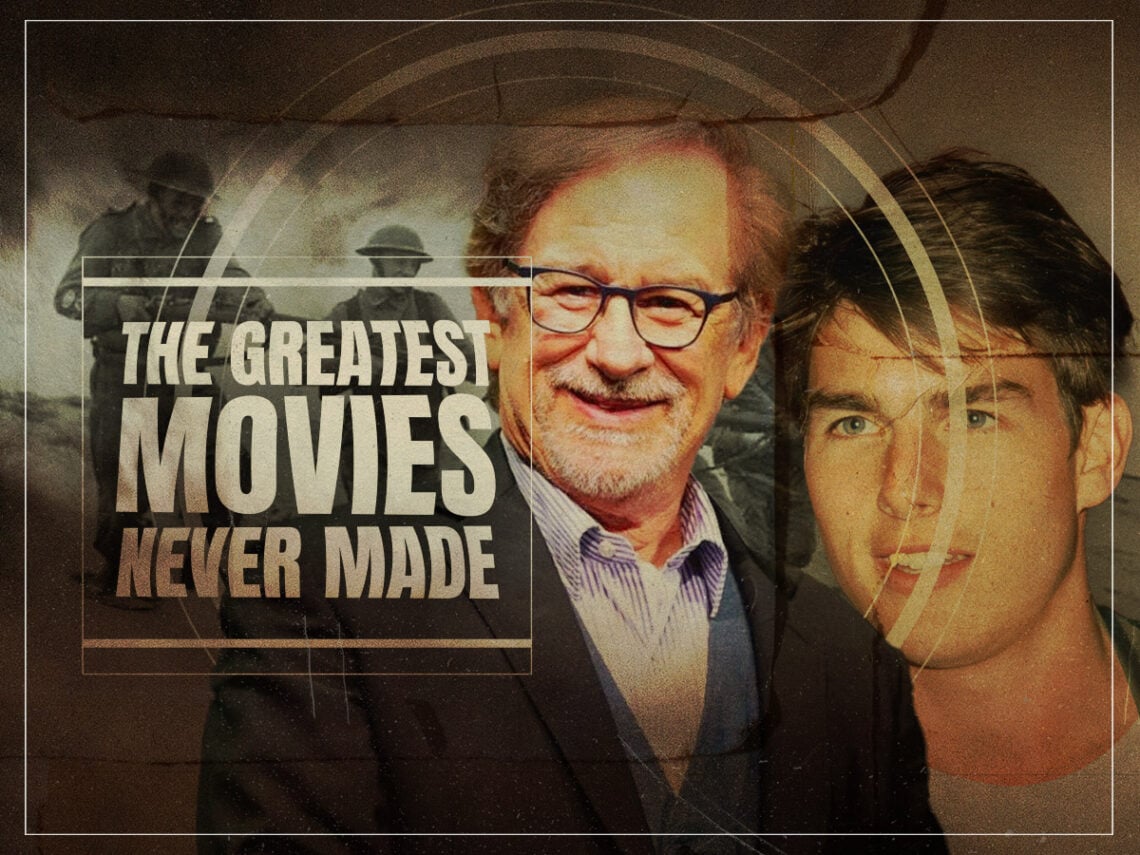
The greatest movies never made: Steven Spielberg and Tom Cruise’s ‘Ghost Soldiers’

Pairing up the most famous and commercially successful director in the industry with the biggest movie star on the planet carries high expectations, but the long-awaited collaboration between Steven Spielberg and Tom Cruise managed to live up to its lofty billing.
The duo’s sci-fi thriller Minority Report was a slick, stylish, and thought-provoking futuristic adventure that asked big questions about the nature of free will, fate, and destiny while utilising cutting-edge visual effects and Cruise’s signature daredevil antics to ensure it provided plenty of sizzle to go along with the steak.
The A-list superstar and the legendary director immediately hit it off behind the scenes, too, and wasted little time in setting up their next project together. In January 2002 – five months before Minority Report had even been released – it was announced that Cruise and producing partner Paula Wagner had boarded the adaptation of author Hampton Sides’ nonfiction book Ghost Soldiers: The Epic Account of World War II’s Greatest Rescue Mission.
Cruise was in line to play the lead role with Spielberg directing, and the first draft of the screenplay was penned by Josh Friedman, who would eventually get the chance to team up with the star-powered duo when he wrote the script for War of the Worlds. Based on the story and the sum of its parts, it was an awards season juggernaut waiting to happen.
At the time, Cruise had never made a World War II movie, but Spielberg certainly had. One of the greatest in cinema history, no less, with Saving Private Ryan earning him a ‘Best Director’ statue from the Academy Awards. An instant classic, the visceral depiction of the conflict in both its most explosive and intimate moments made the prospect of the filmmaker returning to the same time period a mouthwatering one, especially when Band of Brothers had premiered just two months prior to the Ghost Soldiers announcement.
The book details how 121 members of the Army Rangers, members of the reconnaissance unit Alamo Scouts, and hundreds of Filipino guerrillas rescued more than 500 prisoners of war from a Japanese-controlled camp in the city of Cabanatuan, prefaced by the events leading up to the mission.
The prisoners were survivors of the Bataan Death March, who’d been forcibly transferred across the Philippines following the American surrender that drew a line under a three-month battle against Japanese forces. If the movie had hewed closely to its source material, then it would have presented a multi-stranded narrative that explored all sides of a desperate situation.
As well as focusing on the trials, tribulations, and horrors experienced by those held captive at the POW camp, American military officials knew they had to act quickly after growing increasingly concerned a mass execution of the prisoners could happen as the Japanese began to gradually withdraw and retreat from the Philippines.
The second story thread would follow Henry Mucci and Robert Prince, the colonel and captain who developed their rescue mission alongside guerrilla leaders Juan Pajota and Eduardo Joson, and there’s even a subplot revolving around Claire Phillips, the American spy who forged an identity as a local-born Italian dancer named Dorothy Clara Fuentes to gain information, who was one of the hundreds saved during the daring raid.
Although it was never disclosed which role Cruise would be playing, the smart money would be on either Mucci or Prince. Either way, the director of Saving Private Ryan heading back into World War II territory to craft an epic, expansive story that focuses on the strength and resilience of the human spirit, culminating in a raid where upwards of 500 prisoners were liberated in a mission that only took around 30 minutes and resulted in minimal Allied casualties had Oscar bait written all over it.
Ghost Soldiers is a riveting moment in history that would have given Spielberg the leeway to approach the story from multiple different angles, and it would have featured harrowing character moments, fist-pumping rescue sequences, reflections on the true horrors of war, and the meticulous planning required to make such an ambitious operation go off without a hitch, all anchored by Cruise taking centre stage.
It didn’t happen, and when Sides’ book did eventually serve as the partial basis for a feature, the results were dire when John Dahl’s The Great Raid took a pasting from critics and ended up as one of the biggest box office bombs in history. It could have been Spielberg and Cruise, and it would have been incredible.
