


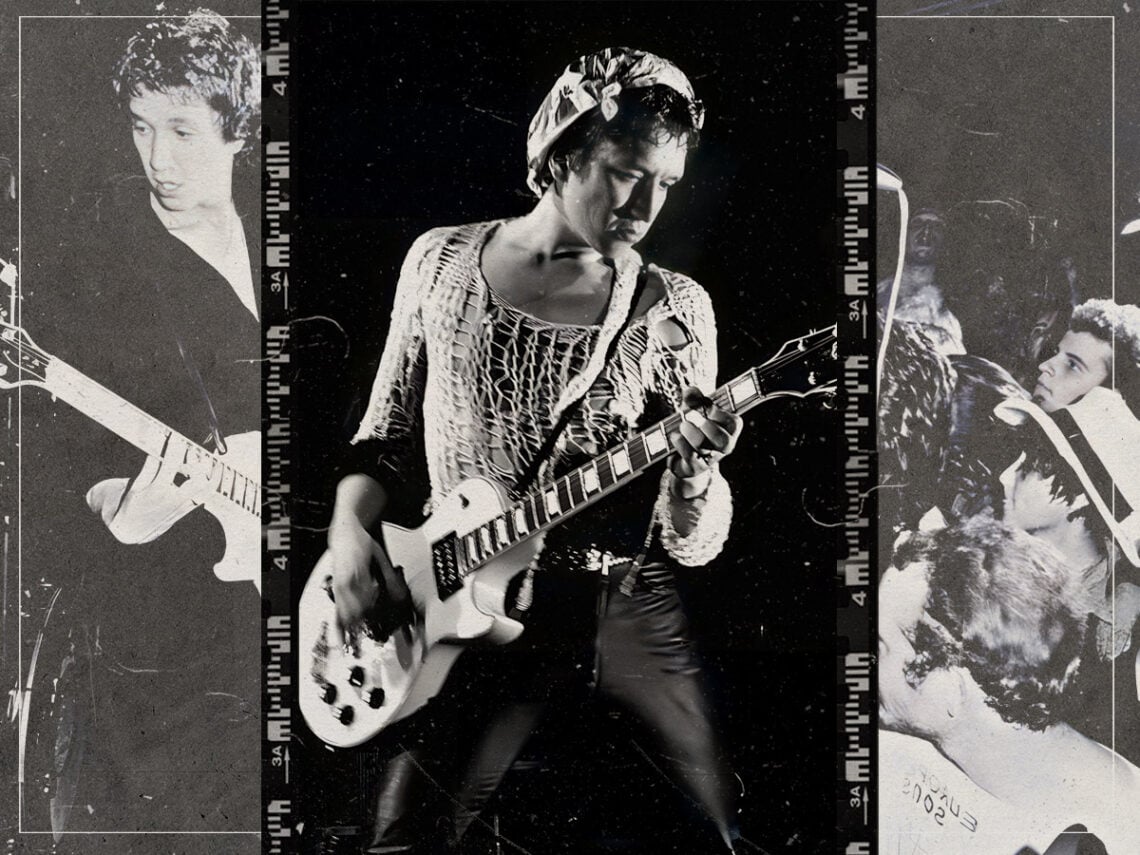
The punk progenitor: Steve Jones named his favourite David Bowie album

Glam rock had a direct impact on punk forming. From the gritty guitars to defiant attitude, without this strange and fleeting form that appeared at the start of the 1970s, it’s highly likely that the likes of Sex Pistols, The Clash and Siouxsie and the Banshees wouldn’t have emerged in the way that they did. Thanks to the earlier influence of groups such as The Velvet Underground, David Bowie, Marc Bolan and The New York Dolls were given a blueprint on which they enacted stark innovations.
These included stripping away the ostentatious complexities of psychedelia’s uncool younger brother, prog rock, and returning guitar music to its bluesy essence. Other elements included defying stuffy tradition by examining sex, drugs and gender in a full-frontal way that hadn’t yet been done. Utterly arty and drawing on the gamut of popular culture for inspiration, glam was a vital and full-bodied movement that captured the imagination. In doing so, it incubated an array of future stars. Without the barrier-busting tidal wave of glam, there would be no punk or grunge.
We get our story today from punk today, and one man in particular, Sex Pistols guitarist Steve Jones. In the true spirit of his genre, he is a total autodidact, assisted by amphetamines in his learning curve. He is best known for his use of Gibson Les Pauls, particularly the iconic white 1974 Custom model with the stickers of pin-up models on it. In a tangible manifestation of glam’s effect on punk, the guitar had belonged to The New York Doll’s axeman, Sylvain Sylvain, which the Pistols manager Malcolm McLaren had acquired from him during his brief stint as their custodian.
Jones is an overlooked player, despite his impact directly influencing so many, and he continues to do so by proxy today, with his direct riffs and swaggering rock ‘n’ roll establishing the punk handbook for the instrument. Pouring attitude into his playing, it’s not ridiculous to state that the Sex Pistols would have been nothing without him, which says much about his importance to the broader punk genre. From the earworms to the chugs, Jones’ style took inspiration from those who inspired him and repackaged their energy amid his own environment.
A fan of everyone from Roxy Music to Queen during the early 1970s, these boundary-pushing groups would galvanise the young Jones, who was well primed to become a believer, in light of his challenging upbringing.
According to him, though, one album started it all off for him: David Bowie’s 1972 breakthrough album, The Rise and Fall of Ziggy Stardust and the Spiders From Mars. It’s the definitive glam rock offering that not only demonstrated the scope of Bowie’s creativity to the world, but given the luminance of his guitarist and sideman, Mick Ronson, it changed guitar playing. While it was classically Bowie in the way it appropriated the glam rock and proto-punk of The Velvet Underground, Iggy Pop and even Marc Bolan, it was a cultural hit. It saw a new generation of guitarists arise in its wake, looking to escape the established order with their fresh sounds.
Listing his 12 favourite albums for Entertainment Weekly in 2005, Jones said of the record: “This album is what got me into music when I was a teenager. Every song is amazing.” From the crunching guitar of ‘Ziggy Stardust’ and its lead line to the raucous rock ‘n’ roll of ‘Suffragette City’, it’s evident that Jones took much inspiration from Ronson and Bowie’s six-strings on the record.
The story of Jones and Bowie does not end there. In the 2000 documentary The Filth and the Fury, it was revealed that Jones stole equipment from a truck parked in the back of London’s Hammersmith Odeon when Bowie was playing his iconic farewell show as Ziggy Stardust in 1973. Per the documentary and Jones himself, he and his friends posed as crew members and stole amplifiers and other equipment.
Asked if he ever apologised to David Bowie by Magnet in 2017, Jones explained: “In a roundabout way, yes, and apparently he thought it was funny. I made amends to the drummer, Woody, on my radio show several months ago and the keyboard player last week. Who I needed to apologise to was the bass player, which is a shame as he’s dead. What I stole was a bass-amp head, some cymbals and some microphones—it wasn’t like they were Bowie’s. I stole a lot more gear from less famous bands, but I wasn’t proud of it. I couldn’t help myself.”
After watching the video of Jones apologising to Woody for the theft, I don’t think the glam rock hero really minded. The Sex Pistols guitarist had a tremendous impact on music directly thanks to the influence of Ziggy Stardust, and as Jones’ on record as only stealing artists’ gear if he liked them, that’s quite a position to be in. Woody even received money for the stolen items.
Listen to Ziggy Stardust below.

Never Miss A Beat
The Far Out Punk Newsletter
All the latest Punk content from the independent voice of culture.
Straight to your inbox.