


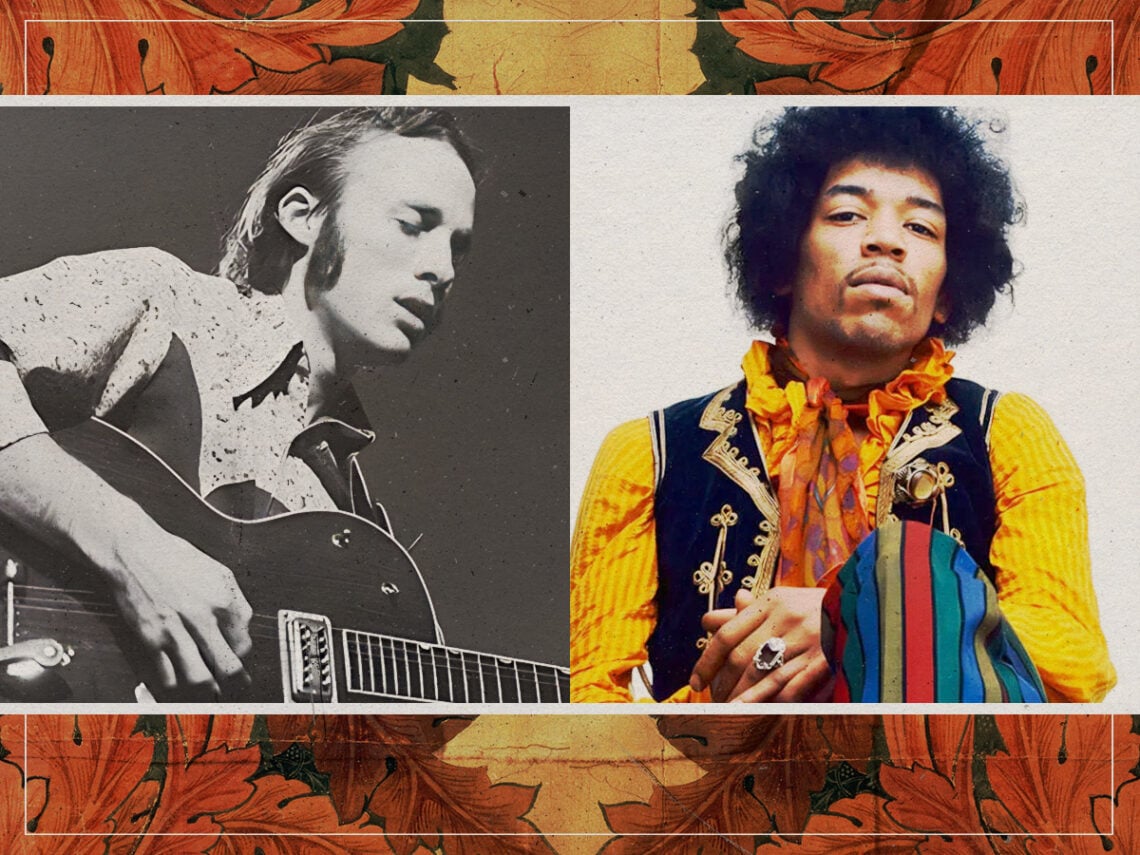
“We sat up the whole night”: the Stephen Stills song inspired by the death of Jimi Hendrix

The influence of Jimi Hendrix on the world of rock music can never be overstated. After rising to prominence amid the counterculture movement of the 1960s, Hendrix’s unparalleled guitar playing and defiant attitude set him apart from virtually every other rock musician of the era. The legend of Jimi Hendrix looms so large that it transcends rock music; he was a cultural icon whose presence has never left the music world. Even after his tragic death in 1970, the Seattle-born guitarist continued to inspire countless gifted musicians like Stephen Stills.
Much like Hendrix, Stills had established himself during the counterculture age of the 1960s, performing with the folk-rock progenitors Buffalo Springfield. With the group, Stills began to gain a reputation for his unique and incredibly captivating guitar playing. Particularly within the saturated rock movement of the era, there were many gifted guitarists on the scene, but Stills managed to stand out as a true individual. Of course, this reputation only increased with the advent of Crosby, Stills, and Nash.
The folk-rock outfit, which was soon joined by Neil Young, was a musical tour-de-force for many years. Inevitably, though, when you put four individually gifted musicians together, some arguments are going to arise. As a result, the history of CSNY is illustrated largely by fallings-out, arguments, and musical differences. Hence, it became essential for Stephen Stills to create music in a solo capacity, away from Crosby, Stills, Nash, and Young. For that solo material, the American songwriter regularly drew upon the influence of Jimi Hendrix.
Reportedly, Stills had struck up a friendship with Hendrix while the pair were both living in London. In fact, speaking in 1991, the songwriter recalled, “He was a very dear friend of mine. We were lonely in London together and hung out a lot. I left England suddenly, and years later, I learned from Mitch Mitchell that Jimi had been looking for me everywhere – wanted me to join the Experience as the bass player, which would have been my greatest dream in life.”
Obviously, Stills never ended up joining the ranks of The Jimi Hendrix Experience, but the pair did work together on a number of occasions. Most notably, Hendrix recorded some guitar parts for ‘Old Times, Good Times’, from Stills’ debut solo album in 1970. During the production of the album, however, Hendrix sadly passed away, which devastated Stills and caused him to draw upon that feeling of grief and loss through the songwriting of the album.
In particular, ‘Love The One You’re With’ seemed to be particularly impacted by the death of Hendrix, released as a single only two months after the guitarist’s passing. Henry Diltz, who was working as a photographer for Stills at the time, recalled the influence of Hendrix on the album, writing in his book, California Dreaming, “After Déjà Vu, CSN went on a bit of a hiatus, and Stephen invited me to join him in Colorado. Gold Hill was way up in the Colorado mountains. While we were there, Stephen received word that Jimi Hendrix had passed away, so everybody was very sad. We sat up the whole night talking, telling stories and remembering him.”
These moments of sober remembrance quickly turned into artistic inspiration. Even the album cover of the 1970 record was impacted by Hendrix’s death, with Diltz recalling, “When dawn came up the next morning, it had snowed overnight, and everything was blanketed in white. I grabbed my camera and Stephen grabbed his guitar, we ran outside and I started taking pictures of him sitting on a chair in the middle of the snow. Sometime later, this (session) was chosen for his first album cover.”
You could spend all day and night listing the various songs, albums, and musicians who took inspiration from Jimi Hendrix; the guitarist had a colossal impact on the cultural fabric of American music. However, it is worth remembering that Stephen Stills’ debut solo album would have looked and sounded incredibly different were it not for the all-encompassing influence of the guitar hero.
