


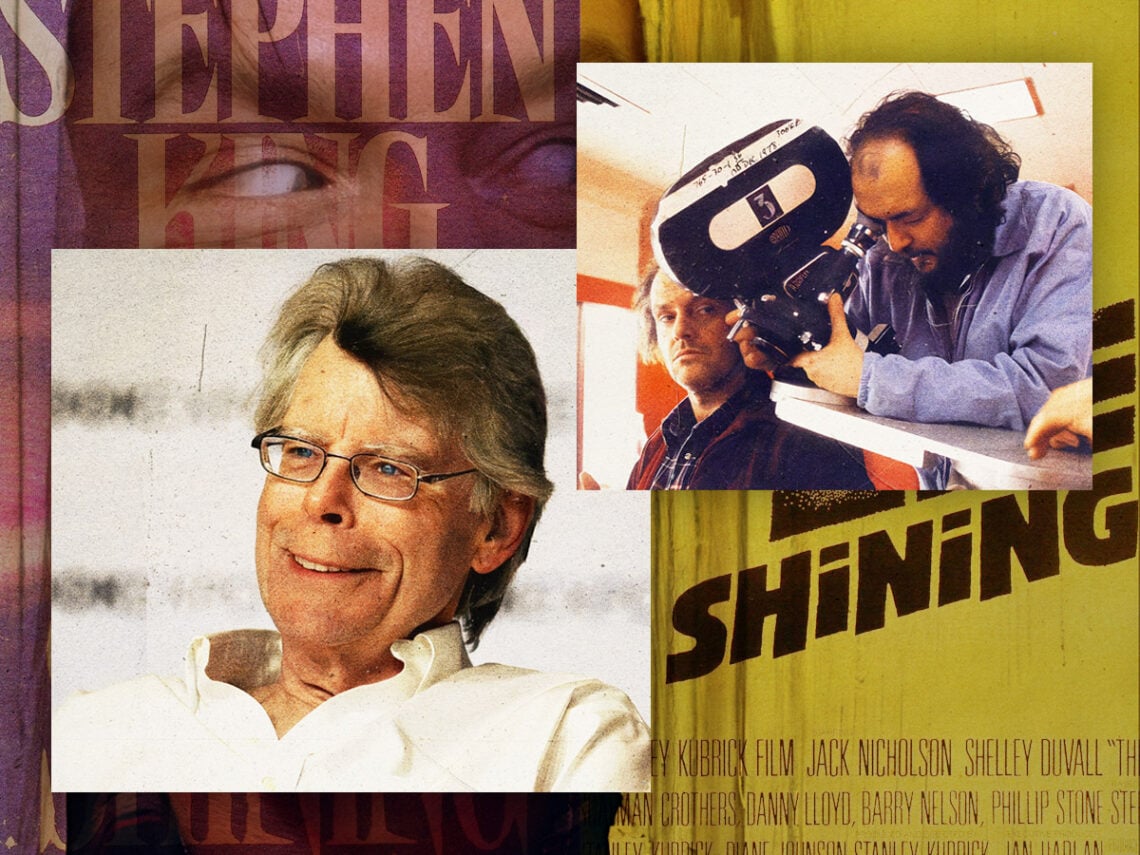
Stephen King’s bizarre conversation with Stanley Kubrick: “I was just floored”

For most authors, having Stanley Kubrick adapt your work would be a priceless and career-defining stroke of fortune. But then again, maybe it wouldn’t be. There’s a reason the 2001: A Space Odyssey filmmaker is often given the lofty label of ‘auteur.’ Kubrick movies were always Kubrick movies, no matter their source material, and this was a fact that Stephen King discovered firsthand.
When the director got to work on an adaptation of his novel The Shining, the master of literary horror had a lot of reasons to be optimistic. Kubrick had already made Dr Strangelove, 2001: A Space Odyssey, and A Clockwork Orange. But there were issues from the start. The director wanted Jack Nicholson to play the lead role of Jack Torrence, which instantly suggested that he had a very different idea about who the character was.
In the novel, Jack is a loving family man who adores his wife and young son but who struggles with the very commonafflictions of addiction, anger, and professional frustration. When he agrees to look after a remote hotel over the winter, he is manipulated and possessed by the building’s supernatural powers, who want him to kill his clairvoyant son. In the film, Jack seems sinister and detached from his family from the beginning, and when they get to the hotel, his increasing rage and murderousness seem more like a mental health spiral than a supernatural one.
King suspected that this might be where Kubrick was headed when he cast Nicholson, who had already gained a reputation (and an Oscar) for portraying mentally unstable characters. The author advocated for comfortable everyman actors like Martin Sheen and Jon Voight, but he had little say in the matter.
Another indication that Kubrick was going to undermine the fundamental themes of the novel was a surprise conversation the men had. In an interview with Cult Oddities in 1986, King remembered, “The first time he called, it was 7:30 in the morning. I was standing in the bathroom in my underwear, shaving, and my wife comes in and her eyes are bugging out.” His first thought was that one of their children must be choking in the kitchen, but instead, his wife informed him that Kubrick was on the phone. “I mean, I was just floored,” King said. “I didn’t even take the shaving cream off my face.”
The minute he picked up the phone, the director cut to the chase. “The whole idea of ghosts is always optimistic, isn’t it?” he asked. King was confused. Kubrick continued, “Well, the concept of the ghost presupposes life after death. That’s a cheerful concept, isn’t it?” The author remembered being so surprised and momentarily convinced that he couldn’t respond. Eventually, he said, “But what about Hell?” There was a long pause before Kubrick responded stiffly, “I don’t believe in Hell.”
And therein lay the elemental difference between author and director. King had written a supernatural thriller about family and ghosts. Kubrick wanted to make a psychological thriller about one man’s descent into madness. The author stressed that he had been flattered that the director was interested in adapting his work and that he had wanted to like the film. Ultimately, however, it was destined to be a huge disappointment.
“The real problem is that Kubrick set out to make a horror picture with no apparent understanding of the genre,” the author asserted. Coming from anyone else, this might have sounded arrogant, but from King, it may as well be gospel.
