


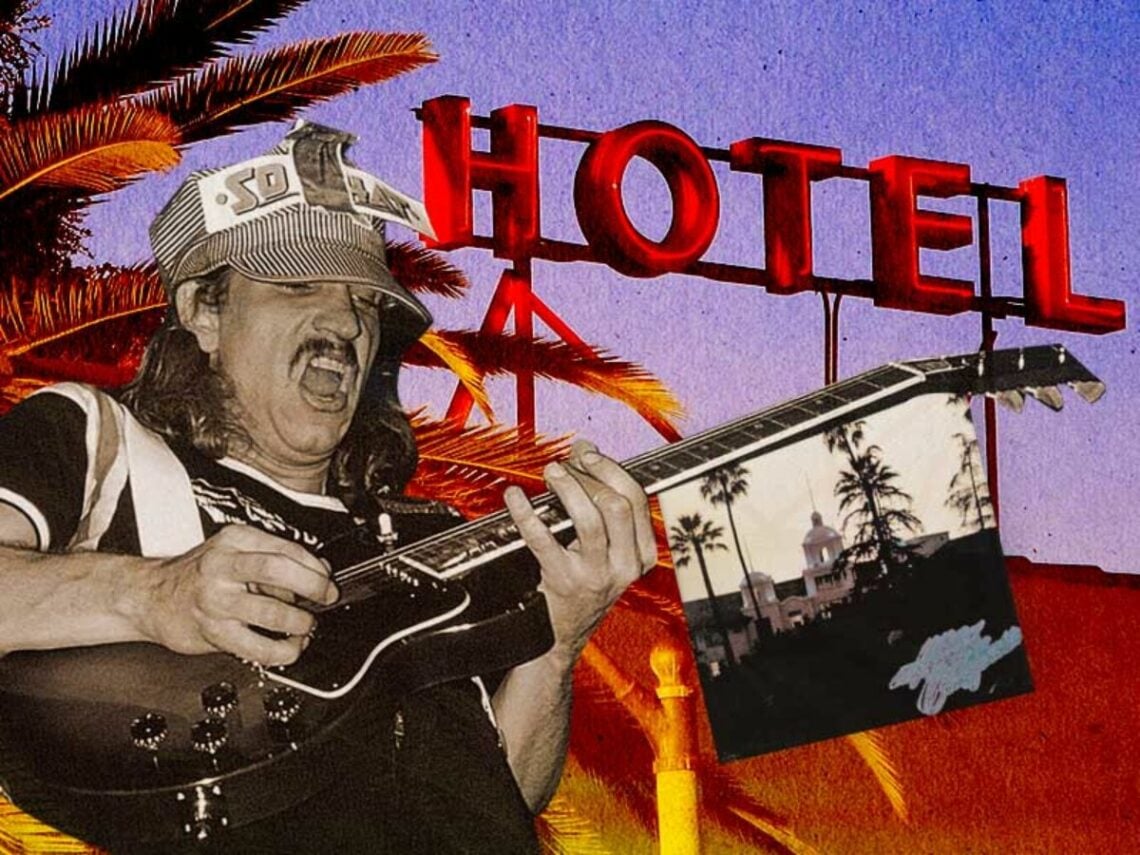
The movie star the Eagles would’ve cast as the lead in ‘Hotel California’: “We wanted to be more cinematic”

Ask a thousand people, and you may well get a thousand different answers: the only thing universal about ‘Hotel California’ is the hum-hawing over what it is actually about.
It’s a monumental hit the world over, but it took three months to get to number one. It’s the band’s signature tune, but the members of the Eagles have always been cagey about praising it. Does it confuse wine for a spirit rather than a fermentation, or is that another of its many mystic puns?
There are mysteries aplenty in the Eagles classic or non-classic, depending on who you ask about the divisive track, but one thing that shines through clearly is the character of this historic tune. As Will Ferrell once responded to the burgeoning question of, “What does that even mean?” in retort whatever daft absurdism he had just uttered: “I don’t know, but it’s provocative”.
‘Hotel California’ evokes a whole welter of things for each individual listener. For Don Henley, it stirred up the following explanation: “The hotel itself could be taken as a metaphor not only for the myth-making of Southern California but for the myth-making that is the ‘American Dream’ because it is a fine line between the American Dream and the American nightmare.”
Regardless of whether you came to the same conclusion about the false allure of opportunities becoming clearer as the spirit of the defiant 1960s came to an close, you will be left with no doubt about the character of the song. Tumbleweeds and creaking iron gates are conjured by the duelling guitars, strange The Shining-like pictures line the walls of the hotel’s corridors, and the protagonist cuts the figure of a weary, spooked salesman for pretty much everyone.
Actors are often tasked with creating this same thing. You don’t need to know the exact message of a movie to grasp its intentions. So, the Eagles looked to one of their heroes when they were weaving the song into place. They needed a knowable icon to act as a sort of spirit guide, if you will, to the ways of the crooked hotel they were checking into as they were writing it.
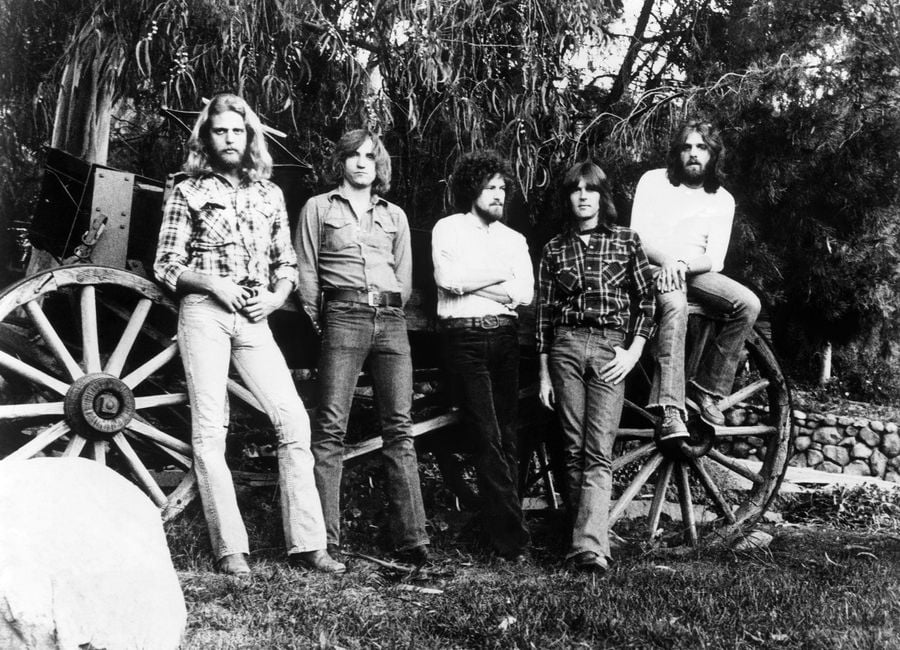
Which actor inspired ‘Hotel California’?
”Almost everybody in my business can write music, play guitar, play piano, create chord progressions,” Glenn Frey told Cameron Crowe, “but it’s only when you add lyrics and melody and voices to these things that they take on an identity and become something beyond that sum of the individual parts.”
Few songs typify that better than ‘Hotel California‘: the searing solos might enrapture you while you listen, but it’s the mystic spirit that you have in mind right now as you read this that sustains it.
”We wanted to be more cinematic,” Frey continues regarding the expansive scope of the song. ”We wanted this song to open like an episode of The Twilight Zone – just one shot after another.” When it came to capturing this lofty goal of transcendence, mustering depth and meaning that would not only match but elevate the music, they had Robert De Niro in mind.
As Frey explains: ”I remember De Niro in The Last Tycoon. He’s got this scene, and he’s talking to some other people in his office. He speaks to them: ‘The door opens…the camera is on a person’s feet…he walks across the room…we pan up to the table… he picks up a pack of matches that says ‘The Such-And-Such Club’ on it… strikes a match and lights a cigarette…puts it out… goes over to the window… opens the shade… looks out… the moon is there… what does it mean? Nothing. It’s just the movies’. ‘Hotel California’ is like that.”
Now, as they were working on the song, they had an imaginary leading star who they could throw into scenes and see what stuck with the melody. They were, in effect, transposing a movie that would never be filmed into a six-minute song, and De Niro had been cast as the fitting star.
The boys, with their penchant for cinema and great admiration for the Goodfellas star, were struck by this abstract scene in The Last Tycoon. Through pure charisma, poetry, and the peculiar paradox of ‘throwaway specifics’, De Niro was able to make something nebulous and vague feel complete and important, a feat typical of the movies at their finest. They decided to do the same.
”We take this guy and make him like a character in The Magus, where every time he walks through a door there’s a new version of reality. We wanted to write a song just like it was a movie. This guy is driving across the desert. He’s tired. He’s smokin’. Comes up over a hill, sees some lights, pulls in,” then the madness of the song itself unfurls around him. He’s De Niro in The Last Tycoon, wearily holding it together, trying to cling to something knowable, like the easy tropes of cinema.
And yet we only glean this from the scenes unfurling around him and the relatability of his story. We hear nothing of his feelings, and that doesn’t matter. In this regard, the Eagles were following De Niro’s own acting advice. He once said, “It is simpler than you think. And it’s very hard for actors, and I get caught up in that myself, where you have to do more, do something. And you don’t have to do anything. Nothing!”
He continued, “The way people are in life, they don’t do anything… You could’ve been told that somebody in your family was this or that, some terrible thing, you’re still going to have the same look on your face.” Vitally, he concludes, “That allows the audience to read into it.” Audiences have been reading into ‘Hotel California’ for half a century now. It remains as movie-like as anything that has arrived since.
In some ways, this only adds to the mystical message of the song: even the false realities it sings of are based not on truth laid bare, but cinema – the American dream? Well, It’s just the movies, isn’t it? It’s make-believe.
But one thing is for certain amid the strange web of ‘Hotel California’, if you didn’t know this detail already, every time you here the track from hereon, you’ll be picturing a disgruntled De Niro checking into the debauched inn trying to get his hands on a simple glass of bloody wine only for Henley to respond with another bastard riddle.
