


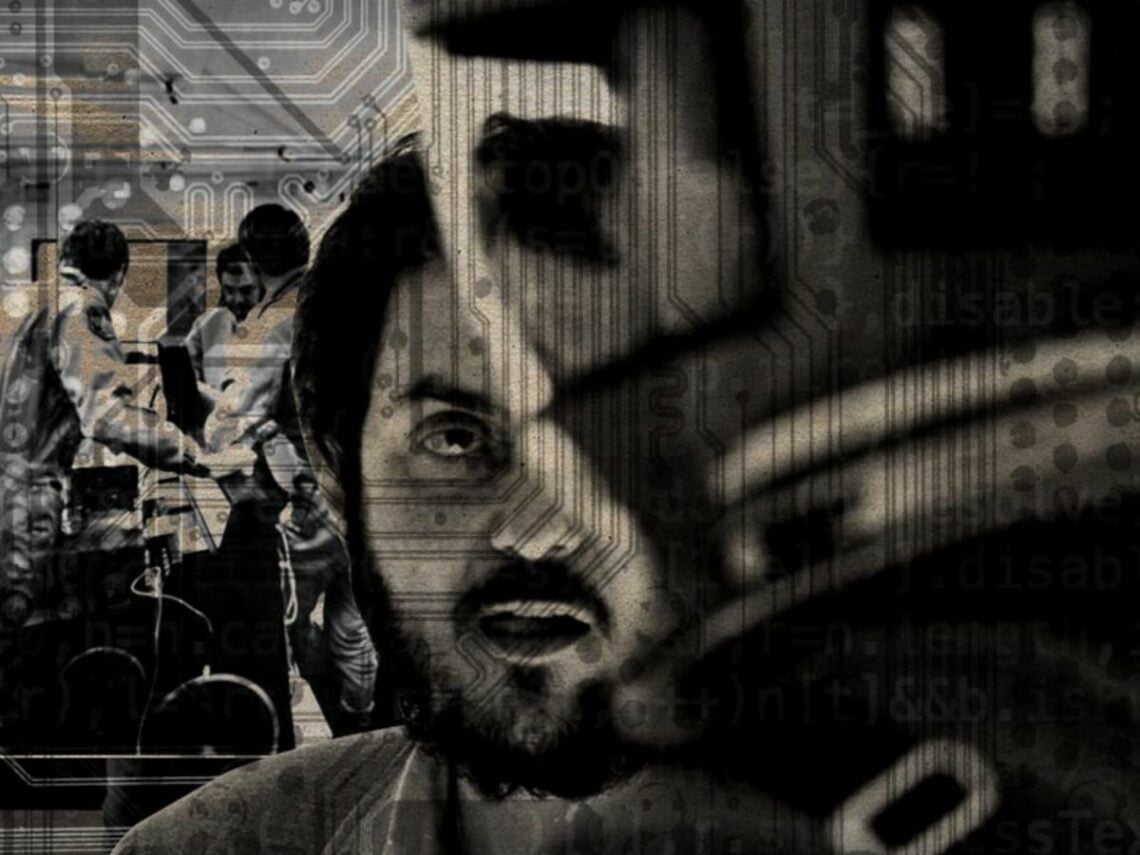
Stanley Kubrick wanted the “psychedelic” parts of ‘2001: A Space Odyssey’ to be a secret

One of the most visually impressive movies of all time, even to this date, is Stanley Kubrick’s masterful science fiction film 2001: A Space Odyssey. Kubrick and his crew went to painstaking lengths to make the space-faring epic the aesthetic masterpiece that it is today, and a number of the film’s sequences remain some of the greatest we are likely to ever see.
Much of the brilliance of 2001‘s special effects were down to the masterful Douglas Trumbull, though, and the artist once explained that Kubrick had actually wanted the trippiest moments of 2001 to remain a secret from the public so that they would have more of an effect when the film was finally screened in cinemas.
Trumbull once noted: “During the filming of what are probably best termed the ‘psychedelic’ effects for the end sequence, we all joked that 2001 would probably attract a great number of hippies out to get the trip of their lives.”
He added: “Stanley Kubrick strongly emphasised to all members of the production crew that he wished the specific techniques used in the last sequence to remain as unpublicised as possible.” Trumbull went on to briefly explain just how he went about creating the effects for the film’s third act.
For the “infinite corridor of light”, Trumbull created a “Slit-Scan machine”, which could “produce two seemingly infinite planes of exposure” by using the kind of image scanning equipment that was often found in scientific and industrial photography.
It’s not long after Dave Bowman begins his journey through the infinite that the “corridor of light” subsides, and he enters what Trumbull called “a series of fantastically delicate, apparently astronomical cataclysms,” through which we believe Bowman is reaching another galaxy altogether.
Amazingly, Trumbull revealed that “these effects involved the interactions of certain chemicals within a camera field of a size no larger than a pack of cigarettes”. However, the final sequence of the journey beyond was more complex and required many trial and error efforts on Trumbull’s part.
The SFX wizard added: “The final series of shots before Keir Dullea ends up in his unusual predicament were done by shooting some fairly unusual aerial scenes and then juggling the colour filters in the YCM duping process. It took months of experimentation to find the key to this technique.”
Trumbull also humorously noted that the hippies that seemed drawn to watching 2001 often just wanted to watch those last sequences alone, ad infinitum. “I understand that each showing draws an increasing number of these people,” he said, “Who would probably prefer to just see the last two reels over and over again.” But who can blame them, given their intoxicating nature?
