


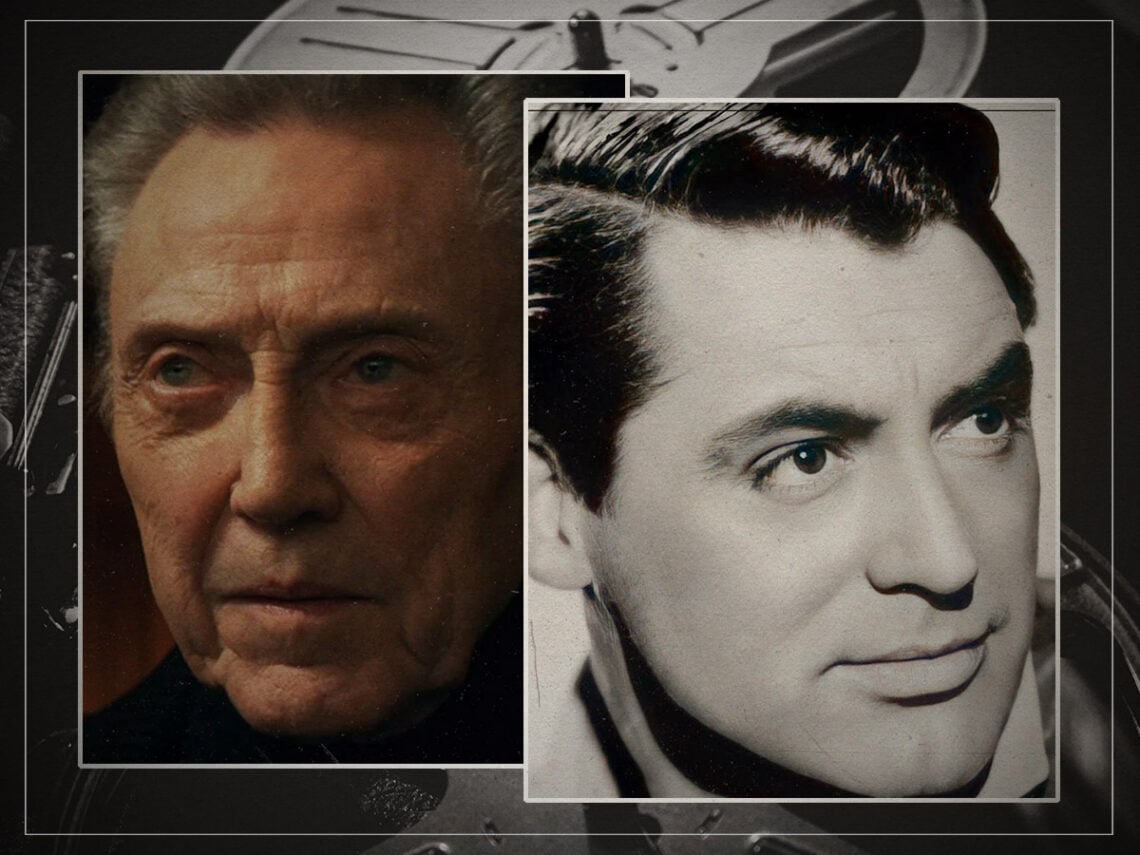
Why did Christopher Walken compare Cary Grant to Muhammad Ali?

Christopher Walken has led an unparalleled career in Hollywood, not because he’s set any records with awards but because no one else can do what he does. Unlike most character actors, he usually plays the same kind of character, which is to say that he is always Christopher Walken, and whether and how that differs from the man himself is a mystery that none of us will ever solve.
He’s worked with pretty much every director that actors would kill to work with, and all of those directors would probably say that they got to work with Walken rather than the other way around. David Cronenberg, Steven Spielberg, Abel Ferrara, Tim Burton, and Quentin Tarantino have all had the distinct privilege of watching him do his thing with their dialogue. Whether he’s doing a striptease or monologuing about sticking a pocket watch where the sun don’t shine, the man is absolutely riveting.
While he might not have much in common with any other actor, Walken does recognise and revere fellow mesmerisers. Chief among them is Muhammad Ali, the greatest heavyweight boxer of all time, political activist, and discipline-spanning cultural icon. Walken even got his hands on a pair of the champ’s unwashed boxing shorts, which he kept framed on the wall of his apartment in New York.
Ali had and still has countless passionate fans, but Walken outflanks many of them by being one of the few people to defend that boxer’s acting abilities. In 1977, Ali starred in a biopic about himself called The Greatest. Directed by Tom Gries, it follows the star from his early days winning the gold medal at the 1960 Olympics to his ascent to sport-defining champion and political activist.
Even movie stars struggle to play themselves, so it’s no surprise that Ali wasn’t exactly the most natural screen presence. Critics dismissed the film as a vanity project and his performance as wooden and unnatural, but Walken was clear: Ali’s star power was undeniable, even when he was at his least charismatic. “I was really impressed with his performance,” the actor insisted. “It was a silly film, but to see him in front of a camera was incredible. He was light, he was funny, and he handled women with such charm, almost like Cary Grant. He’s got it.”
Comparing anyone to Cary Grant is nothing short of brazen. The Bringing Up Baby star helped define audience expectations about classic Hollywood unlike anyone else. Whether he was playing a hapless stooge opposite Katharine Hepburn or a cat burglar wooing Grace Kelly in To Catch a Thief, he radiated ease and star power. Many movie stars have been compared to him over the decades, but none have come close to filling his shoes. Like all great movie stars, he was a one-off.
In that respect, Walken’s comparison is pretty accurate. Ali was also a one-off, a star who transcended his field to a much greater extent than Grant ever did and who was overflowing with that same sort of star power possessed by only a handful of luminaries. At this stage, he is practically a cliché, destined to populate posters next to Marilyn Monroe and Van Gogh’s Starry Night into eternity. Ubiquity might not be the most flattering form of greatness, but Ali is in good company.
