


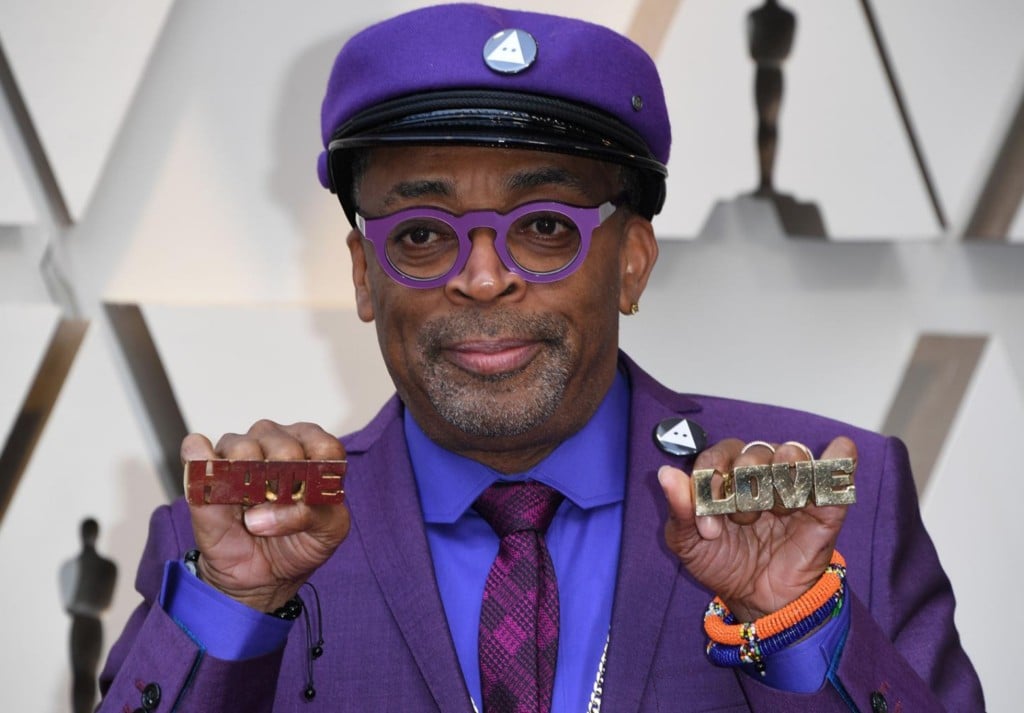
Spike Lee once picked his ultimate cinematic heroes

Spike Lee is one of the most important names in contemporary cinema. The mind behind the iconic comedy-drama Do the Right Thing, the historical epic Malcolm X, and the fierce crime drama BlacKkKlansman, the director has proven his talent for cinema across genres and decades.
Lee’s love for movie-making stems from his youth, which was marked by cinema trips with his cinephile mother and an education in film. After getting a taste for filmmaking while at Morehouse College in Atlanta, Lee went on to study film and television at NYU’s revered Tisch School of the Arts, where he now teaches and inspires budding filmmakers.
The five-time Academy Award nominee once shared the filmmakers who shaped his own desire to take up the craft, listing his cinematic heroes in an interview with GQ. One of them, he even first met during his time at NYU. As Lee recalls it, he grew up as his mother’s “movie date”. His father was a sports fan who refused to go to the cinema: “He hated films, particularly for how they portrayed black people at that time.”
As a result, Lee often accompanied his mother. Together, they saw Mean Streets when it was first released in 1972. At the time, he recalls, “I didn’t even know people made films, you just went to the movie theatre, but that film really… had an impact on me.”
He went on to recall the first time he met Scorsese, when he approached him after a screening of After Hours at NYU: “I went up to him, and I told him the story, and he still remembers it. So I knew I made an impact on him, by just talking to him and telling him how much I liked the film.” The interaction went so well, in fact, that lee notes, “We’ve been friends ever since.”
Lee also shouts out the filmmaking partnership between director Elia Kazan and writer Budd Schulberg, picking out On the Waterfront and A Face in the Crowd as two of his favourite films. Scorsese wasn’t the only filmmaker Lee managed to convert from hero to friend and collaborator – he also worked closely with Schulberg before he died too.
As Lee reccals it: “Me and Budd were tight. Budd took an interest in me and we talked about writing and in fact we wrote a script together called ‘Save Us, Joe Louis’, about the friendship between Max Schmeling and Joe Louis.” The screenplay looked at their two fights, the second of which was believed to determine who would win World War II.
The Do The Right Thing director recalls, “During Budd’s last year, he would call me once a week saying, ‘Spike, did you get the money yet?’… I made a promise to Budd that one day, soon, I would get the money and I’m gonna keep that promise and get that film made.”
He also took the time to praise Charles Laughton, whose films he still shows to his students to emphasise that “great cinema was made before you were born”, alongside David Lean. He notes that the latter was a big inspiration on the making of Malcolm X: “We wanted Malcolm X to have the epic feel of a David Lean film. It was a big subject so it needed to be epic.”
Now a cinematic hero to many young filmmakers himself, Lee also provided some advice to those just starting out, noting, “You’ve gotta be doing it because this is what you love, this is your calling, and this is what you wanna do for the rest of your life.” It’s this enduring love for cinema that fuels Lee’s work and has endeared it to so many.
