


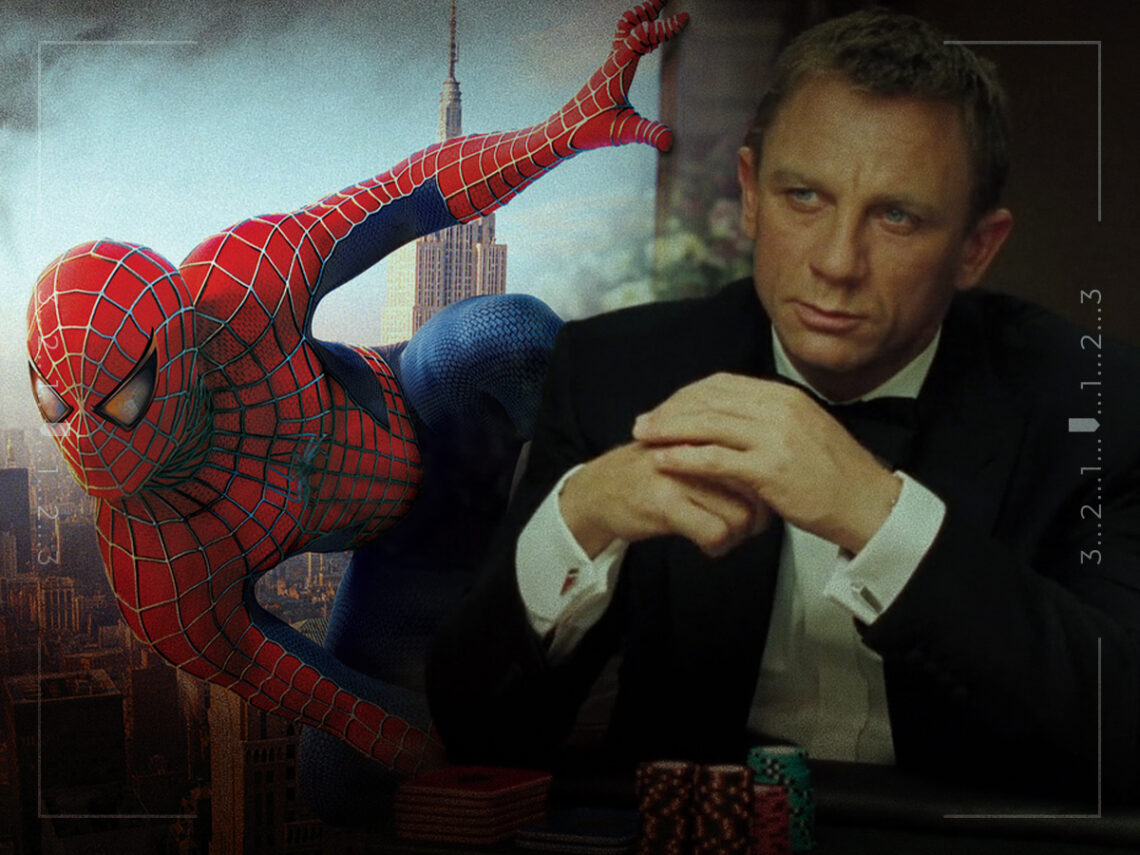
How Spider-Man saved cinema from having two James Bonds at the same time: “Let’s start our own series”

Since Eon Productions was always so adamant that James Bond would never involve prequels, spinoffs, TV shows, and the rest of the bells and whistles that come with franchise filmmaking, you can only imagine how the company’s heaviest hitters reacted behind closed doors to potentially having another 007 on the scene.
It had already happened once before, when Sean Connery returned in Never Say Never Again in the same year that Roger Moore headlined Octopussy, and Cubby Broccoli was so angry at another studio infringing on his territory that he considered going out of his way to sabotage the movie out of spite.
The official rights holders continue to pretend that Connery’s swansong never happened, and it lingers as the long-running spy saga’s red-headed stepchild. Along similar lines, the animated James Bond Jr was only allowed to happen to prevent that pesky Kevin McClory from doing the same thing again, this time on the small screen.
However, not only did it almost happen a third time, but it was the most ambitious gambit yet; once McClory’s ten-year restriction on doing anything with his rights expired in the early 1990s, newly-appointed Sony chairman John Calley realised that his studio was sitting on the rights to Casino Royale, hatching a plan that seriously irked Michael G Wilson.
“When John Calley went over to Sony, he knew that there was a problem with Kevin McClory from when he was working at MGM,” the producer recalled. “So he went and he said, ‘I can get the McClory rights. You guys at Sony have Casino Royale, right? Let’s start our own series, because with two novels we could claim a series, right? You’ve got series rights’. So we had another lawsuit.”
Technically, with two novels in his arsenal, Calley was within his rights to start a James Bond franchise of his own, regardless of how confusing it would have been for audiences to have two separate strings of blockbusters from two rival studios with two different actors playing the same character. Still, legal action was filed, and Wilson didn’t even try to hide his disdain.
“John Calley is a legend and all that, and, of course, we didn’t get on with him,” he admitted. Calley was a key figure in reviving the flagging 007 brand with GoldenEye when he was at United Artists, and after defecting to Sony, he tried to use his familiarity with Bond and its small print to get one over on Eon.
MGM and Sony both held certain rights to Spider-Man, who’d never been the subject of a feature-length blockbuster at the time. To resolve the dispute, the former paid the latter $5 million to assume complete control of Bond, in return for abandoning any claims it had to the iconic superhero, clearing the path for the latter to ramp up pre-production on what would become Sam Raimi’s 2002 picture.
Seven of Sony’s ten highest-grossing movies of all time have Spider-Man in the title, with the character’s solo films in both live-action and animation earning north of $9 billion from cinemas, so it’s an understatement to say that the outfit has done pretty well out of sacrificing 007 for the greater good.
