


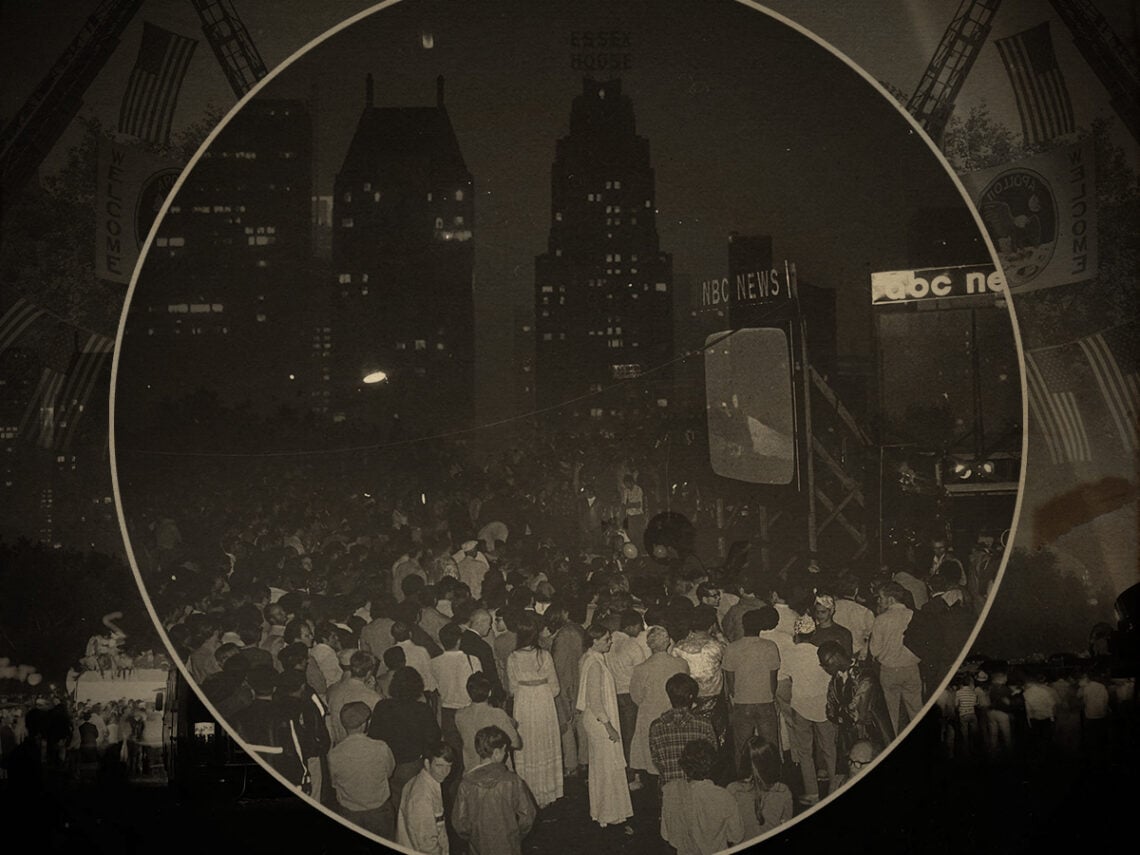
The soundtrack to history in the making: Remembering the Moon Landing party in Central Park

“We choose to go to the moon,” declared John F Kennedy during a 1962 speech. “Not because they are easy, but because they are hard.” Within a few short years, the president would be dead, but his dream of putting American men on the moon had been realised.
Humanity has always fostered a desire to conquer the cosmos, and back in 1969, the United States did just that. With a backdrop of Cold War conflict, anti-war protests, and civil rights struggles, the Apollo 11 landing managed – if only for a fleeting moment – to unite the world under a common fascination with the world beyond our atmosphere.
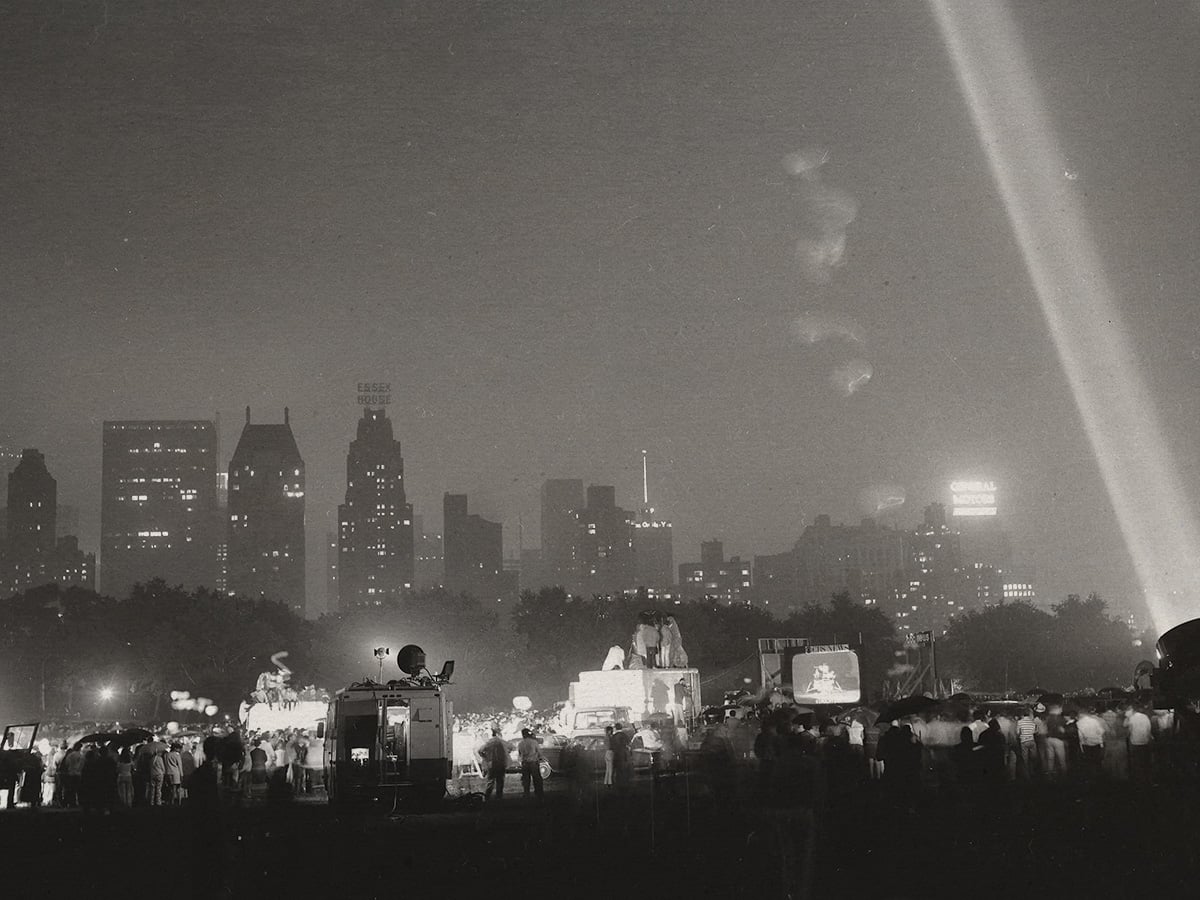
All over the United States and beyond, crowds congregated around radios and television sets in order to catch a glimpse of the landings’ broadcast; to see Neil Armstrong become the first man to set foot on land outside our Earthly atmosphere and give his famous – and famously misquoted – “One small step for a man,” speech. In New York City, for instance, thousands of people gathered within the leafy surroundings of Central Park to watch and celebrate this era-defining moment.
Throughout that ‘celestial-celebration’, The New Yorker was on the ground chronicling the events of the day for future posterity, and their coverage now serves as an incredible account of the attitudes on the ground on that fateful day back in 1969. In addition to writing up the stunned conversations and emotions of the hordes of people watching in disbelief as Armstrong stepped out of the Lunar Module, the magazine also showed another, often forgotten aspect of the moon landings.
After all, the United States had poured an incomprehensible amount of effort and money into the Apollo program, with one of the prevailing motivating factors being an opportunity to one-up the Soviet Union. Meanwhile, the streets of New York were rife with poverty, disease, and decay. To the south, lynchings and institutionalised racism were still rife, and even on the East Coast, Black Americans were still forced to fight for their right to exist in a nation controlled solely by the white man.
Inevitably, then, there were vast swathes of the American population who viewed the moon landings with, at best, indifference and at worst, searing resentment. The following year, Gil Scott-Heron penned his infamous ‘Whitey on the Moon’ poem, which perfectly captured the attitude that many had towards the Apollo missions: “I can’t pay no doctor bills, but whitey’s on the moon.”
According to the New Yorker, those attitudes were present in the area surrounding Central Park, too. At one point in its coverage, the magazine focuses on a local bar, in which the television set is being drowned out by the anecdotes and complaints of its patrons, along with the blaring sound of a jukebox.
Eventually, the owner unplugs the jukebox, to the protests of his patrons, with one exclaiming, “We ain’t care nothin’ ‘bout no moon”.
What, then, would those patrons rather be listening to? Although the magazine didn’t give an overly detailed account of the jukebox’s playlist that day, it did highlight two tracks as having been played while the moon landings were broadcast in the background. The first being the Burt Bacharach classic ‘What the World Needs Now Is Love’, performed by The Sweet Inspirations, and the second being ‘Goin’ To Chicago Blues’ – presumably, though it was never confirmed, performed by either Count Basie or Joe Williams.
In all honesty, a better playlist couldn’t have been concocted to soundtrack the moon landings; ‘What the World Needs Now Is Love’ seems particularly pertinent to the divided nature of the United States at that time. For many, the unity that the Apollo 11 mission brought was as close to widespread love and harmony as the decade got, while for others, it only reminded them of just how far US society had to go before love could truly return.
