


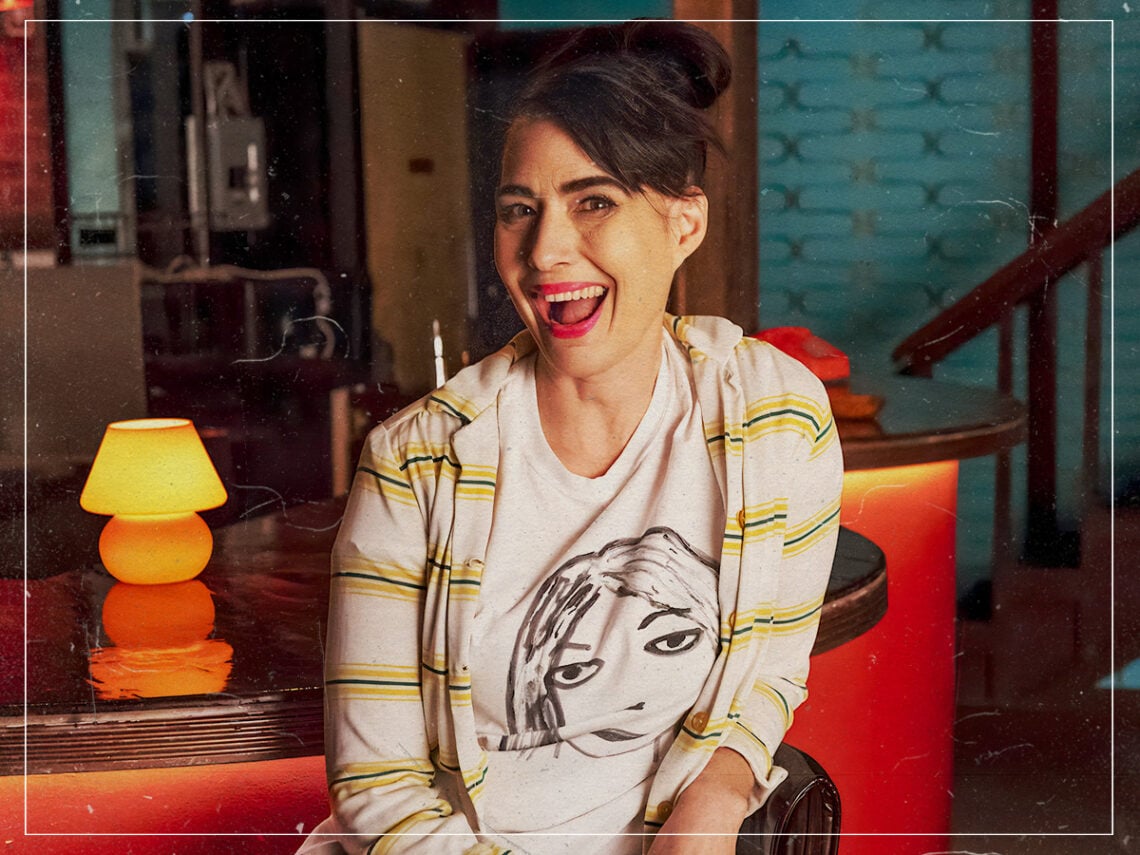
The soul album that changed Kathleen Hanna’s life: “Mixing language and music”

Punk rock has never been a genre known for its subtlety. Whether you’re picking up your very first pop-punk album or going in deep on the hardcore variety of punk, you don’t so much get led into the album as much as you get assaulted with the sound from the minute the tracks start. While Kathleen Hanna has built her career off of making abrasive music in Bikini Kill, one of her favourite albums of all time came from the smooth sounds of Isaac Hayes.
Even though a good portion of people still knew Hayes as the guy who made the theme from Shaft, there was a lot more going on behind the voice of Chef from South Park. Regardless of his ability to make a funky groove when he wanted to, Hayes wanted to tell a story every time he played music, even if that meant drawing out the album to massive proportions.
Just take a look at an album like Hot Buttered Soul. The whole thing is only four tracks long, but when he goes into the opening monologue at the start of ‘By the Time I Get To Phoenix’, you’re hanging on his every word. The lyrics might be changed on the cover songs, and the instrumentation might be muted, but it doesn’t matter when he has you in the palm of his hand.
Instead of singing, most of the time, Hayes sounds like he’s delivering Shakespearean-level dialogue to the crowd. Before you pull out your comparisons to fellow narrator extraordinaire William Shatner, Hayes still manages to balance the singing and the talking, almost serving as the musical appetizer before getting into the real nitty-gritty.
Despite records like Joy being another fixture in his catalogue, Hanna gravitated towards the live album Live at the Sahara, telling Amoeba, “That record totally changed my life because he talks between [songs], like spoken-word style, but he tells these stories. He tells this story about his brother and then goes into ‘Use Me’. It was the first time I saw someone mixing language with music.”
Whereas most punk rockers of Hanna’s generation were looking to drone on about the state of the world, she was inspired to speak on what was happening to her every day. Bikini Kill was always meant to go against the system of male-dominated punks, and even if the songs weren’t the most complicated thing in the world, it wasn’t hard to figure out what she was getting at in ‘Rebel Girl’, calling out the need for feminist beliefs in the greater cultural conversation.
That kind of courage also probably wouldn’t have happened without Hayes, with Hanna saying, “I’ve been in a lot of bands where I talk in between about feminist stuff or political things that are going on, and the most common thing is that men yell at me ‘Shut up and play’. And I’m like, ‘Wow, I’m listening to someone talk and telling these beautiful, funny stories, and no one’s saying [that]. I thought if I could incorporate my stories with music behind it or be really specific, I could utilise it.”
Punk rock crowds are not exactly for being a patient bunch, but Hanna’s way of incorporating that kind of spoken-word material into her songs actually works a lot better over time. After becoming one of the biggest feminist icons of the riot-grrl movement, hearing her talk about these true-to-life stories about her personal experience with feminism is like hearing a wise sage dispensing their knowledge to the rest of the world.
