


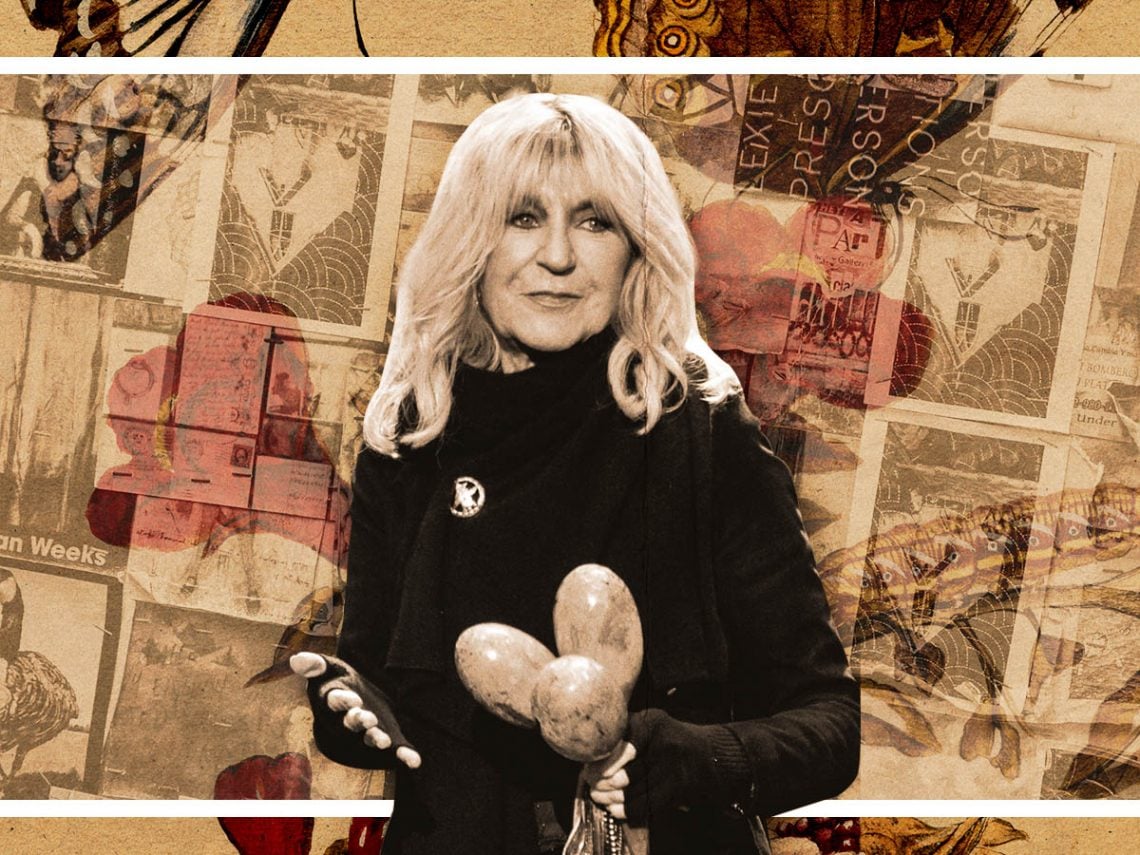
“I’m not good”: The songs Christine McVie could never write

They say it takes 10,000 hours to become an expert at anything. I don’t think there is such a thing as an expert at relationships, but living through the 1970s as a member of Fleetwood Mac will make you the closest possible thing to it. While her involvement in the salacious backdrop of Rumours sometimes goes unnoticed, make no bones about it, Christine McVie’s heart was out in the open on that record as anybody else’s.
Her namesake in the band was the founding member, bass player and her ex-partner, John McVie. Together, their dynamic mirrored that of Lindsey Buckingham and Stevie Nicks—riddled with romantic history, bound together by an artistic purpose and brutally vulnerable as it was poured into one of the most listened-to records in history.
It was a trial by fire for all of the songwriters involved, understanding the inconvenient truth that their art is better when it’s unflinchingly honest. For the song’s purpose to be truly served, their vulnerability had to be poured into it. The stories of the Rumours recording sessions are as fractious as the songs imply, and the subsequent live shows played out like a Shakespearean tragedy.
It sort of bound the artists involved to a future where fans wanted more romantic insights. Unbeknownst to them, they became the relationship gurus to a music listening generation who wanted their deepest desires and most aching heartbreaks understood. As such, we rarely saw McVie, Buckingham or Nicks’ music veer away from that territory and into the more societal. The most we got in the way of difference was a much-needed exploration into the mythical from Nicks, but that was it.
But for McVie in particular, that was fine. Her legacy as one of the most interesting songwriters in history wasn’t crafted from flimsy attempts at societal commentary. Instead, she was a master of the human condition and an astute observer of relationship dynamics. So, naturally, when her solo career progressed through the decades and into the millennium, the crux of her songwriting didn’t change. On her 2004 album In The Meantime, McVie was a little wiser and a little more world-weary, but the crux of her narrative sentiment still spoke to her die-hard fans.
“Well, it’s a relationships album because that’s what I write about,” she told the BBC in 2004. “I can’t write message-y type songs., I run quickly to the nearest vomitorium if I start to try and do that kind of thing, I’m not good at it.”
It’s a suitably self-deprecating answer from a performer who fell into the more modest side of the Fleetwood Mac spectrum. While her biggest hits were predominantly open letters of love, lust and heartbreak, the nuance with which she approached them undoubtedly pits her as someone capable of pulling off something broader. Her ballad ‘Songbird’ still remains one of the most profound lyrical takes in music and has often been used as an anthem for various personal situations, and thus confirms McVie is a writer with more than just one string in her bow.
