


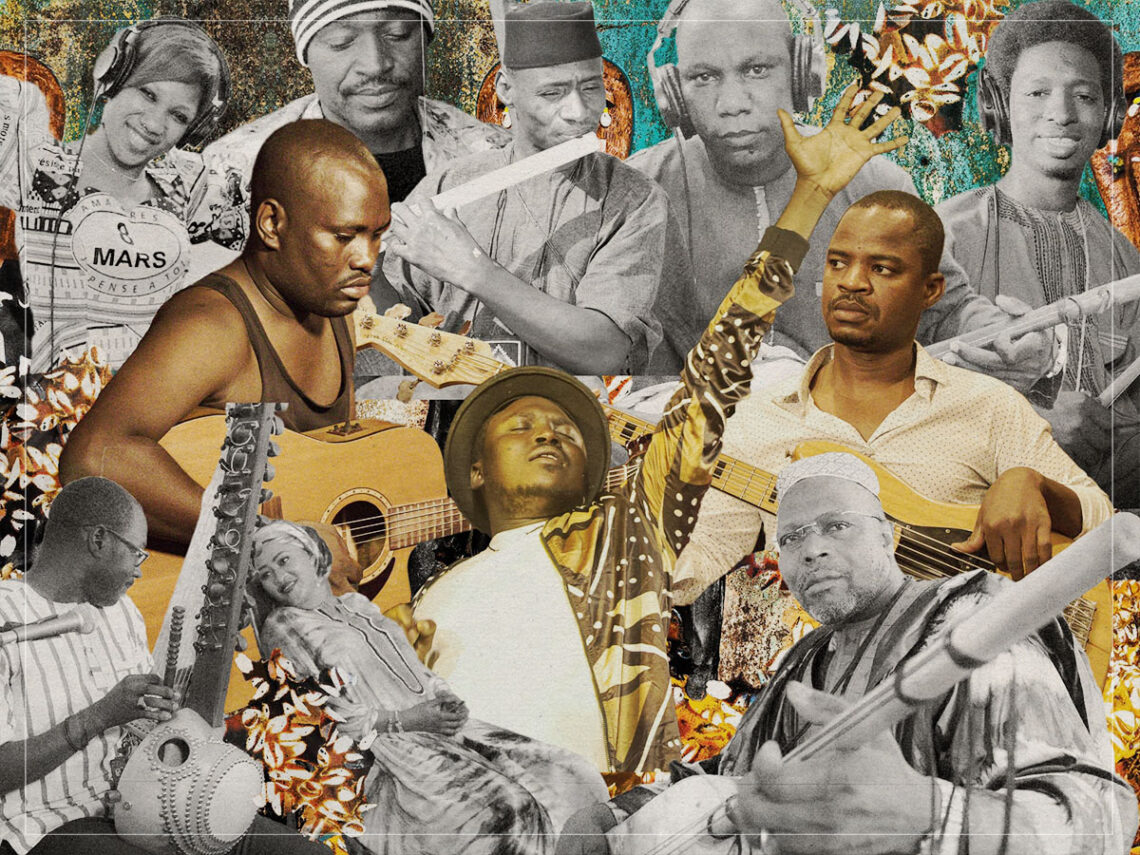
Songhoy Blues – ‘Héritage’ album review: less power, but as vital as ever

THE SKINNY: You might wince at the idea of moving back towards traditional values, considering how much positive progress we’ve made societally in the last century or so, but in some respects, paying homage to the customs of your ancestors can ultimately bring you closer to your culture. On Songhoy Blues’ fourth studio album, Héritage, the Malian desert blues outfit have toned down their frenetic West African interpretation of rock music to deliver an album that functions as a love letter to the country’s rich cultural past.
Displaced from their home in the North of the country due to the civil war that broke out in Mali in 2012, the band settled in their new home in the capital of Bamako, where they were given more access to a wider variety of music that encompassed the traditional music of other ethnic backgrounds. As a much more liberated city, they had the freedom to express themselves through the electrified sounds of desert blues, mixing together elements of Western rock and funk with music from the Saharan region.
However, the group had always wanted to bring things back to the music that they would initially have been exposed to and brought up on in their hometown of Timbuktu, and on Héritage, this sideways step away from the desert blues, or tishoumaren, sees the band focus on a folkier and more acoustic version of their sound without needing to fully reinvent themselves in the process.
This shift towards a more traditional style is something that feels natural throughout Héritage, and the dense but carefully crafted arrangements on the record allow both the band and the featuring guest musicians to fill more space with the warmth of their instruments. Some of the Malian folk musicians that the band brought in to work on the album are regarded as masters of their craft, with Madou Diabaté featuring on kora (a West African hybrid of harp and lute), and balafon player Neba Solo featuring among the guests.
Stripping back their sound is not so much a depletion of what they had before as an expansion, with a greater emphasis on subtle details that allow different instruments to flourish and enjoy a moment in the spotlight. While the lyrics of the songs, sung in the local Songhai language, often deal with the troubles of being displaced from their homes and being in a constant struggle against the ruling powers in their home country, there is still an overwhelming positivity in the band’s music that acts as an antidote to the drab protest music created in the West that focuses more on the negatives rather than as a hopeful voice for change.
Songhoy Blues might have gone through numerous changes in their sound and personal circumstances, but their music is just as vital as ever, and gives a fine insight into the wealth of musical history that Mali has to offer as a nation.
For fans of: Adopting old traditions in an unproblematic way, journeys of discovery, joyful protest.
A concluding comment from a cured bluesman: “I woke up this morning, and I suddenly felt a sense of positivity and quality of life that I’m not sure how to convey through song like these guys manage to.”
Héritage track by track:
Release Date: January 17th | Producer: Paul Chandler | Label: Transgressive Records
‘Toukambela’: The opening track settles you into the new-found gentleness of the band immediately and throws up a variety of instrumentation, with the flutes immediately transporting the listener into the environment to which the album pays tribute. [4/5]
‘Gambary’: Running at a slightly slower pace than ‘Toukambela’, the album continues to throw a broader palette of sounds into the mix without sacrificing the sound that saw Songhoy Blues rise to prominence in the first place. [3.5/5]
‘Norou’: There’s a greater sparseness on this track, but the knotty interplay of the guitars is really put front and centre through tasteful production and mixing, thanks in part to how they’ve stripped everything of the blues rock distortion and allowed the instruments to sing. [3.5/5]
‘Dagabi’: Rhythmically speaking, this one charges along with syncopated elements and features call-and-response vocals that are typical of Songhai music. For those not as well-versed in the traditional music of the region, this is a wonderful way to continue to ease in new elements and offer room for discovery. [4/5]
‘Gara’: All the elements continue to meld together in this song and do so in what feels like such a revitalising and exhilarating fashion. Removing rock elements from their sound might have felt like a risk, but it doesn’t hinder them at all. [3.5/5]
‘Boutiki’: Starts more reserved than other songs, but some cheeky vocal interplay leads to all instruments dropping out before the bass and lead guitar slink their way back in. The harmony work is stronger here than on any other point in the record, most likely due to how simple everything around it is kept. [4/5]
‘Boroterey’: The slide guitar and flute make this a beautiful track to have around the midway point, one that offers a contemplative feel and an opportunity to experience the warm embrace of the desert. [4.5/5]
‘Batto’: This is the first track on the album to feature a ripping guitar solo, and while the rest of the arrangements are a little more reserved than some of the previous tracks, it’s brought to life by the virtuosic lead break. [3.5/5]
‘Garibou’: If the point of the record is to bring together disparate influences, then the inclusion of a full drumkit as opposed to the calabash percussion featured on the rest of the album gives this track more of a modern flavour, and this track is the closest-sounding to earlier Songhoy Blues that the album has to offer. [3.5/5]
‘Woyhenna’: As one of the softest tracks on the album, it feels like the record runs out of steam a little bit by this point. It’s pleasant, but it doesn’t offer a huge amount more that hasn’t already been introduced elsewhere on the album. [3/5]
‘Issa’: Closing the album is the most blues-heavy track on the album. It’s playful but at the same time, feels like an outpouring of all the emotions collected on the album and is a profound expression of love for Malian culture. [4/5]

Never Miss A Beat
The Far Out New Music Newsletter
All the latest New Music from the independent voice of culture.
Straight to your inbox.