


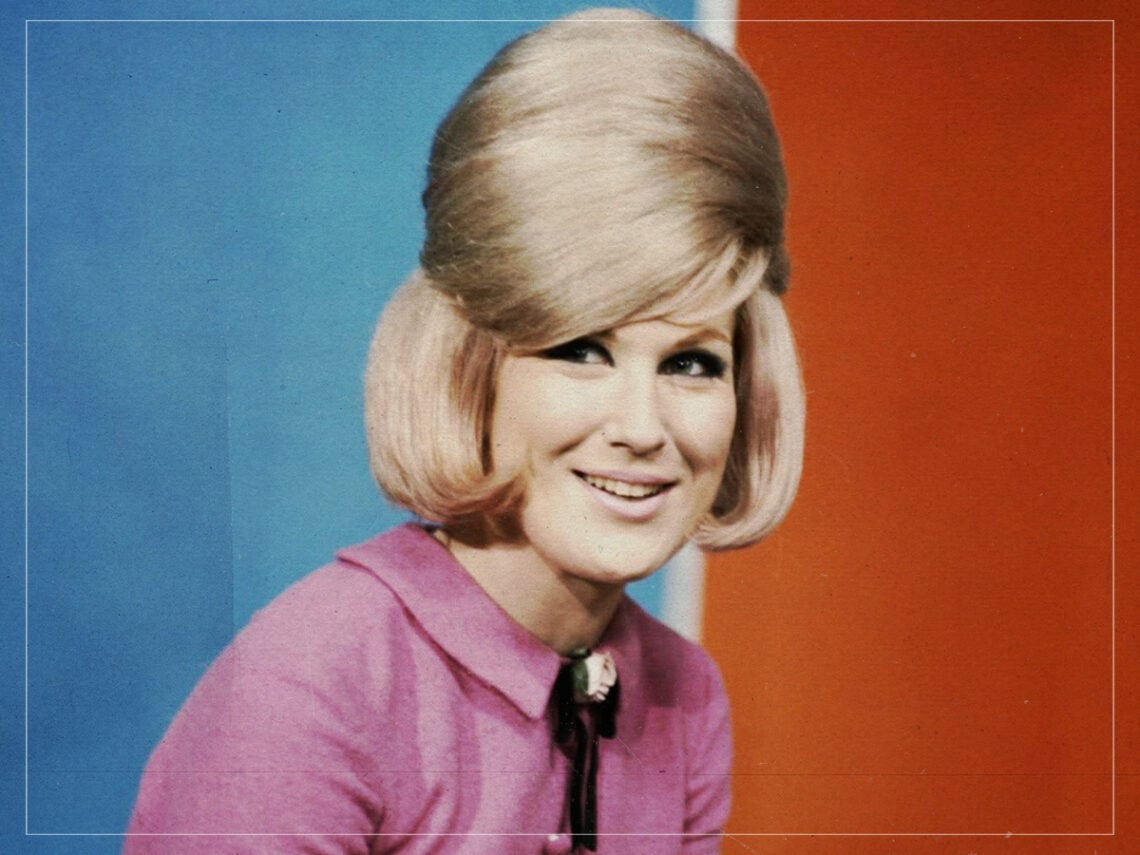
‘You Don’t Have to Say You Love Me’: the song that turned Dusty Springfield into an icon

If you grew up in the decades after Dusty Springfield’s prime 1960s hit-making peak and maybe first heard her on oldies radio singing ‘Son of a Preacher Man’, you probably also had that familiar moment when you discovered, or were informed, that you were listening to a white English woman whose real name was Mary Isobel Catherine Bernadette O’Brien.
Dusty’s soulful mezzo-soprano voice didn’t match her girl-next-door looks and beehive hairdo, but she ultimately became one of the defining icons of “Swinging London”, powered into superstardom by a string of radio hits and numerous television specials.
Between 1963 and 1965, singles like ‘I Only Wanna Be With You’, ‘Wishin’ and Hopin’’, and ‘I Just Don’t Know What to Do With Myself’ had already made Springfield a household name on both sides of the Atlantic, but an unlikely cover (or arguably a bastardisation) of an Italian torch song really elevated her to a completely different level in 1966.
Released on March 25th, 1966, just two weeks after it was captured in the recording studio, ‘You Don’t Have to Say You Love Me’ became the biggest hit of Dusty Springfield’s career, reaching number one in the UK and number four in the US. Sixty years later, it also still stands as arguably the greatest showcase for Dusty’s booming, emotive voice.
As effortless as it sounds on record, and in some live televised versions, Springfield wasn’t the type to waltz into a studio and lay down a vocal in one take. The sessions for this classic, in fact, were somewhat notorious, as Dusty became extremely frustrated with the acoustics at London’s Philips Studios, eventually moving herself into the building’s stairwell to try and get a better sound. After nearly 50 takes, she somehow laid down the legendary performance that made ‘You Don’t Have to Say You Love Me’ one of the defining statements of her career.

As further evidence of how much faster the music business could move back in the mid-1960s, even the lyrics to ‘You Don’t Have to Say You Love Me’ were essentially hot off the presses when they got to Springfield in the studio.
Because the music itself was lifted from the 1965 Italian hit ‘Lo Che Non Vivo (Senza Te)’ by Pino Dinaggio, the presumption was that somebody at the Philips offices would also translate the original lyrics into English. Instead, the job fell haphazardly to Springfield’s friend, TV producer Vicki Wickham, along with songwriter Simon Napier-Bell, who had just started managing The Yardbirds.
Wickham and Napier-Bell had no knowledge of the Italian language, nor did they find it worth their while to acquire an Italian-to-English dictionary. And so, while the general heartbreaking mood of the original song was retained, the message effectively shifted 180 degrees. Whereas the Italian version, sung by a man, suggests the usual cliché of the singer not being able to live without his lady, Dusty’s is a fresh take from the woman’s perspective, basically telling the guy that it’s OK if he’s not into her long term; she’ll be fine.
Well, maybe not “fine,” exactly, as she does suggest life will seem “dead and so unreal” if he leaves her, but nonetheless, “I’ll never tie you down.”
In the fantastic, horn-boosted conclusion of the song, the original parting line of “sei mia, sei mia” or “you’re mine, you’re mine” is also replaced with “Believe me! Believe me!”. It’s a desperate pleading message that Dusty, stuck in her stairwell, managed to nail with an amazing combination of otherworldly vocal power and genuine vulnerability. Her skills could no longer be doubted: she was the queen of pop in 1966.
