


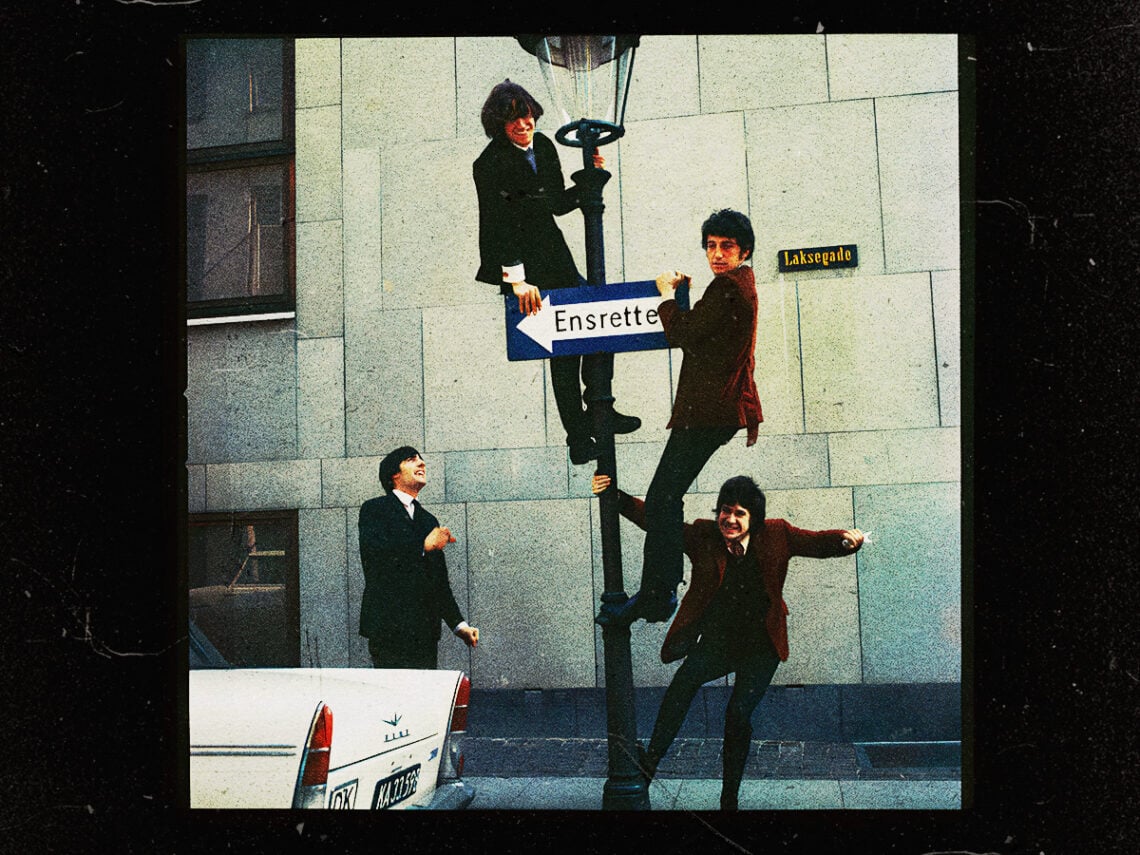
‘You Really Got Me’: The song that saved rock ‘n’ roll before it truly began

Lodged in the FBI vault is a letter from a former Army Intelligence Service officer to FBI director J. Edgar Hoover from 1956 about a certain Elvis Presley. In it, the reconnaissance states: “[Elvis is] a definite danger to the security of the United States.” It continues to analyse what was learned from attending one of his lurid rock ‘n’ roll performances: “[His] actions and motions were such as to arouse the sexual passions of teenaged youth. One eye-witness described his actions as ‘sexual self-gratification on stage’ – another as ‘a strip-tease with clothes on’.”
Before troublingly concluding: “It is known by psychologists, psychiatrists, and priests that teenaged girls from the age of eleven,” which strictly doesn’t even make them teenagers, “and boys in their adolescence are easily aroused to sexual indulgence and perversion by certain types of motions and hysteria, – the type that was exhibited at the Presley show. There is also gossip of the Presley Fan Clubs that degenerate into sex orgies. From eye-witness reports about Presley, I would judge that he may possibly be a drug addict and a sexual pervert.”
So, it comes with great irony that the very same vault includes a 663-page report on “Presley, Elvis A” from just 15 years or so later. Within that, we learn that the King “thought the Beatles had been a real force for anti-American spirit”. He was also “of the opinion that the Beatles laid the groundwork for many of the problems we are having with young people by their filthy unkempt appearances and suggestive music”.
Somehow, in mere years, Elvis went from being the main proprietor of ‘The Devil’s Music’ to a concerned citizen scoffing at the scruffy state of rock ‘n’ roll.
From this, we perhaps learn that his hip twisting wasn’t as revolutionary in the perfunctory sense as what soon followed. In truth, sex might have been liberated by the greased-up rockers of the 1950s, but it was done so with traditions intact. For a while, this continued in the 1960s. While Paul McCartney might have said that ‘I Wanna Hold Your Hand’ implied a whole lot more, anything else was purely implied nonetheless.
Yes, it seemed like rock ‘n’ roll was being wrestled away from the revolutionaries just as it was getting going and steered towards more of a safe Motown method. Then Dave Davies, like a mad delinquent, took a razor blade to his amp and invented distortion, which vivified ‘You Really Got Me’ with a raucous energy. Much has been said about how that roaring sound helped to develop heavy metal, but more pivotal than that was how it saved rock ‘n’ roll from a more sedate status before the 1960s had even really got swinging.
The track is filled with rage and sexual energy—with good reason, too. The distortion mimicked the rage that Dave Davies felt when he idly took a razor blade to his amp, apparently for no reason, but perhaps his girlfriend’s parents preventing them from marrying might have had something to do with it. The desire is borne by Ray Davies, who was incapacited by beauty while he was playing on stage.
He told Q magazine: “I was playing a gig at a club in Piccadilly and there was a young girl in the audience who I really liked. She had beautiful lips. Thin, but not skinny. A bit similar to Françoise Hardy. Not long hair, but down to about there [shoulder lenght]. Long enough to put your hands through… [drifts off, wistfully]… long enough to hold. I wrote ‘You Really Got Me’ for her, even though I never met her.”
Although this was how people were feeling at the time, few songs reflected it. However, The Kinks didn’t care about putting out a single safe for the radio—they wanted something more than that. Once again, this is ratified by the song’s constitution. The band were instructed to play a slower, more polished blues version when they were in the studio, but Ray Davies rallied against it. He wanted it to capture the rebellion of the live version. When Dave Davies played it to his girlfriend, and she said it didn’t make it want to “drop her knickers”, the old blues were out, and the new blues were in.
Shortly after the track’s release and its riotous success, other bands began to jump on the delinquent bandwagon, giving the youth what they wanted without any thoughts of the past. Bold and defiant, the future of rock was illuminated by the sheer simplicity of the singularly ugly ‘You Really Got Me’, the first masterpiece of its kind.
