


Something about the bread: the song coded in Leonardo da Vinci’s ‘The Last Supper’

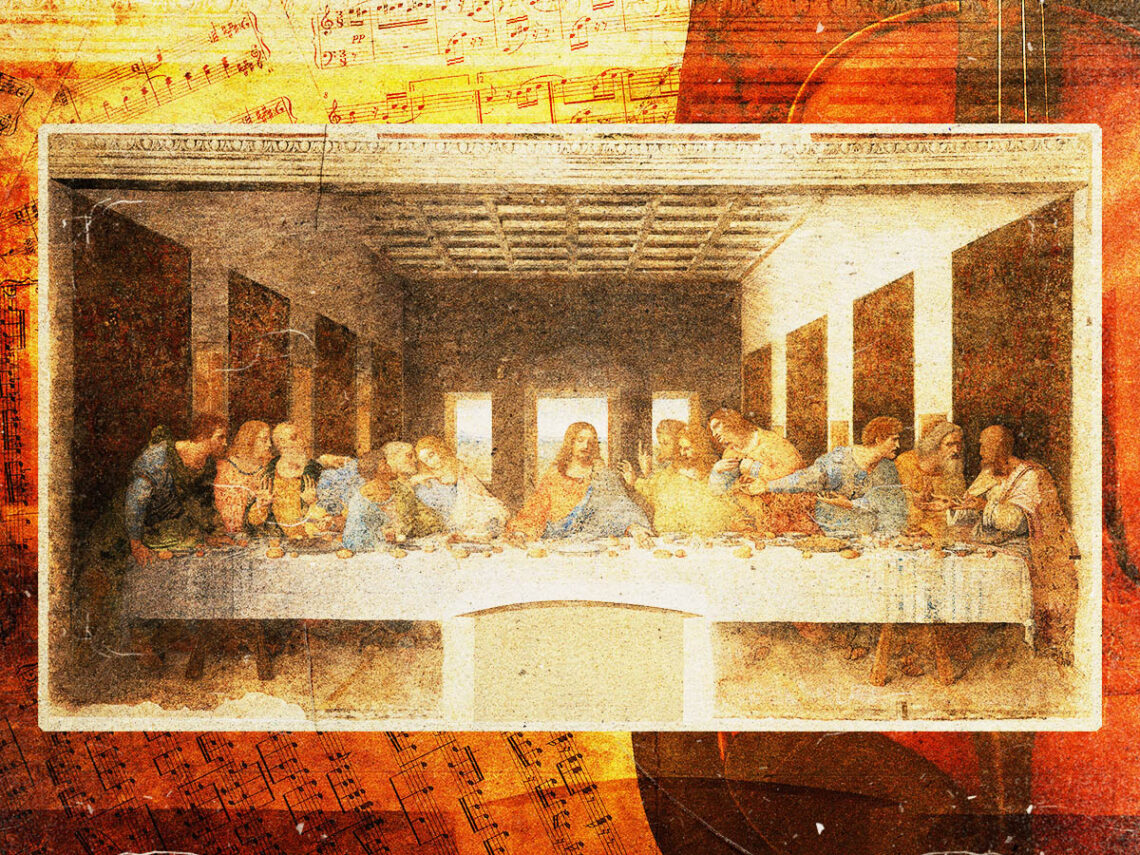
‘The Last Supper’ mural by Leonardo da Vinci holds an essential and undeniable omnipresence. It dominates religious imagery, but its standards of harmonious composition, space and perspective have inspired the likes of Salvador Dalì, Andy Warhol, and Madsaki. It depicts Jesus and his 12 apostles sharing their last meal, with bread and wine galore.
However, a new layer has been uncovered in this iconic artwork. A song to accompany the tenseness of the mural when Jesus’ followers discover that one of them will betray him. Among the numerous conspiracy theories around this work, the latest offers an insight into the multidisciplinary talent of Da Vinci.
Giovanni Maria Pala, a doctorate candidate at Magdalen College, Oxford, is an avid researcher of Da Vinci, having pursued and analysed ‘The Last Supper’ since 2003. As a musician, Pala wanted to dig deeper, becoming consumed with the proportions and hidden measurements. Following his discovery, Pala’s book ‘Leonardo: The Ultimate Secret’ contains the mathematical workings behind the mysterious, almost funerary hymn.
Da Vinci’s musical talents and interests are often overlooked compared to his accomplishments in science and art. However, he was a talented composer and invented a lyre in the shape of a horse’s head, among other instruments. Many have struggled to build his instruments while working from his sketch. However, his symphonies are now even rooted deep in his historic mural.
His paintings and works of Da Vinci have been the prey of many conjectures following Dan Brown’s book ‘The Da Vinci Code’, a controversial work, with critics questioning the historical accuracy and religious narrative against the Catholic church. However, Pala pointed out that his findings and discoveries do not seek to sully the name of the Catholic church but rather serenade it. “It sounds like a requiem,” he said, “It’s like a soundtrack that emphasises the passion of Jesus”.
The symbolic bread on the table was noticed by Pala, a gift from God in Christianity. Jesus split bread to feed a crowd, thus depicting sharing. He pointed out the musical harmony interwoven in Da Vinci’s painting, saying, “Where you have harmonic proportions, you have music”. The 40-second requiem is an excellent representative accompaniment to the artwork – incorporating almost negative space into music. The pauses in the requiem overhang the impending circumstances in ‘The Last Supper’. However, Da Vinci’s notes had to be read from left to right in his authentic style. A Da Vinci expert, Alessandro Vezzosi, commented on Pala’s discovery, saying it was “plausible”.
‘The Last Supper’ is the earliest painting to contain a sort of multimedia. The tradition of adding a musical accompaniment to the art convergence of the two has been unconsciously continued. Da Vinci blurred the boundary between art and music centuries ago to create an immersive experience ahead of his time.
