


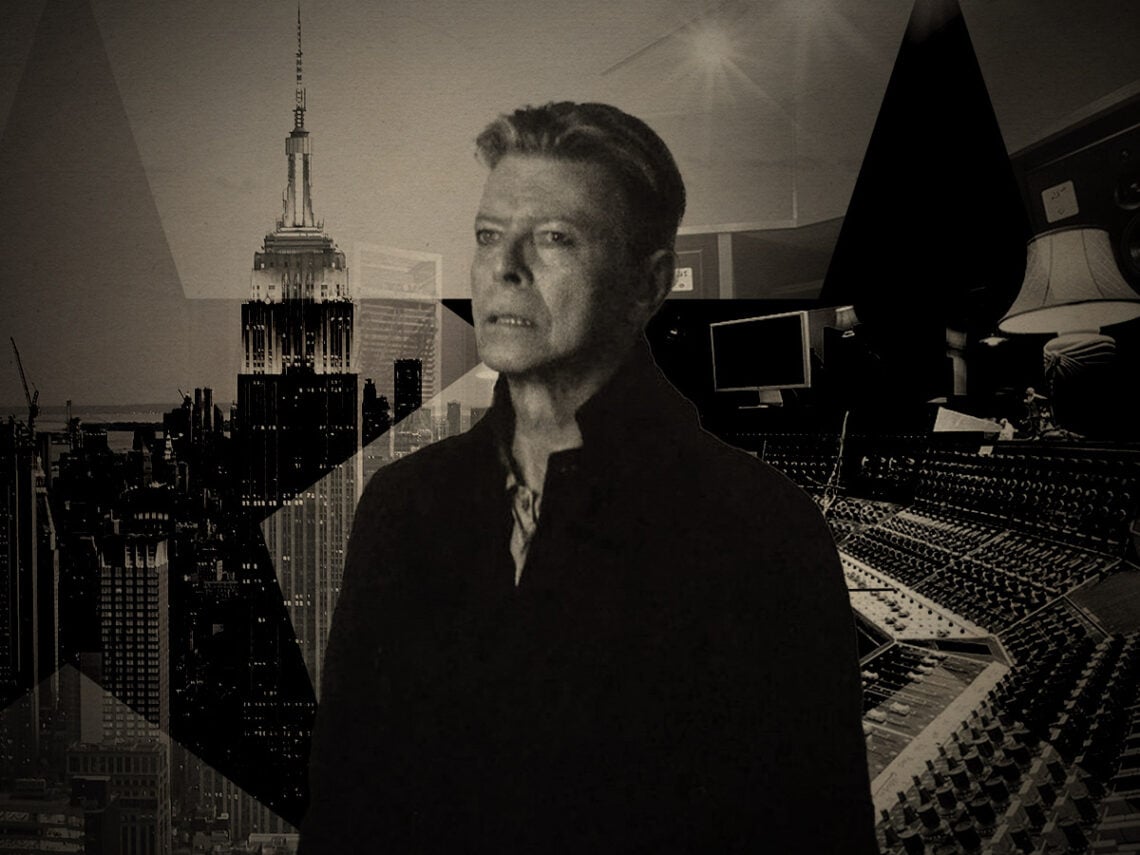
The Magic Shop: The SoHo studio where David Bowie spent his final years

Everything you read about David Bowie makes him feel less and less human. He was far more of an ethereal spirit.
That worked in charming, beguiling, and often serendipitous ways throughout the entire course of his career, with examples too many and massive to name. Yet it was his one final act of sorcery that really sealed the deal, with his last secret lair of musical concoction vanishing almost just as he did.
If there was any place which defined the final years of Bowie’s life, there is no shadow of a doubt that New York comes to the foreground. It was the city he retreated to when he could no longer handle the gruelling task of heavy touring in the mid-2000s, and the environment that, unconventionally as ever, became his retirement village of sorts.
Yet all that changed in 2011 when, almost out of the blue, Bowie became suddenly reinvigorated by a sonic persuasion that he had to scratch and explore. The result was his final two albums – 2013’s The Next Day and the swan song of Blackstar in 2016. Much can be said about the process and creation of these records, but to do so would be missing one essential ingredient: The Magic Shop.
No, this was not the place for the typical sleights of hand and wondrous feats that could be achieved by any jobbing magician on the block, although, come to think of it, it’s quite an apt description for what did happen. But The Magic Shop, in this instance, was a small SoHo studio nestled just a few blocks from Bowie’s home.
It was therefore the perfect place to harbour those final two albums, almost hidden in plain sight from the world but acting in utmost discretion as to what the music would hold. That notion became all the more pertinent after it transpired that Bowie was dying from cancer, information he kept in the strictest possible quarters. But the studio kept his secrets safe.
Although tragic in its own way, it was poetically fitting that when the Starman died only two days after the release of Blackstar in January 2016, the sense of loss was so powerful that it simply couldn’t carry on without him. By only two months later, in March of that year, The Magic Shop was forced to shut its doors.
Say what you want about the state of the economy and SoHo rent prices, but the fact that Blackstar was the final ever album to be recorded there in its storied history evoked something incredibly profound about the lasting legacy Bowie left behind. For a time, he was the true beating heart of New York. So when he left, part of it did too.
That whole chain of events spoke volumes about the ethereality, electricity, and magnitude that the final overtures of a man like Bowie created in the world. He may have carried out the process in secret, but the impact it created when let out into the world was nothing less than a lion’s roar. There’s simply no way anyone can ever replicate that.
