


‘The Virgin Suicides’: Sofia Coppola turned personal tragedy into one of her greatest movies

Ever an expert at capturing a distillation of the melancholic and sentimental feminine, filmmaker Sofia Coppola employs her artistic integrity and passion for emotional storytelling within her filmography to create solemn indie-style features. Though her career is widely revered, the director made perhaps her biggest splash with the 1999 film The Virgin Suicides, adapted from American author Jeffrey Eugenides’s debut novel of the same name.
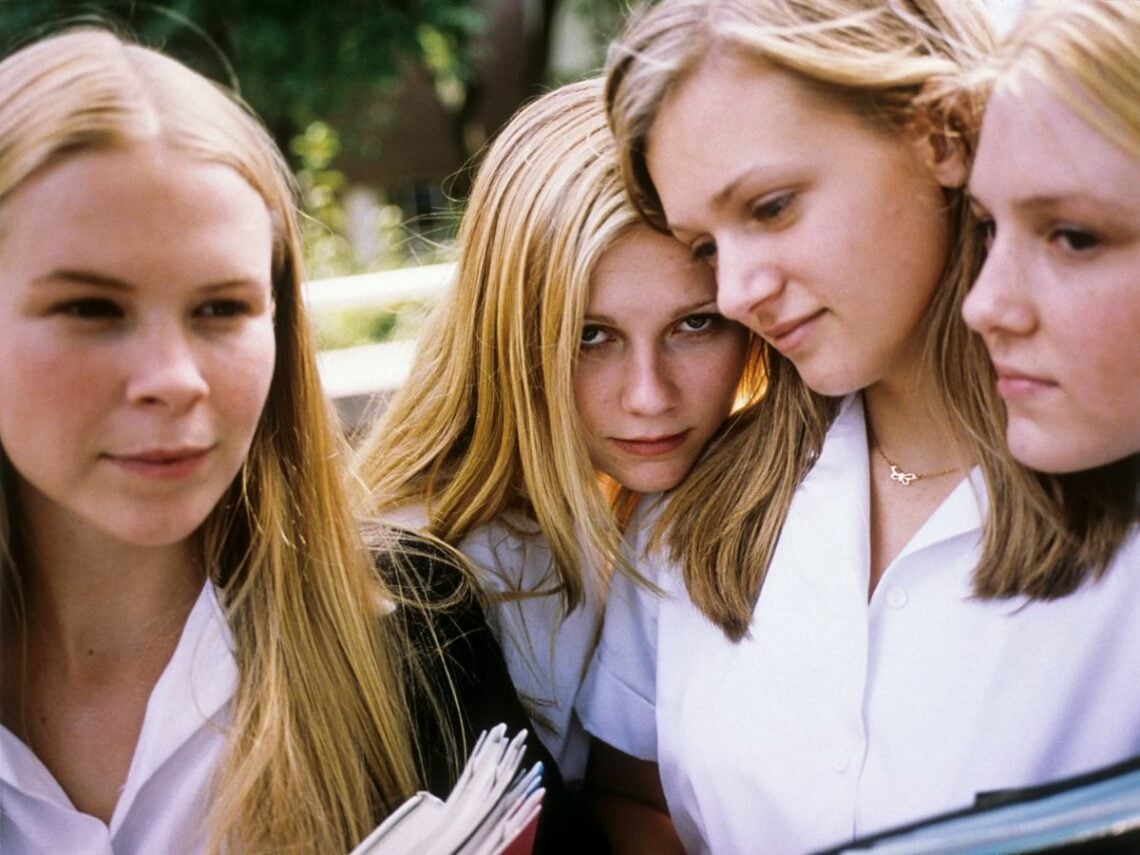
The Virgin Suicides stars James Woods, Kathleen Turner, Kirsten Dunst, A. J. Cook, Hanna R. Hall, Leslie Hayman and Chelse Swain as a traditional suburban American family who are rocked by the suicide attempt of the youngest member Cecilia. Following the attempt, the sisters are monitored closely and scrutinised by their religious, overprotective parents. This change leads to some depressive and isolated behaviour. Josh Hartnett appears as a neighbour close to the sisters in age who becomes fascinated with the girls to provide a noted degree of tension from which the movie hangs.
Coppola’s film recruits and upholds the sentimental indie filmmaking manifesto by showcasing a surreal and artistic visual palette. She combines this with the sensitive subject matter to orchestrate a touching watch that tugs on the audience’s heartstrings but still dives deep into the desire for artistry.
The Virgin Suicides presents its challenging plot delicately, immersing its concepts in slow-paced editing, humanised and emotional based shots, all designed with relaxed and calming colours that read almost as a lullaby. Its story and exposition draw the viewer in and accentuate their senses and emotional responses through this attentive design and narrative.
Not only is the film touching and personally tragic in plot events, film style and audience engagement, but the intention and context behind the story on the director’s part further establish this sense of a complex emotional landscape. Writing for The Guardian in 2018, Coppola shared her experience with writing and directing the film, stating: “When I was in my mid-20s, I came across The Virgin Suicides. I remember seeing the cover – it was just all this blonde hair. I read it and loved it. It felt like Jeffrey Eugenides, the writer, really understood the experience of being a teenager”.
“The longing, the melancholy, the mystery between boys and girls. I loved how the boys were so confused by the girls, and I really connected with all that lazing around in your bedroom,” she added. “I didn’t feel like I saw that very much in films, not in a way I could relate to.” However, the director aligns this vision of designing a visceral experience loaded with thematic values and emotional influences with a personal tragedy that ties in with family loss at a young age and the turbulent path it can set an individual on”.
The director continued: “I made The Virgin Suicides, my first feature-length film, a little later. Although I didn’t realise it at the time, it was personal. When I was 15, my eldest brother Gio died suddenly in a boating accident,” Coppola shares her heartbreaking experience that fuels the emotional merit of the project. “This gave me a connection to The Virgin Suicides, which is also about loss.”
Considering its tragic personal investment and the overall harrowing essence, The Virgin Suicides had to be a film that dignifies the American adolescent experience of struggle for identity and control of emotions through a compelling stylised palette and terrific performances. The film is detailed and rich in its presentation. Still, it maintains its delicate and dream-like aura, representing the all-American teenage girl in a moving snapshot that mirrors painted artwork.
“Often, movies about teenagers are dumbed down with cheap photography. There aren’t a lot of quality art films made for young audiences,” Coppola shares, expressing this intention of creating something powerful and sincere for a teen audience. “But I wanted to treat them with respect, to look properly at that deep, emotional time. Because I was still in my 20s, the idea of school wasn’t far away.”
