


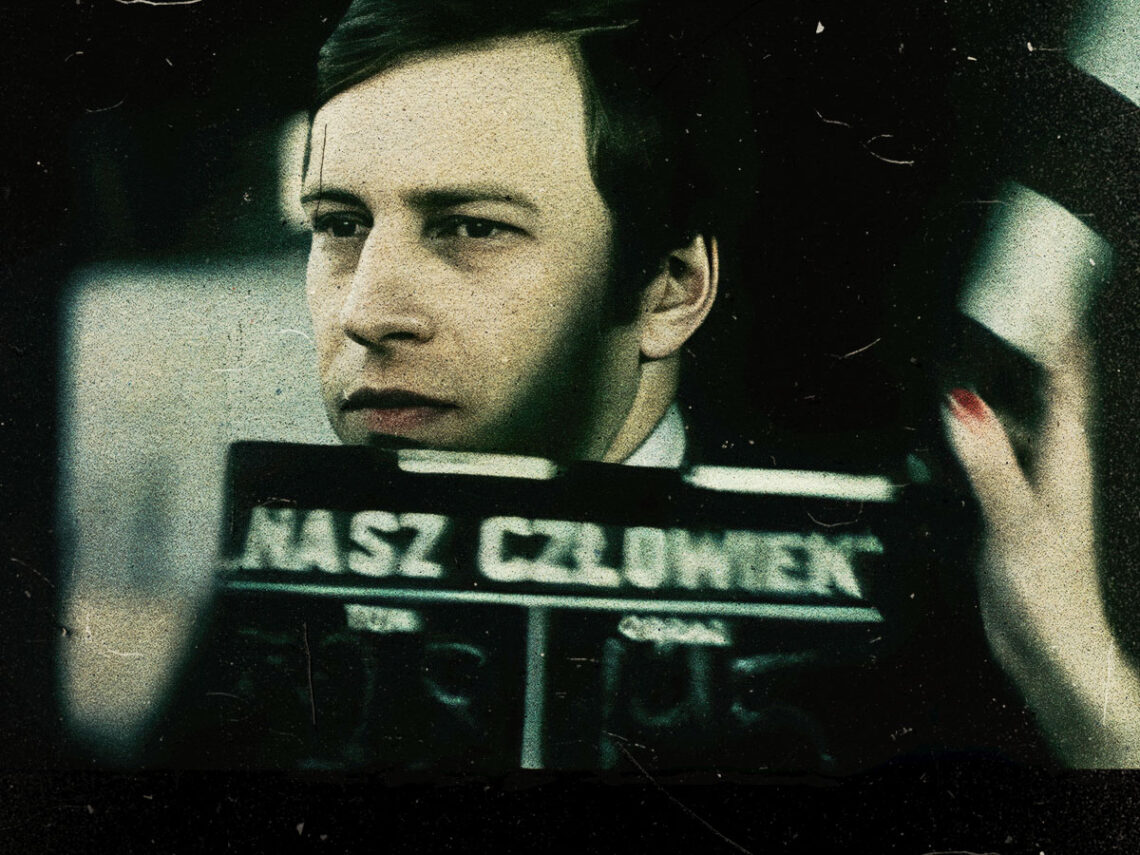
‘Slate’: Krzysztof Kieślowski’s blooper reel

While most directors contribute to the evolution of cinema in some way or the other, very few pioneers change the medium forever. Polish auteur Krzysztof Kieślowski should definitely be counted in the elite ranks of the latter, revered in the film community for his unforgettable masterpieces such as the Three Colours trilogy and Dekalog, which have left an indelible mark on the extensive history of cinema’s glorious trajectory during the 20th century.
Born in Warsaw, Kieślowski initially wanted to become a theatre director, but he eventually became interested in documentary filmmaking which proved to be an interesting entry point. Of course, The Double Life of Veronique director would produce his greatest works in the domain of fiction, using fascinating philosophical frameworks to explore the rugged topography of the human condition. The editing process, and the conflict between reality and cinema, remained integral to Kieślowski’s thought process.
In an interview, he once said: “I think life is more intelligent than literature. And working so long in documentaries became both a blessing and an obstacle in my work. In a documentary, the script is just to point you in a certain direction. One never knows how a story is going to unfold. And during the shoot, the point is to get as much material as possible. It’s in the editing that a documentary takes place. Today, I think I still work in the same way. What I shoot isn’t really the story – the footage just contains the elements that will make up the story. While shooting, details which weren’t in the script are often thrown in. And during the editing process, a lot is cut out.”
While talking about the importance of arranging a story in a particular way to suit cinema’s visual language, Kieślowksi added: “For me, the script is key because it’s the means to communicating with the people I work with. It may be the skeleton, but it is the indispensable foundation. Later, many things can be changed: Certain ideas may be eliminated, the end may become the beginning, but what’s between the lines, all the ideas – that stays the same.”
Although Kieślowski’s mastery over film editing can be seen in all his finest films, one of the most interesting examples of this is his 1976 work Slate. Designed as a blooper reel consisting of hilarious outtakes from his shoots, Kiéslowski uses his editing skills to create a unique rhythm revolving around the sounds of clapperboards. In doing so, he not only generates a strange commentary which reflects on the filmmaking process itself but a genuinely hilarious compilation.
Those who are familiar with Kieślowski’s oeuvre will know that comedy was never a familiar genre for the Polish director, who was deeply interested in an overwhelmingly bleak vision of the world. Even though Slate is a deviation from his recurring artistic curiosities, it somehow feels like the logical conclusion of his beliefs as well. Ranging from a dog being terrified by the sudden noise of a clapperboard to repetitive takes of actors messing up, which reveal the inherent absurdity of the filmmaking exercise, Slate is truly something else. It immediately makes you wish that all other directors had created something similar.
Watch the film below.
