


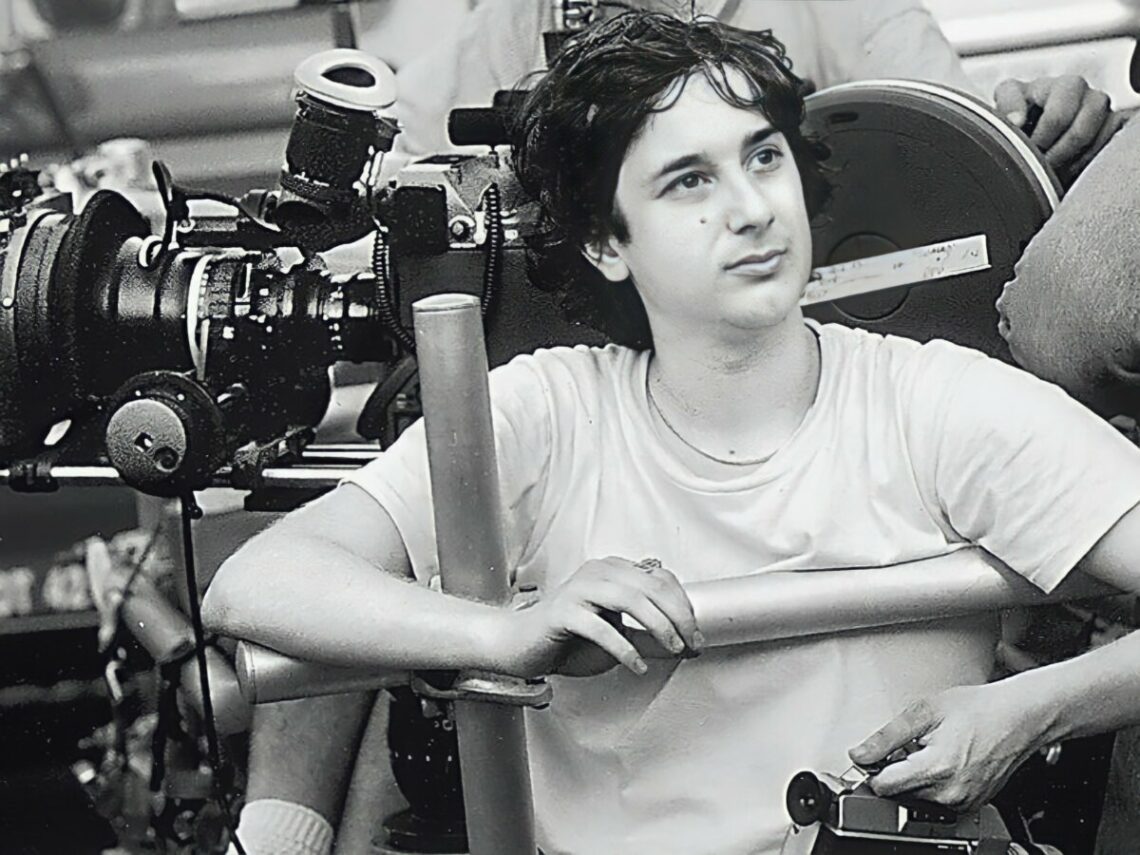
How skate culture influenced the early work of Harmony Korine

The works of Harmony Korine often focus on the downcast members of American society, certainly his films of the late 1990s, such as Gummo and Julien Donkey-Boy, which both present their narratives through unconventional means. At heart, though, Korine has been an out-and-out skater since his youth and his early work is certainly influenced by skate culture.
Korine’s childhood saw him move from Bolinas, California, to San Francisco, to Nashville and eventually to New York City, where he lived with his grandmother. The allure of San Francisco in the late 1980s was always strong, though, and Korine spent many of his teenage summers in the Bay City “skateboarding and living on rooftops”.
He’d become interested in film at a young age when his father showed him how to use a Bolex camera and who introduced him to the works of several prominent directors, including Werner Herzog and John Cassavetes. However, for a while, Korine’s biggest passion was skateboarding, not only the physical activity but the entire culture that surrounds it.
In fact, it was skateboarding that, in many ways, informed the early work of Korine, particularly his debut feature film, 1995’s Kids, written by Korine and directed by Larry Clark. The film is very much a document of the skate culture that seemed to have a grip on many American youths in the mid-1990s.
But there was a violence in the culture that seemed to be alluring to Korine, something we can certainly see in some of his films. He once told Vice: “Skateboarding in the late 1980s/early 1990s in the South wasn’t something that most people aspired to do. It was much more looked down upon. We were spat at all the time, and fights were a daily occurrence. At the same time, it was fun.”
Korine added, noting how he made the decision to focus his talents elsewhere, leading to eventually filmmaking, “Skateboarding got really technical and stairs and handrails and stuff, and I just knew I wasn’t ever going to be good enough to turn pro or have a career. It wasn’t that I lost interest; I just began to feel that it wasn’t my lot in life.”
Korine began making movies in high school and developed an interest in making a career in the movie industry. It was in New York City that Korine eventually got his first chance, though, but it still came through being a skateboarder and just generally hanging out with fellow skaters.
He met photographer Larry Clark whilst skating in Washington Square Park, and the two discussed the idea for a film. Clark told Vice: “One day, I was in New York in Washington Square Park with my skateboard, and I had my Leica, and this kid came up and sat down next to me and said his name’s Harmony Korine. He said something about the Leica and Robert Frank, and I said, ‘What 18-year-old kid knows about Leicas and Robert Frank?’ So I got in a conversation with him.”
Clark wanted to make the “Great American Teenage Movie”, not in a John Hughes sense but in a way that would capture the reality of youth in the 1990s. After all, authenticity was a real motive for Clark, being a photographer rather than a director of fictional movies.

He put Korine in charge of writing the script. Three weeks later, still just 18 years old, Korine returned with Kids, a film taking place over 24 hours in New York City against the backdrop of the AIDS crisis. Rather than cast proper actors, though, Korine put his skating friends in the roles of the film’s characters.
He knew Leo Fitzpatrick after watching him swear whilst trying to land tricks, and in Justin Pierce, he had another notorious New York “street” youngster. Kids, although it is indeed mostly scripted, contrary to belief, is brimming with authenticity. The reason much of the mere “hanging out” scenes in Korine and Clark’s film seems so real is that the cast largely already knew one another, and the chemistry between them is genuine and not forced or faked.
“Nobody had ever done anything. Everyone was amateurs. I’d never written,” he explained. “We didn’t have a real script. Larry had never directed. It was this weird synthesis”. But it was that synthesis, that do-it-yourself approach to making Kids that certainly came from the casual, laidback culture that arose out of the mid-1990s skateboarding and is what gives the film its undoubted excellence.
Kids is set in 1995 and stars the aforementioned Fitzpatrick and Pierce, as well as a young Chloë Sevigny and Rosario Dawson. The characters are all teenagers who are hedonistic in their approach to living, doing drugs, having sex, and generally making having fun and seeking pleasure the primary motivators in their lives, even if there is a latent immorality present in their attitude.
“At that point, most kids just wanted to disappear. This was pre-internet, before everyone’s life was on display,” Korine said. “It was more about living a life that was away from your parents and away from convention. Most everyone had broken homes. So the movie was trying to show that world and that kind of oblivion seeking.”
Professional skateboarder Ed Templeton hit the nail on the head when he also told Vice, “It’s the best film about skating that’s not about skating because all the skate movies are so bad when they’re trying to be about skating. The genius way to do it is just to create a regular human story that is set in a world of skating.”
And Templeton sums up there the brilliance of Kids and of Korine and Clark’s collaboration in those words. They took the street skating kids, the downtrodden, the looked down upon, the spat at, and they made a film about them. It’s one of the most authentic films out there, and it’s no wonder audiences assumes it’s entirely comprised of improvisation.
Kids will be remembered for its controversy and its nihilistic attitude, but it should also be venerated for its laidback brilliance and its unique approach to filmmaking too.
