


Six Definitive Songs: The ultimate beginner’s guide to Husker Du

It’s a tale as old as time: Upstate New Yorker pretends to be a Manhattanite as he arrives in the cold, dank eternal winter of Minnesota for college. He meets a record store clerk with a mohawk and reputation for selling weed, and they bond over a love of punk rock. They enlist the only other punk rock-loving clerk to start a band. While trying to play the Talking Heads song ‘Psycho Killer’, they start throwing out any French-sounding phrases they can think of, one of which is a children’s game that actually turns out to be Danish.
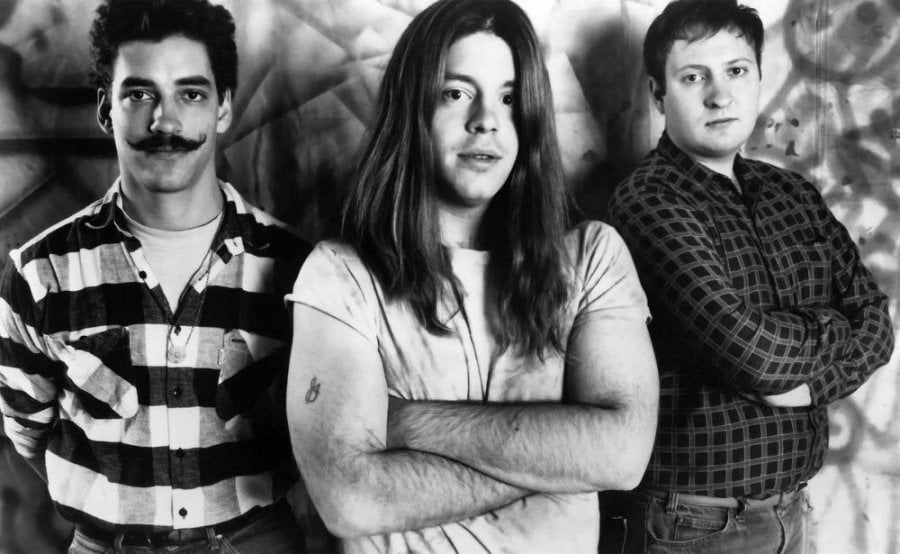
The origins of Husker Du, the legendary St. Paul punk-turned-alternative rock trio consisting of guitarist Bob Mould, drummer Grant Hart, and bassist Greg Norton, are modest. Their peak sales at the height of their fame, despite being on the major label Warner Bros. Records, were modest. The band’s look, alternately paunchy, drab, and moustachioed, was modest. Their sound, a revolutionary blend of punk rock energy, classic rock roots, and pop predilections, however, was anything but.
Husker Du were not rock stars. They toured in vans, sold low numbers of records to almost exclusively underground stores and fans, set up their own equipment, booked their own shows, and never left the dreariness of the upper Midwest for the glorious and glamorous world of stardom. But through six albums, the band almost singlehandedly changed the way rock music would be interpreted for the next 40 years.
It sounds obvious now, but back when punk rock was as rigid an idiom as any genre of music, slowing down tempos, using acoustic guitars, and singing harmonies weren’t just seen as unpopular, but as a betrayal of the very core ethos of the genre. Husker Du lost a large core of their initial audience when they began writing songs with melodies and hooks, but what they found was an entire generation of impressionable minds who took their comprehensive retooling of punk music as gospel.
The legacy of Husker Du is best found in the songwriters who took lessons from Mould and Hart’s mix of punk and pop: Kurt Cobain, Dave Grohl, Billie Joe Armstrong, Black Francis, Kim Deal, Billy Corgan, and pretty much anybody else who played on 120 Minutes. Arguably no band has a better claim to fostering the eventual alternative rock explosion in the 1990s as Husker Du does, and even if they lack the significant prestige and name recognition of Nirvana or Pixies, they did more to push rock music forward than arguably any other ’80s band. If you need a primer on Husker Du, here are the six songs you need to start with.
The six definitive songs of Husker Du:
‘Diane’
It feels slightly uncouth to jump ahead this much in Husker Du’s history, considering how it’s their first major turning point, but the truth is that Husker Du was simply just another hardcore punk band before the release of the Metal Circus EP. Songs from the band’s debut, Everything Falls Apart, are mostly quick bursts of antagonism without much thought or importance behind them. They’re awesome, but they lack distinction.
But as early as their first EP, the band began to grow dissatisfied with their own approach. Both Mould and Hart had complex melodic sensibilities, and the reliance on being the fastest punk band in Minnesota wasn’t getting them much fulfilment or attention. So Hart decided that his new song, covering the grisly real-life murder of St. Paul waitress Diane Edwards, should be slower, more deliberate, and more articulate.
In turn, Norman added chorus effects to his bass line, and Mould held back from covering the song in a wall of distortion. What resulted was an unheard mix of dark beauty and aggressive drive, a new sound that the band began to gravitate towards and would much later become the de facto sound of alternative rock. ‘Diane’ is the start of Husker Du becoming one of the most important and influential bands of all time.
‘Pink Turns to Blue’
Zen Arcade was already miles away from the previous work of Husker Du. The band was less than five years into their existence – and less than three years into their recording career – but they were already a completely different trio musically from the one that recorded Land Speed Record in 1982.
At this point, if you’re a newcomer to the Du, you might be forgiven for thinking that Grant Hart has a morbid fascination with death. That’s because it just so happens his two most groundbreaking songs up to this point involve death: the previously mentioned murder of ‘Diane’ and now the overdose tale of ‘Pink Turns to Blue’.
Within the narrative of Zen Arcade, another progressive step that showed the Du moving away from the restrictions of traditional punk rock, ‘Pink Turns to Blue’ is the moment where the central character loses everything and begins his spiral. Perhaps it’s slightly ironic that Husker Du themselves would instead find renewed life and direction forward in the highly melodic push and pull of the song’s darker recesses.
‘Celebrated Summer’
If ever there was a peak, a point of no return, or a perfect line of demarcation for Husker Du, a single song where they fully embrace their singular blend of pop hooks and unbridled aggression while conclusively turning their backs on the constraints of hardcore punk, I would be ‘Celebrated Summer’.
New Day Rising, the band’s best album, came at a time when Mould and Hart began getting territorial and ultra-competitive about who was the best songwriter in the band. The result is amazing track after amazing track: ‘The Girl Who Lives on Heaven Hill’, ‘I Apologize’, ‘Powerline’, ‘Books About UFOs’ and ‘I Don’t Know What You’re Talking About’, just to name a few. But it was ‘Celebrated Summer’ that changed everything.
Featuring an acoustic bridge and an unrepentantly pop sensibility that would influence everyone from Green Day to Nirvana and the Foo Fighters, ‘Celebrated Summer’ radiates with joy and life and vibrancy that punks just didn’t have at the time. And so, now and forever, Husker Du could no longer be a punk band. They had to be something different. Something new. Something alternative.
‘Makes No Sense At All’
One of the most astonishing aspects of Husker Du’s career is how prolific they were in such a short amount of time. In only five years, the band went from hardcore punks to a nebulous new pop-punk hybrid to the very basis for alternative rock before imploding spectacularly. We’ll get there eventually, but when the band was on their endless cycle of tours, they hardly ever played the material that was familiar to fans: they wouldn’t be promoting songs from their current record and, instead, they would already be playing songs from the next record.
Flip Your Wig was the point where the outside world could no longer ignore what Husker Du were doing. They had reached a sales ceiling with legendary punk label SST and required better promotion. Their Twin Cities frenemies in The Replacements had recently signed with Warner Bros. subsidiary Sire Records, and the suits at Warners decided to bring on the Du to the main label’s roster. In order not to burn any bridges, the band decided to give their newly finished record to SST as a parting gift.
Mould was particularly fond of his newest song ‘Makes No Sense At All’, there was an added more promotional muscle behind it by making it a single and producing a music video. It sold well in England, but wasn’t quite as big of a step forward as the band had wanted. Nevertheless, ‘Makes No Sense At All’ was the final divorce from the stifling yet nurturing underground that Husker Du were raised in. For better or for worse, Husker Du were going for the big time.
‘Hardly Getting Over It’
There’s a famous anecdotal, officially unverifiable rumour that Warner Bros. experienced some buyers remorse signing Husker Du. Disappointed that they had given Flip Your Wig to SST, and comparatively disappointed in their new album Candy Apple Grey, the suits began to wonder if their admittedly modest investment was even worth it. Husker Du were never going to be the major mainstream success, but the least they could do was get out of the tiny clubs.
When the band returned to the studio, they were in a more muted mindset. The resulting album took all their disappointments and pessimistic attitudes and channelled them into what would be the band’s darkest album. Candy Apple Grey is unrelentingly bleak but still has the band’s raucous commitment powering it, even as the band attempt new sonic sounds like piano ballads on ‘No Promises Have I Made’ or organ-soaked power pop on ‘Sorry Somehow’.
‘Hardly Getting Over It’ might be the first emo song ever put to tape. Consisting of six minutes of acoustic guitar strums and soul-baring lyrics, the song is Mould wholly removed from his punk-rock past. Things wouldn’t get any easier for the Du going forward, but ‘Hardly Getting Over It’ shows how the band were illustrating their desolation into beautiful and tender songs.
‘Charity, Chastity, Prudence, and Hope’
Never had a band so spectacularly fallen apart the minute they were given the opportunity to succeed. Their fellow former punks in The Replacements at least were able to stick around to taste a little bit of the alt-rock explosion, while SST labelmates Minutemen were robbed of their own breakthrough via the death of leader D. Boon in a van accident. But Husker Du had drug problems, personal antagonism, internal tragedy, and pure exhaustion to blame for their own implosion, right as the world was beginning to embrace the exact kind of music they were playing.
Warehouse: Songs and Stories showed a band that certainly wasn’t lacking in quality material. Both Mould and Hart had so enough amazing songs to fill out full albums each, so Warehouse became a double album featuring alternating song credits. The two were so controlling of their material at that point that they would occasionally rerecord Norton’s bass parts themselves.
What followed the album’s release is a sad and bizarre string of events that spelt the end of the band: their manager David Savoy took his own life right before the supporting tour kicked off, leading Mould to take control to the consternation of Hart. Hart was in the throes of a heroin addiction that made his playing and behaviour unpredictable. The band played on The Today Show and The Late Show Starring Joan Rivers, for inexplicable and unexplainable reasons. When Hart and Mould came to blows over Hart’s abilities to play clean, the three parted ways and permanently closed the door on Husker Du. It was a sad ending to an amazing band, but the joys and triumphs of a legendary band could still be heard, and if you want to find that joy for yourself, it’s hard to find it in a better place than Hart’s ‘Charity, Chastity, Prudence, and Hope.’
