


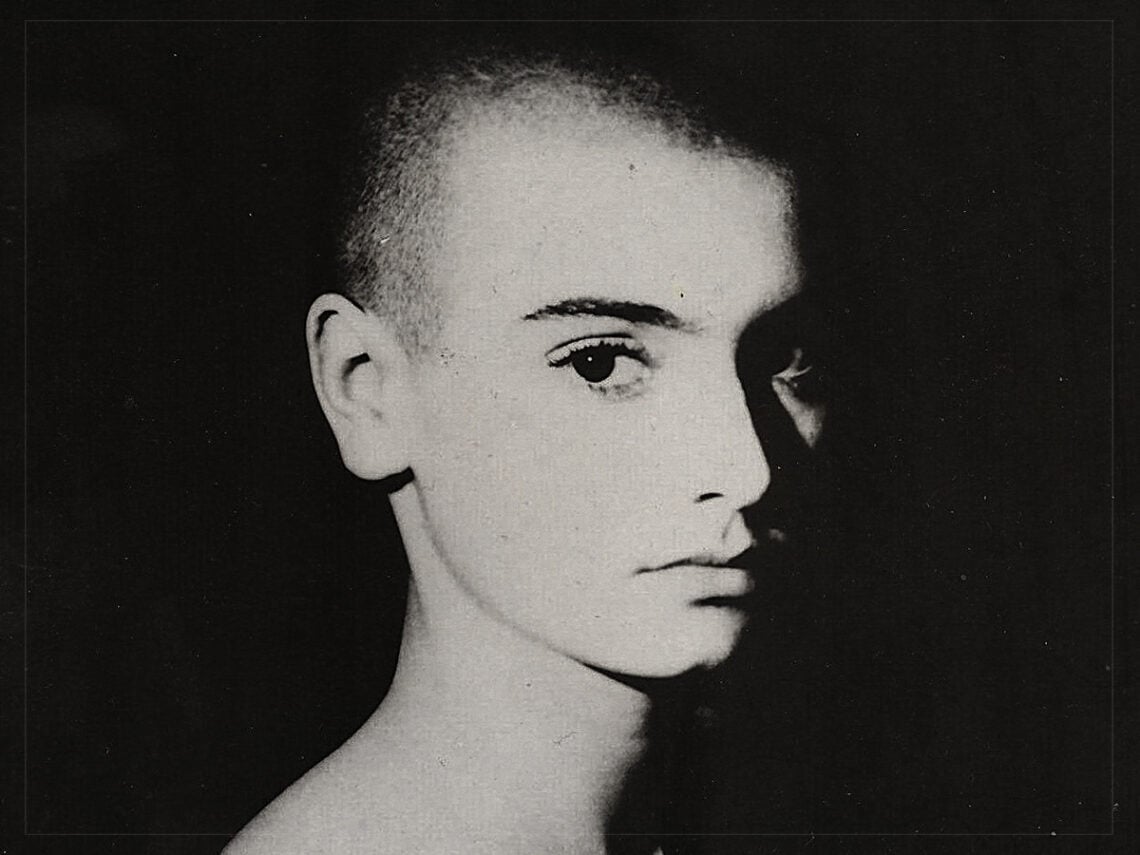
“Spoken words are dreadfully powerful”: Sinéad O’Connor’s on the prophetic power of her music

Does punk mean anything in music anymore?
Post-punk, pop-punk and even art-punk have been thrown into the mix, mobbed by us culture critics trying to understand it, but punk can’t really be understood in that way; it’s merely a spirit that only the likes of Sinéad O’Connor truly represented.
Not a single social construct was gobbled up and taken as gospel by O’Connor, but instead, she challenged everything ever presented to her in means of trying to understand where the true equality of a situation lay. That’s what made her the ultimate punk; not chord progressions, distortion pedals or rhyming word play that fit into the categories of any preassigned genres.
With that, it felt as though O’Connor had an inherent ability to see through this. Whether it was the brutal history of British rule, the scandalous truth of the Catholic church, or the tragedy of the life of an artist, her finger was pressed firmly on the pulse that your average person was far too scared to address. So when it came to her own music, there was a deeper sense of knowing the danger of the truth she was willing to investigate, but she went there anyway.
She explained, “There is that old saying, I think, therefore I am. What you think is what you create. Your feelings are directly associated with your thoughts; what you think is what causes you to feel whatever way you feel. And what you think is what you create. Words are dreadfully powerful, and words uttered are ten times more powerful”.
Adding, “The spoken word is the science on which the entire universe is built. Spoken words are dreadfully powerful. And I think songwriters have an understanding of the power of the spoken word, and possibly we find it out the hard way, by things coming true, and then we start to be careful what we write.”
To the uninitiated, that’s O’Connor explaining how her own songs serve as something of a self-fulfilling prophecy. Despite the autonomy she has placed over her own life, through her activism and philanthropy, there are times when her life feels nothing more than the subject of her own lyrics.
On ‘Take Me To Church’, it manifests itself in an almost meta way where her protagonist acknowledges that bizarre relationship between words and real life, before seeking to avoid it altogether. In suffering for her own art, O’Connor has been confronted with situations, and on ‘Take Me To Church’ in particular, by people who have raised the question of how worthy that suffering truly is, or perhaps how you can change your relationship with art to manifest a very different reality.
She continued, “Songs come very true in your life. That’s what my character is talking about in ‘Take Me To Church’. She is talking about how she understands that she has written a ton of songs that then came true, she got what she wanted, which was the man, only that it turned out he was very frightening. So she then is declaring about it in ‘Take Me To Church’, she is going to be very careful about the type of songs she writes in future because songs come true in your life and they make things happen. And then it is very true you have to be careful what you write because the songs will happen in your life.”
O’Connor’s willingness to pursue that is what made her the ultimate artist. There was no construct or theory that deterred her, no matter how frightening or grave the consequences may have seemed to be. Maybe her knowledge extended to the fact that ‘Take Me To Church’ would be on her very last album, before her passing, just under ten years later. It may seem unlikely, and you may think I’m over-estimating the realms of her prophetic genius, but in the very same interview she gave that quote, she also said within a decade she plans to “leave a legacy of fantastic songwriting and not just for myself, but lots of other people.”
It’s hard to believe that Sinéad O’Connor didn’t know it all.
