


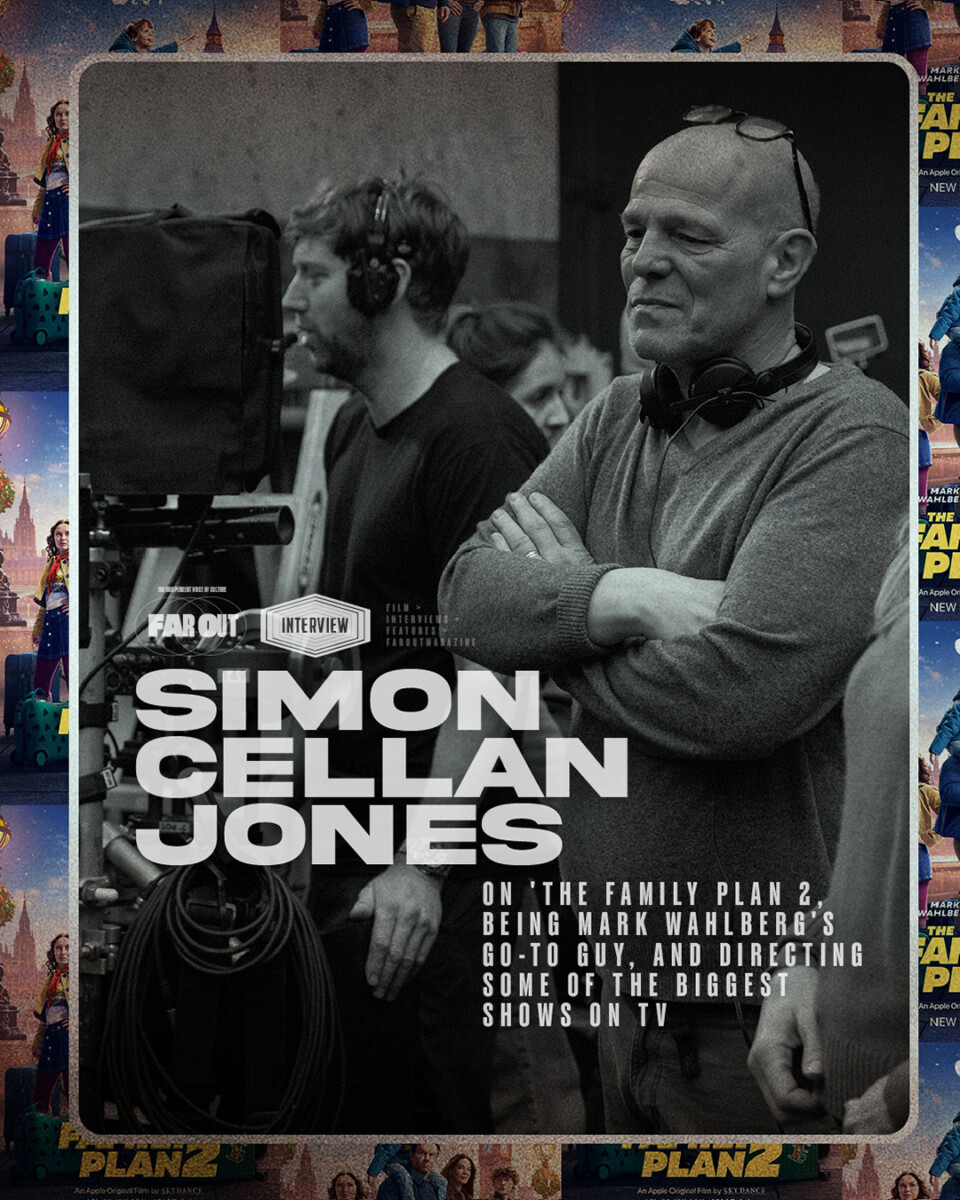
Simon Cellan Jones on ‘The Family Plan 2’, being Mark Wahlberg’s go-to guy, and directing some of the biggest shows on TV

After a two-decade sabbatical from directing features, Simon Cellan Jones will see his third released in less than three years when The Family Plan 2 premieres on Apple TV on November 21st, and all of them were produced by and star Mark Wahlberg in the lead role.
The first instalment saw Wahlberg’s Dan Morgan forced to outrun his past when the happily married suburban husband and father’s history as an assassin is exposed. The second time around, even more ghosts from his past rear their nefarious heads, this time during a family holiday in Europe.
Alongside Michelle Monaghan’s spouse, Jessica, and their three children, the Morgans find themselves caught up in a case of unfinished business, with Kit Harington’s villain, Aidan, guaranteeing that the clan’s journey across the Atlantic to visit their eldest daughter, Zoe Colletti’s Nina, will be anything but relaxing.
When the first Family Plan debuted in December 2023, it became the most-watched original film in Apple TV’s history. Since then, it’s been knocked off its perch by Jon Watts’ Wolfs, which starred a couple of relative unknowns called Brad Pitt and George Clooney, but Cellan Jones had designs on reclaiming the top spot.
“I’m crossing my fingers,” he admitted. “But, you know, George and Brad are pretty cool, so I’m not going to get too clever about them. Personally, I like this film even more than the last one, and I really hope people agree with that. Apple’s really excited, they’re really behind it. So, hopefully. It’s out of my hands now.”
The popularity of the opener made a sequel somewhat inevitable, but The Family Plan 2 wasn’t officially announced until October 2024, which is a quick turnaround for a globetrotting genre film. While Cellan Jones didn’t accept it as a foregone conclusion, he always had an inkling that the door had been left open for more.
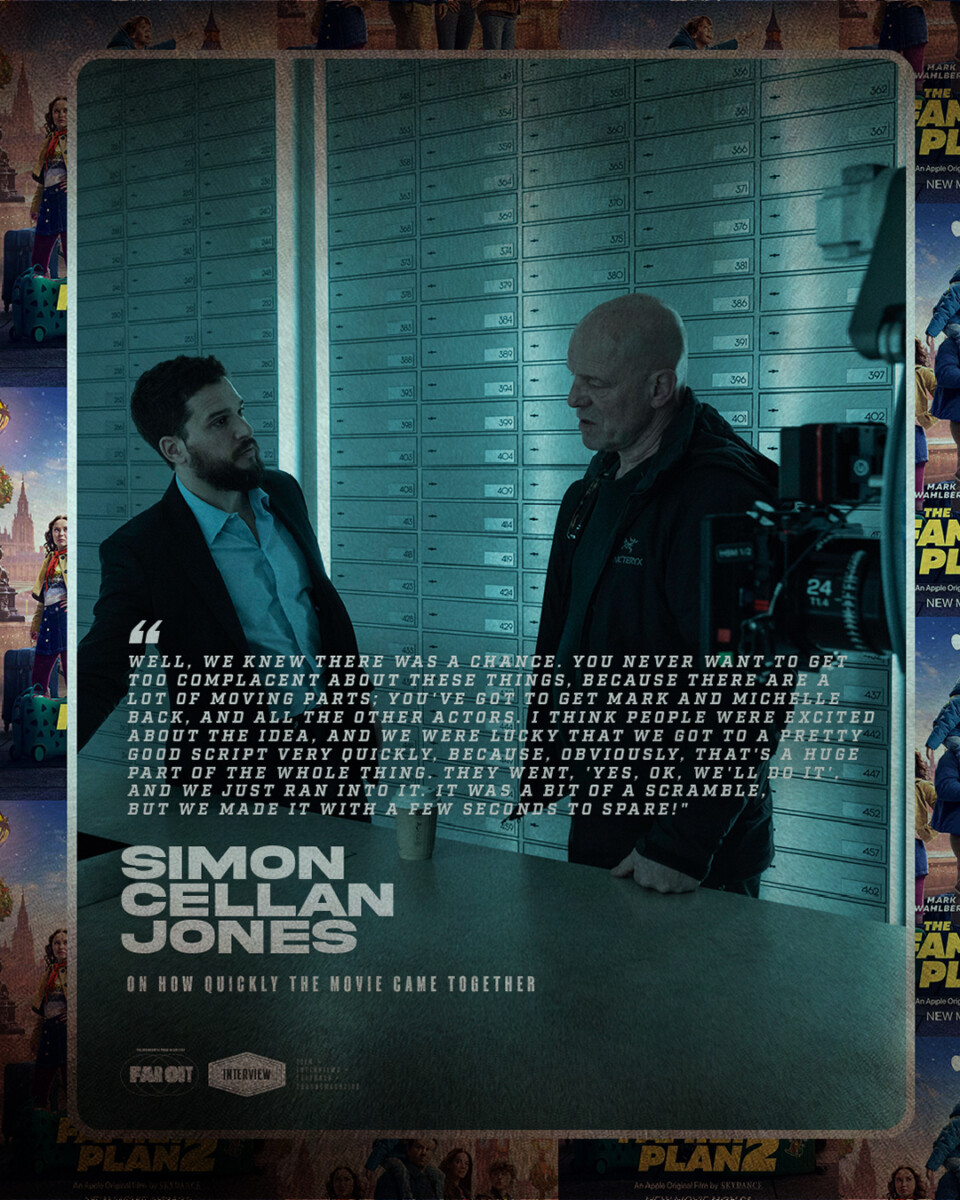
“Well, we knew there was a chance,” he shared. “You never want to get too complacent about these things, because there are a lot of moving parts; You’ve got to get Mark and Michelle back, and all the other actors. I think people were excited about the idea, and we were lucky that we got to a pretty good script very quickly, because, obviously, that’s a huge part of the whole thing. They went, ‘Yes, OK, we’ll do it’, and we just ran into it. It was a bit of a scramble, but we made it with a few seconds to spare!”
The danger that every sequel carries is the risk that it feels forced and doesn’t give itself enough of a reason to exist, other than because the first one was a hit. Plenty of franchises have been born of no other reason than to see if lightning could, and would, strike twice, a danger the filmmaker was aware of.
“Well, you’re absolutely right,” he agreed. “You know, it’s second album syndrome and all that stuff. We loved the family, and although, of course, you need a story, you need a thrill and spill and adventure, our family, I think, is so relatable that they’re always good value to spend time with.”
Beyond the dynamic between Wahlberg, Monaghan, and their onscreen children, Cellan Jones credited screenwriter David Coggeshall with coming up with “this wonderful thing about taking them into Europe.” That gives The Family Plan 2 that “fish out of water” element, with most of the action unfolding across London and Paris to freshen up the formula to try and prevent a case of sequelitis from settling in.
The Family Plan and its follow-up aren’t what you’d call realistic, what with a former killer washing his hands of his old life and settling down as a stereotypical suburban dad before he needs to dust off his particular set of skills to keep them out of danger, but despite being a high-concept genre film, Cellan Jones kept his focus on the Morgans above everything else.
“You know, the old, ‘My dad was an assassin and I didn’t know’, that’s not a very familiar thing in real life,” he pointed out, rather accurately. “But what was so great was that, and I think Mark really grounded it fantastically, it was a real, proper family. The family actually wasn’t that high-concept. They were sweet, they were nice, they argued, they were annoying. There were teenagers. There was a baby. There was a dad trying to keep everything in control, and a mum trying to keep the dad in control.”
With the cast ensuring that things remained “very, very human,” Cellan Jones was confident that “however high-concept the action got, the family would bring everything back to the ground.” In a two-for-one special, The Family Plan 2 also counts as a Christmas film, with the Morgans visiting Nina in London to spend the festive season, with the director pointing out that it was actually a three-for-one.
“We did the double, because, as you know, the Americans love Thanksgiving even more than Christmas sometimes, and we managed to squeeze both of them in,” he pointed out. “In fact, we’ve got two Thanskgivings and one Christmas. Spoiler alert!” Naturally, that led him to reminisce about another staple of the December viewing schedule, which is definitely a Christmas film.
“One of my favourite quotes is, when they made Die Hard, Bruce Willis said, ‘It’s not a Christmas movie, it’s a Bruce Willis movie,'” before relating that to his latest work. “And, in many ways, this is a Mark Wahlberg movie, and a Michelle Monaghan movie, but it also really is a Christmas movie; the joy and the tension, you know what Christmas could be like, it can raise the expectations and put everyone on edge, so I think we managed to combine that really well with the real holiday.”
Unlike the first chapter, Cellan Jones is an executive producer on The Family Plan 2, although he played down his involvement in that regard. “I think, in some ways, they were just being polite to call me that,” he claimed. “I felt very involved in the first one, but this time, all of us filmmakers felt… we weren’t necessarily confident, but we knew roughly what film we were making.”
That made everyone feel more like “equals and partners,” which is just as well, since another obligation for sequels is for them to become bigger and more expansive. Even though the story unfolds across two of Europe’s most iconic capital cities, the filmmaker alluded to having one eye on a global audience.
“I think Americans do like London and Paris, and Londoners and Parisians,” he reasoned. “We could have gone to all sorts of places, but I think London and Paris; they are so spectacularly beautiful, and they’re so wonderful at Christmas as well, and we were filming around the sort of November/December time as well, so it felt very Christmassy as we were doing it.” That meant there was plenty of location shooting, which presented its own set of challenges.
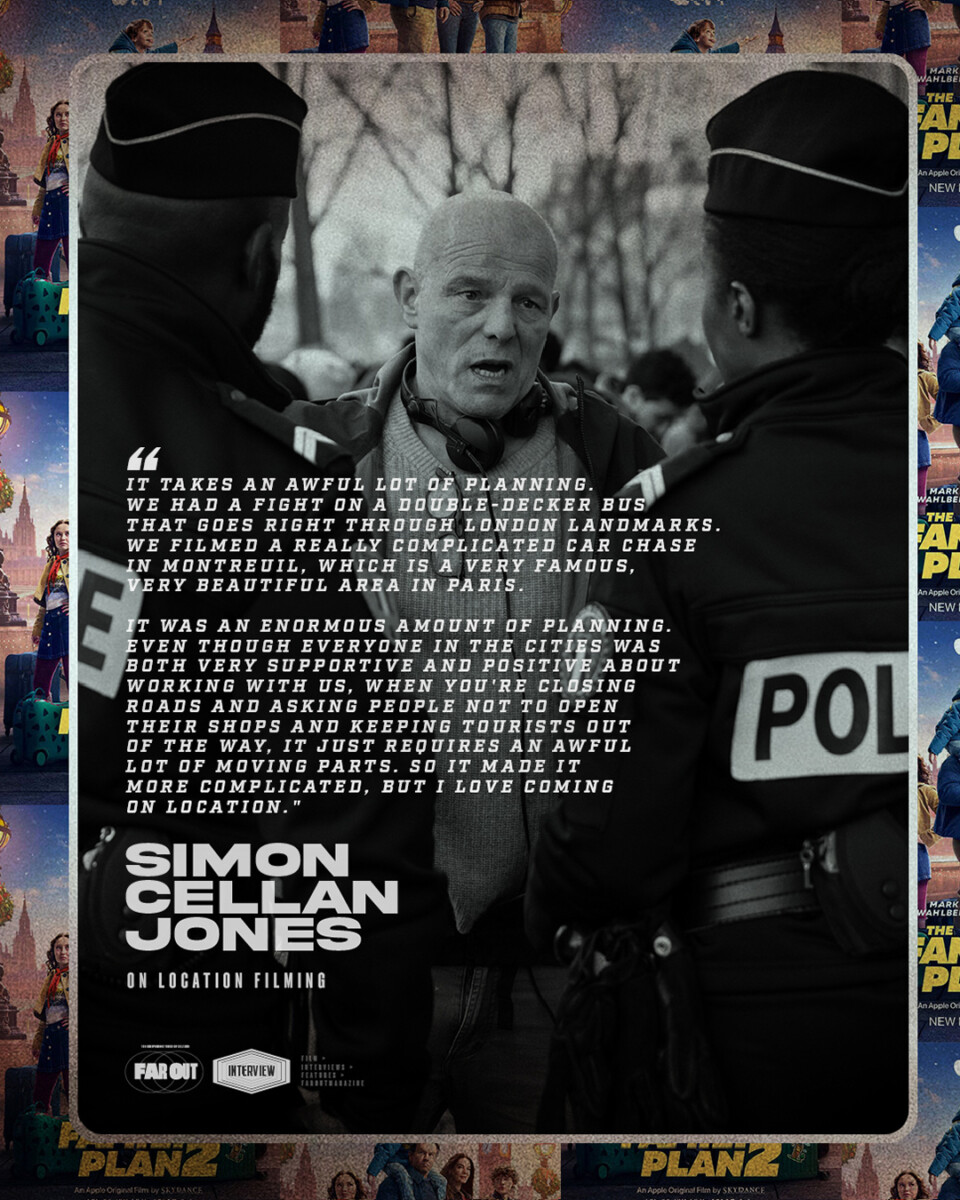
“It takes an awful lot of planning. We had a fight on a double-decker bus that goes right through London landmarks. We filmed a really complicated car chase in Montreuil, which is a very famous, very beautiful area in Paris. It was an enormous amount of planning. Even though everyone in the cities was both very supportive and positive about working with us, when you’re closing roads and asking people not to open their shops and keeping tourists out of the way, it just requires an awful lot of moving parts. So it made it more complicated, but I love coming on location.”
Simon Cellan Jones
In addition to the logistical headaches, the old adage says you should never work with children or animals, but between the two Family Plan films and Arthur the King, Cellan Jones has been doing a lot of both, which sounds as though it’s taken a toll.
“Oh my god, it drains you,” he confessed. “Man, actually, the first film I made with Mark involved a dog. Who was very nice, actually. But it’s a dog, you know? They don’t do what you say. And then this film and the previous one had kids, and then we’ve got quite a lot of cats in this film as well, for some reason.” Fortunately, the time jump between the first and second entries means no babies this time.
“We had two twins in this one, and they were sweethearts, and they were just that little bit older, they were, like, six,” Cellan Jones continued. “The last film had an 18-month-old baby; all bets are off with that. But I love kids. I’ve got four of my own, but it’s an extra step working with them!”
As mentioned earlier, The Family Plan was Cellan Jones’ first time directing a feature since the 2002 romantic comedy, The One and Only, and there was one major driving force that lured him back: “Well, to be honest with you, I owe it all to Mark Wahlberg. I’ve worked with him a couple of times when he’s been a producer on TV shows, things like Boardwalk Empire, Ballers, and Shooter, so I knew him a little bit.”
The stars aligned under unfortunate circumstances when a combination of scheduling issues and the pandemic saw Wahlberg’s Contraband and 2 Guns director, Baltasar Kormákur, drop out of the biographical drama, and, as Cellan Jones self-deprecatingly put it, “There was a position they needed to fill.”
“Mark and his producer, and the other producers, took a risk on me,” he elaborated. “I’ve got to tell you, not just because he’s helped me get into films, but he’s just the easiest, funnest, coolest person to work with. You could imagine, when I first started working with him, I was going, ‘Oh my god, this huge movie star. What’s he going to be like? He’s not going to be there for other people’s close-ups.’ And he’s just the most committed, one of the most committed actors I’ve ever worked with, even though he’s a huge star.”
Having made three consecutive movies with Wahlberg, it’s safe to say he and Cellan Jones have a strong working relationship, with the filmmaker praising him for being “very, very straightforward to work with.” The latter’s “favourite thing about doing my job” is getting to work with actors, and the former makes it easy.
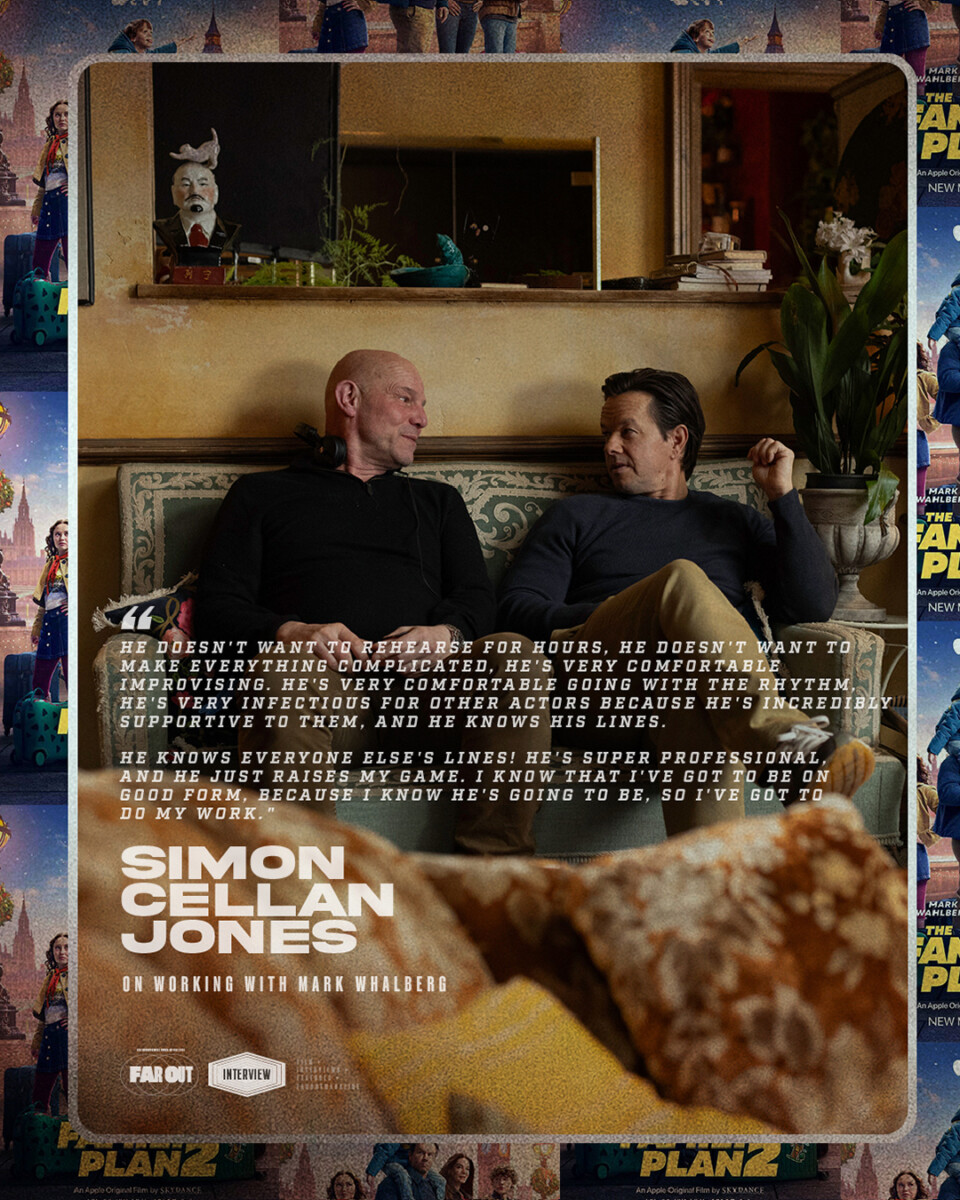
“He doesn’t want to rehearse for hours, he doesn’t want to make everything complicated, he’s very comfortable improvising,” he said of Wahlberg’s professionalism. “He’s very comfortable going with the rhythm, he’s very infectious for other actors because he’s incredibly supportive to them, and he knows his lines. He knows everyone else’s lines! He’s super professional, and he just raises my game. I know that I’ve got to be on good form, because I know he’s going to be, so I’ve got to do my work.”
Cellan Jones’ father, Simon, was also a director and was prominent during the ‘Golden Age’ of the BBC drama in the 1960s. With that in mind, you’d think there was a sense of pre-ordained destiny about the son following in the footsteps of the father, but as he revealed, that wasn’t quite the case.
“Well, no, I sort of shied away, because we were all a bit wary,” he shared. “Well, most of us are a bit wary of the nepo kids and stuff like that, and I didn’t want to be somebody coming on my dad’s coattails, although I did admire him very much as a director.” Instead, he worked his way from the bottom up.
“I got my grounding at the BBC, which, as you know, is one of Britain’s truly great institutions. And even though it’s getting a little more challenged by so much competition nowadays, it’s still a wonderful place to work. My background is that I started off as a mail boy at 20th Century Fox. I didn’t go to film school, I didn’t go to university, I had to pay my dues and work like a dog for a long time, and, so far, it’s paid off, and let’s hope it keeps that way.”
Simon Cellan Jones
That’s led to an extensive list of eclectic credits on the small screens, so Far Out decided to pluck some of them out of the hat at random and quiz Cellan Jones for his memories. First up: Our Friends in the North, the 1996 classic that’s frequently cited as one of the greatest episodic British dramas ever made, with Cellan Jones helming five of the nine episodes, and co-directing another alongside Pedr James and Stuart Urban.
“I was very, very young when I made that, just to be clear,” he began. “That was my big break. I was 31, or something like that, and suddenly, I was doing this huge TV series. I told you before, I love actors, and we had some fantastic actors on that. Daniel Craig, Mark Strong, Christopher Ecclestone, and Gina McKee, who went on to become big stars after that. And, I think, my biggest love of that show is that it was a nine-part series about the history of the Labour Party, which doesn’t sound very sexy, does it?”
“It did really well,” the director reflected. “People still talk fondly of it, and it’s got some incredibly happy memories for me.” A turning point arrived in 2008 when Cellan Jones took the reins on three episodes of Generation Kill, the HBO miniseries steered by The Wire creator, David Simon. Before that, most of his work had been in the UK, but since then, he’s been predominantly working in America.
“That was a huge turning point for me,” he concurred. “And I owe an awful lot to David Simon, who is a spectacularly good writer. That script was one of the most authentic things I’ve ever been involved with, and I went on to work with David a couple more times on a TV show called Treme. So he really helped me get into America, that’s absolutely right.”
In 1993, he directed the sixth and seventh episodes of Cracker‘s first season, working with the late, great Robbie Coltrane. “Oh my god, yes,” he fondly remembered. “I worked on the first season of that, before we all knew what a thing… I think he won three Baftas in a row, Robbie, it was absolutely incredible.”
“Again, he was the heart of that show, and he’ll be, as I’m sure you’ll agree, he’ll be much missed, not just by Harry Potter fans, but by an awful lot of other people,” Cellan Jones added. “But yeah, that was a great writer called Jimmy McGovern as well, so that was one of my first tastes of great writing.”
Fast forward two decades, and he shepherded ‘Abaddon’s Gate’, the 13th episode of The Expanse‘s third run, which was the first time he’d worked in hard sci-fi, surrounded by green screen. “It’s my first time working in space,” he pointed out. “Yeah, it’s the only science fiction thing I’ve done. It was a great show, and had this incredible sort of underground fandom.”
“I remember at one stage, it sort of got pretty much cancelled, and then it got revived by Amazon because it had such a big fanbase,” and he’s right; the first three seasons aired on Syfy, and once it was given the chop, Prime Video picked it up for another three. “Again, it had a great set of actors, and it was just so cool. I had one day on location, and everything else was in the studio, because it was all set in space or spaceships.”
Back to HBO, and Ballers. Cellan Jones worked on every year of the Dwayne Johnson-led dramedy, bar the third season, directing nine episodes in total. “He was pretty big when we started working with him, and by the end of that season, he was one of the biggest movie stars on the planet,” he said of the man also known as ‘The Rock’.
“What a sweetheart. I mean, you just switch the camera on and he smiles, and then you say, ‘OK, we’re done here. We’re all set.’ He was fantastic to work with. And that, for me, was so fun, because it was about the messy world of sports and sports financing and doping, and injury syndromes. And it was, obviously, a sort of fun, glitzy comedy, but I think it had a little bit of a core to it, so I think that was a great thing.”
Cellan Jones has even scratched the Marvel itch, helming the seventh and eighth episodes of Jessica Jones‘ first season on Netflix: “Yeah, Marvel. They were nice. I thought, ‘Oh, Marvel, oh my God, there’s the evil corporation’, but they’re filmmakers. It was a TV show, of course, but they’re filmmakers, and it was all set in New York. That’s one, along with Paris and London, I would say New York is one of my favourite cities.”
Back to HBO yet again, with an episode of the Martin Scorsese-backed Boardwalk Empire in his back pocket, the first season’s ‘The Emerald City’. Another memorable experience, albeit with one downside. “I never met the great man,” he lamented. “But I’m still saying that I worked with him! Again, the cast of that was just incredible, people like Michael Shannon, Michael Stuhlbarg.”
As you may have gathered, Cellan Jones has worked with HBO a lot. “They are just a class act,” he said. “They really go for it. They’re very strong about scripts, they spend money when they think it’s it’s worth it, and they have exceptionally high standards. So I’m a big fan of HBO.”
Throwing a curveball, Far Out pivots to Netflix. Specifically, The Diplomat. Cellan Jones directed the opening two episodes of the hit show’s first season, and since it earned a Golden Globe nomination that year for ‘Best Television Series – Drama’, and he set the visual template, surely he can take some of the credit?
“Well, I give most of the credit to Deb Cahn, who wrote it, but I am super proud to have directed the pilot,” he stated. “It’s always great to be in on the beginning of things. Keri Russell, I think, is a great actor, and Rufus Sewell. So it was such great writing. It was such a brilliant dance between a serious, horrible, messy, truthful thing and something really funny and mischievous. And I think, Deb, the writer, pulled off a great tightrope walk there.”
Last, but by no means least, The Bill. For people of a certain generation, the mere mention of the long-running British police drama will bring the theme song roaring back to the forefront of their mind like some long-forgotten core memory. He directed the first of his two episodes back in 1989, and he remembers it fondly, for one reason above all others.
“Literally, my very first professional job, when I was like 25 or something,” Cellan Jones recalled. “I’d just come out of some directing course at the BBC, and all I did there was learn, because, you know, it’s great scripts, but they say, ‘Right, you can’t go five minutes over schedule. If you do, you’re in serious trouble.’ And on one day, I went about 20 minutes over schedule, and I was called into the executive producer’s office and given the biggest bollocking I’ve ever got! So I went, ‘OK, I get it, I get it. I won’t ever do it again.’ And I pretty much never have!”
After taking a trip down memory lane, we decided to look towards the future, and whether there’s such a thing as a movie that Cellan Jones has always dreamed of making: “First thing, I’d love to work with anything that Mark Wahlberg is in.” Fair enough, but then he got a lot more specific.
“Aside from that, I would love to do a really exciting, jagged psychological thriller with a sort of heisty, conspiracy-ish vibe to it,” he mused. “I think, of my top ten films, I reckon about six of them must have been made in the 1970s, things like The French Connection and Midnight Cowboy, things like that. I think that was the real, real golden age of filmmaking. So I’d love to walk it down that route a little bit.”
With three films under their belt already and potentially more to come, if Simon Cellan Jones is announced to be directing a 1970s-style conspiracy thriller with Mark Wahlberg in the lead role, you heard it here first.
