


Should ‘It’s a Wonderful Life’ count as a Christmas movie?

Without getting into the Die Hard debate, every year, we get the same old arguments about what a ‘Christmas movie’ actually is.
We won’t be delving into whether the film needs to be set entirely at Christmas or whether Christmas needs to directly affect the plot, but the funniest thing in all this is that It’s a Wonderful Life, one of the most widely accepted and celebrated Christmas movies of all time, actually has very little to do with the festive season.
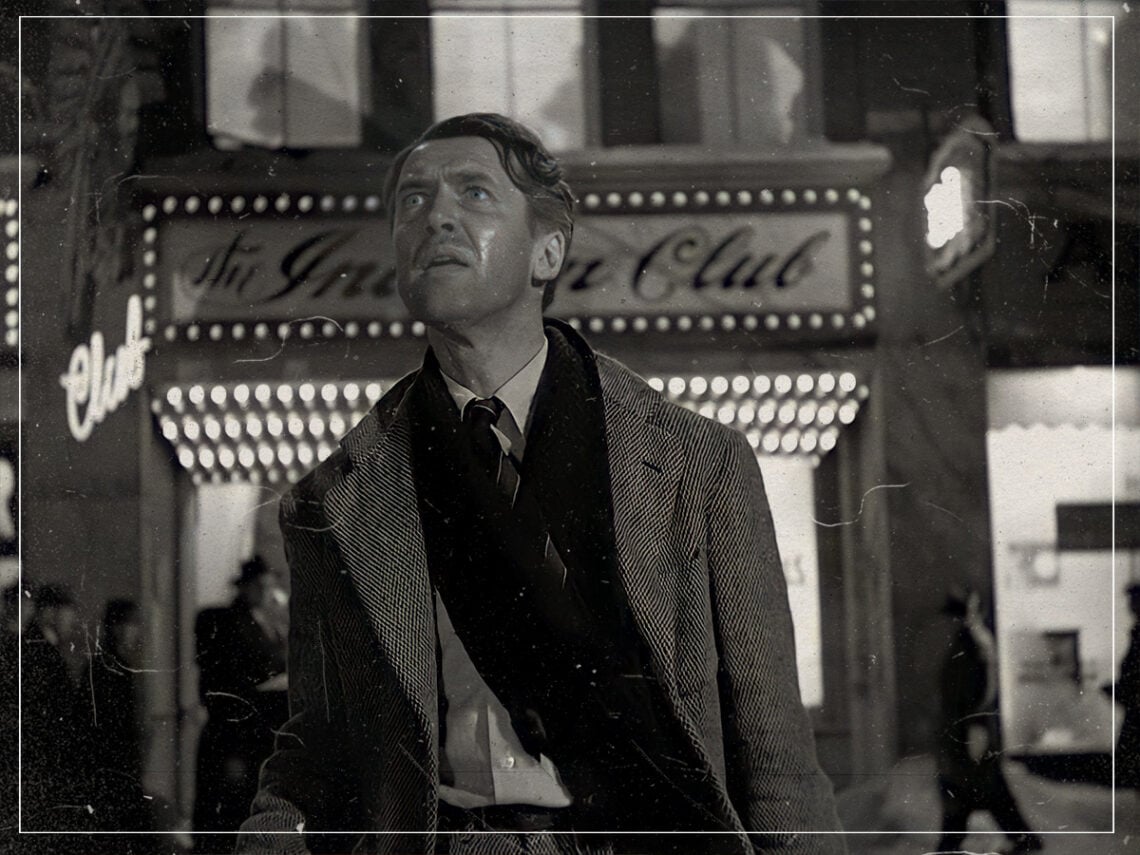
Watching Frank Capra’s enduring classic for the first time, I was amazed to discover how late in the day the whole ‘I wish I’d never been born’ plot kicks in, as James Stewart’s George Bailey doesn’t meet the bumbling angel Clarence Oddbod, played by Henry Carter, until around the 100-minute mark, which is about three quarters of the way through.
Things only really hit their yuletide stride when George runs through the snow streets of Bedford Falls, elatedly wishing the townsfolk, and the town itself, a ‘Merry Christmas’, such that for well over an hour between the film’s opening scene and the final act, Christmas doesn’t factor into the story at all.
It follows George’s life and how, despite numerous attempts, he can’t achieve his dream of leaving Bedford Falls, in stark contrast to the original story, which is essentially just the final portion of the film, so, if anything, the movie is more to do with the Wall Street crash than it is mince pies and tinsel.
When you think about it, George could have tried to kill himself at any point in the calendar. Looking at him standing on that bridge, the only thing particularly Christmassy is the snow in the background, which begs the question of whether it would have been much different if Clarence had visited him at Easter or Halloween or even Arbour Day, and does Christmas really have anything to do with It’s a Wonderful Life?
So while the film might not be directly about Christmas, it contains so many of the ideals we associate with the big day: George Bailey is cinema’s kindest man, generous, selfless and moral to a fault, and embodies so much of the positivity we associate with this time of year. He never says as much, but he is the walking version of the ‘Christmas spirit’ all year round, such that you could call him Ebeneezer Scrooge, but the one from the very end of A Christmas Carol.
Christmas is supposed to be the highest of highs, which is what makes the sad parts of it feel so devastating, and as such, emotions are often polarised this time of year, and the finale of It’s a Wonderful Life captures that dichotomy perfectly.
Before his epiphany, George is in deep despair; however, when the residents of Bedford Falls pool their money together to save him and his family, it’s one of the purest moments of uncomplicated happiness ever committed to the big screen. It’s every Christmas present all at once, and one of the most heart-warming examples of why we as a species love to give each other gifts.
If you want to get pedantic about it, then no, It’s a Wonderful Life shouldn’t count as a Christmas movie, as there’s far too much non-Christmas stuff and the actual links to the holiday are tenuous at best. Regardless, you just try to watch that final scene and hear those people singing ‘Auld Lang Syne’, and that one moment sums up everything great about Christmas better than almost every other film ever made that’s on the nose about the holiday.
