


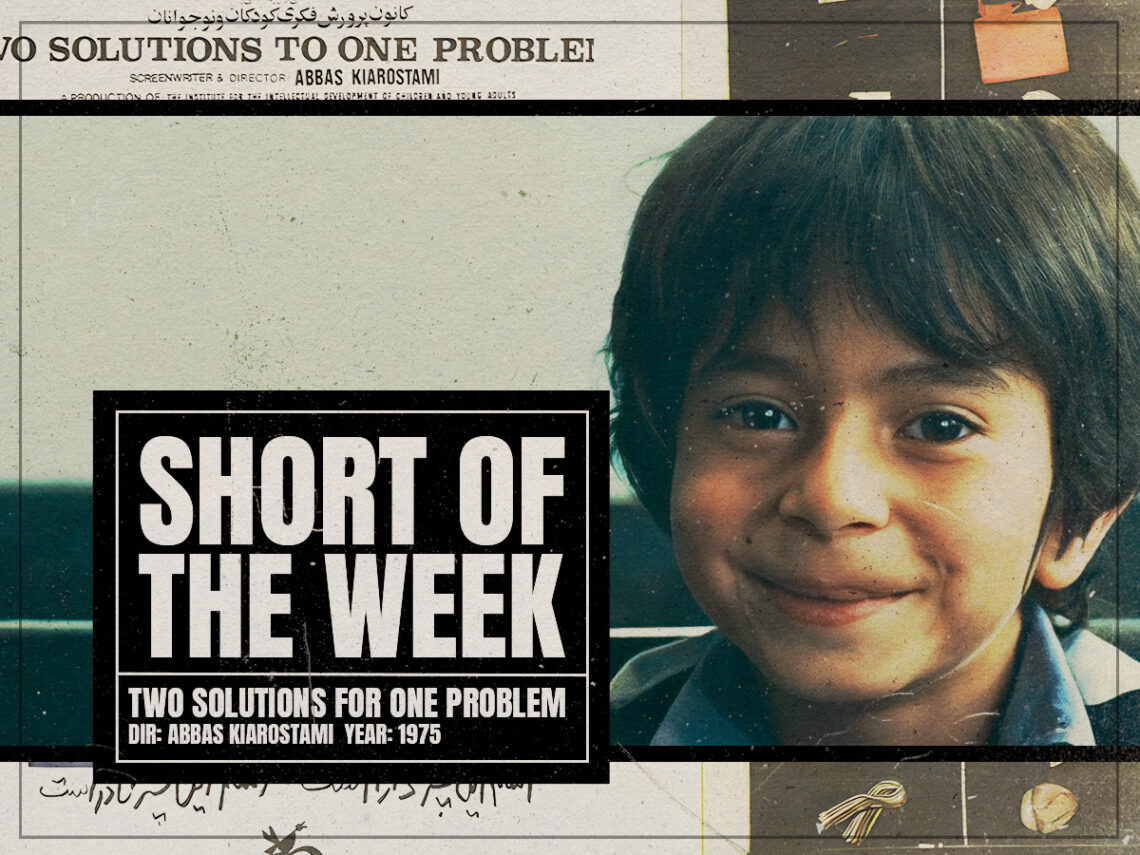
Short of the Week: A moral tale by Abbas Kiarostami

Among the major movements that facilitated the evolution of the cinematic medium during the 20th century, few bodies of work are as powerful and innovative as the output of the Iranian New Wave. Tackling pressing sociopolitical issues while also developing new modes of artistic expression, Iranian auteurs such as Abbas Kiarostami and Mohsen Makhmalbaf contributed to the creation of a robust and essential national cinematic tradition.
Starting with early projects like The Bread and Alley, Kiarostami’s distinctive artistic style evolved in unimaginable ways throughout his career. Breaking away from the neorealistic traditions of Iranian cinema, the filmmaker sought to examine the boundaries of the art form and created several self-reflexive masterpieces in the process. Ranging from Close-Up to Taste of Cherry, his filmography is full of works that constantly challenge our preconceived definitions.
While his works became increasingly experimental in later years, some of Kiarostami’s early documentaries are relatively simple and humourous. One such example is the 1975 work Two Solutions for One Problem, an educational film designed to teach a relatively straightforward moral lesson to children. It is universal in its simplicity, appealing to audiences all over the world who have all been in the same position at some point in their lives.
During a conversation with Film Comment, Kiarostami once said: “Each movie has an ID or birth certificate of its own. A movie is about human beings, about humanity. All the different nations in the world, despite their differences of appearance and religion and language and way of life, still have one thing in common, and that is what’s inside of all of us. If we X-rayed the insides of different human beings, we wouldn’t be able to tell from those X-rays what the person’s language or background or race is.”
The filmmaker added: “Our blood circulates exactly the same way, our nervous system and our eyes work the same way, we laugh and cry the same way, we feel pain the same way. The teeth we have in our mouths — no matter what our nationality or background is—ache exactly the same way. If we want to divide cinema and the subjects of cinema, the way to do it is to talk about pain and about happiness. These are common among all countries.”
Two Solutions for One Problem revolves around two schoolboys who face a dilemma when their friendship is threatened by a torn book. One scenario shows the pair of friends engaging in a mutually destructive fight, resulting in irreversible losses, while the other advocates for understanding and patience during times of miscommunication. It’s a basic allegory for conflict resolution, but it has the comedy and playfulness that formed the foundation of a lot of Kiarostami gems.
Watch the film below.
