


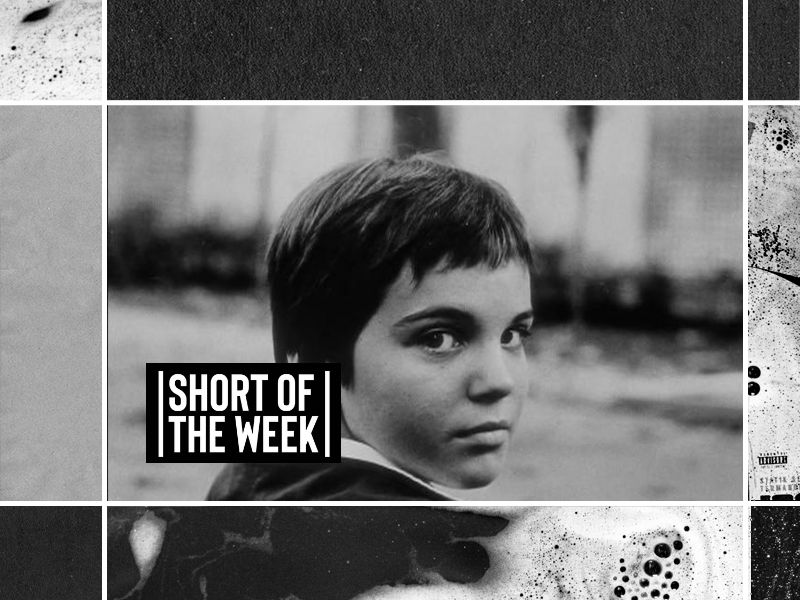
Short of the Week: An inquiry into documentary cinema by Guy Debord

Few figures have been as influential in the analysis of the image as Guy Debord. Known for his revolutionary work The Society of the Spectacle, Debord’s meditations on modernity and the function of ideological representations in modern society are widely discussed by students and scholars to this day.
Especially during the age of social media and widespread virtual dependence, Debord’s ideas seem more relevant than ever before. In The Society of the Spectacle, Debord argued that representations have replaced real social relationships and that the quality of life has inevitably been degraded.
For this edition of Short of the Week, we have chosen Debord’s intelligent 1961 short Critique of Separation. Only eighteen minutes long, Debord attempts to dissect the cinematic image and its relation with philosophical dialectics. In the process, he ends up deconstructing the function of other visual elements, such as subtitles and inter-titles.
Throughout the film, Debord launches a scathing attack against the categorisation of documentary cinema as truth. According to him, the audience is forever separated from the truth and the grotesque realities of the documentary subjects due to the retrospective distances of borrowed knowledge and our inactivity.
He describes us as “distant and bored spectators”, a description that is all too truthful when contextualising it within the pernicious frameworks of social media. While scrolling through our social media feeds, we glide over reels about genocide before immediately encountering other numbing agents such as memes and animal photos.
“It is necessary to destroy memory in art,” the narrator declares. “To undermine the conventions of its communication. To demoralise its fans. What a task!” As long as the conventions of communication are codified within the human psyche due to corrosive mass media practices, art will always be in a precarious position.
Watch it below.
