


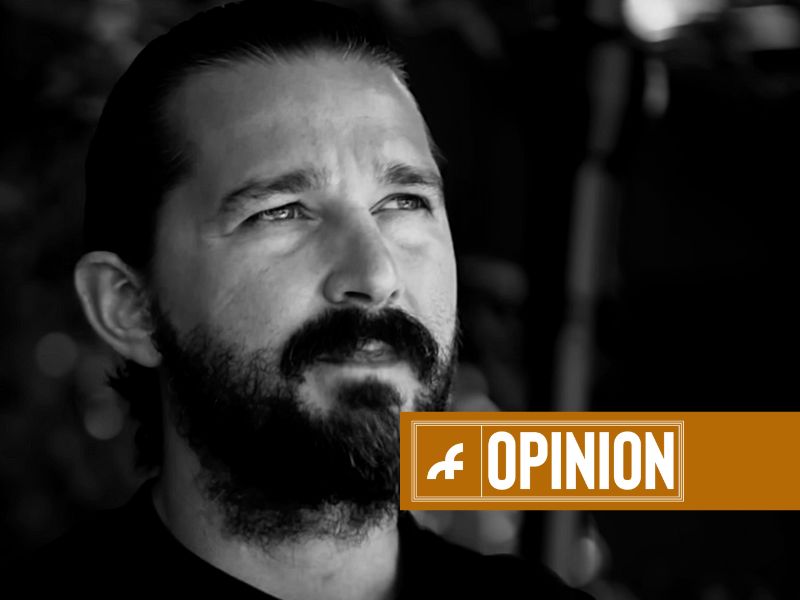
Shia LaBeouf’s manipulative apology shows Hollywood is still as toxic as ever

In December 2020, the singer FKA Twigs accused Shia LaBeouf of “relentless abuse” during their relationship, citing sexual battery, assault and the infliction of emotional distress. The actor has consistently denied all allegations but recently apologised for his treatment of Twigs – real name Tahliah Barnett – while appearing onReal Ones. Though clearly designed to convince the world of his reformed status, LaBeouf’s apology struck me as incredibly unnerving — not only because he casts himself as the victim, but because so many people are willing to believe him.
During his conversation with Bernthal, LaBeouf discussed the various allegations against him, though he made sure not to name or reference Barnett specifically. “I hurt that woman,” he began. “And in the process of doing that, I hurt many other people, and many other people before that woman. I was a pleasure-seeking, selfish, self-centred, dishonest, inconsiderate, fearful human being.”
The actor went on to claim that Twigs’ allegations pushed him towards suicide. “I went and loaded up a gun and sat on my table,” he said. “I was gonna kill myself.” He went on to note that, after seeking the advice of similarly-disgraced stars Josh Brolin and Sean Penn, LaBeouf sought treatment for his alcoholism and psychological issues.
Reading the comment section beneath the video, it’s clear that many of us are still willing to accept the Hollywood non-apology at face value. The most-liked comment reads: “This was actually amazing! No matter how much you fuck up, you are still a human. Never forget that.” Another user writes: “Love it! Our society has and is moving towards a more open, honest, real sense of self and what’s important to do with our short time here on Earth.” This kind of ‘I must try harder’ apology is, of course, nothing new. Every time a public figure steps out of line, they’re forced to grovel and beg forgiveness. Usually, these apologies are framed by an aura of repentance (LaBeouf, for example, noted that he is currently seeking treatment for his psychological issues and alcoholism), but it’s not so often that someone uses suicide to garner sympathy after being accused of such maltreatment. Obviously, it’s great that LaBeouf is seeking treatment rather than continuing to let his issues affect those around him. And yet, I can’t help but feel as though I’m being manipulated into forgiving someone who clearly isn’t ready to be.
Shortly after she filed a lawsuit against LaBeouf, Barnett opened up about the various psychological tactics employed by her abuser. During a conversation with Elle, she spoke of the “calculated, systematic, tricky, and mazelike” tactics LaBeouf would use to control her.” The actor’s apology is certainly all of these things. In acknowledging “I fucked up,” he admits culpability (which is good), but he also exploits the public’s inclination to forgive the repentant “sinner” (which is not). It sometimes feels as though we’ve been taught to overlook the flaws of clearly dangerous men if they show even the faintest hint of emotional self-awareness.
The really dangerous people, society tells us, are those who do not know why they act the way they do. Clearly, a serial abuser cannot be a threat after his Paul on the road to Damascus moment. Sadly, that’s simply not true. Rehab is in no way a quick fix, and LaBeouf’s weekly meetings with “60 dudes” who he goes on regular bike rides with should not be seen as one either. None of this is to say that people aren’t worthy of forgiveness; my concern is that we’re allowing our hope that Hollywood is getting less toxic to override evidence to the contrary.
