


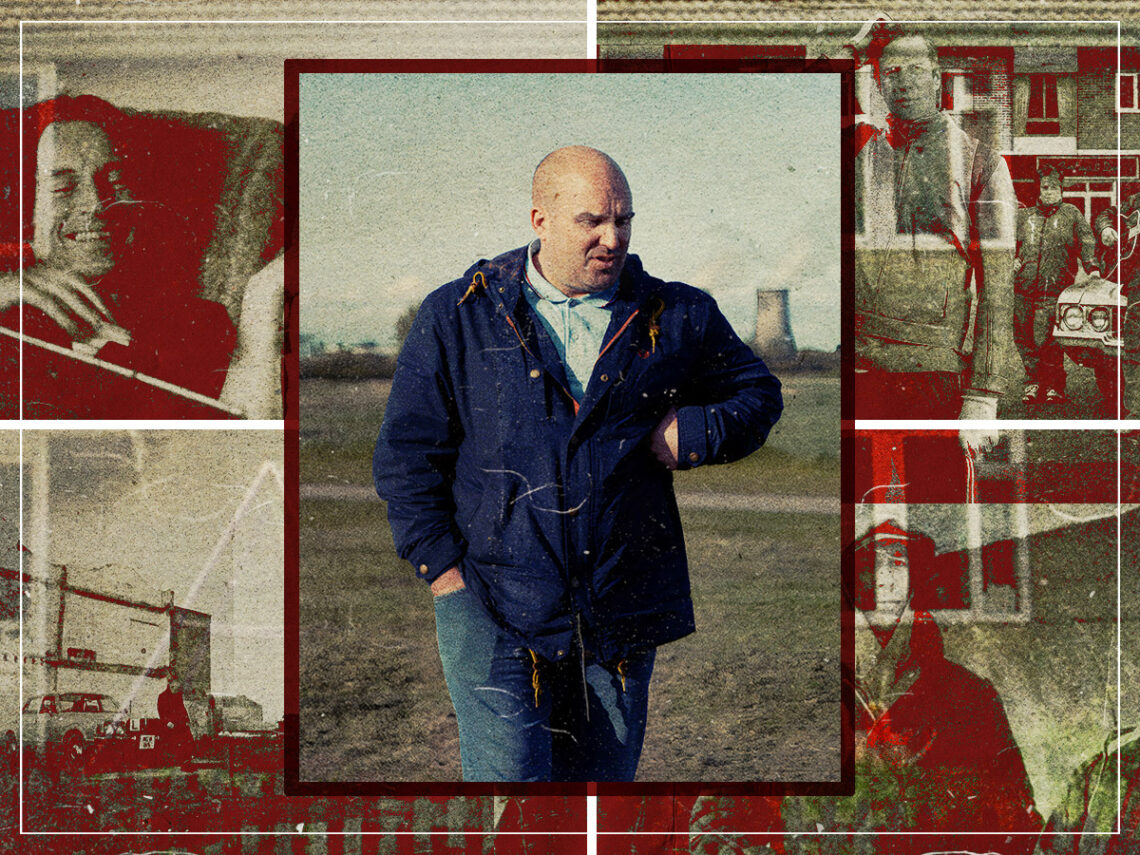
How Shane Meadows venerates the Midlands identity

There’s a real problem in England that seems like it’s never going to end. It’s that classic debate of where the border between the north and the south lies, which for most people, is oh-so-important. After all, it’s generally accepted that people from the northern and southern parts of the country are starkly different in upbringing, humour, culture and everything else in between. But the obsession with the north/south divide largely ignores the greatest region of England of them all – the Midlands, the home of British director Shane Meadows.
What is the Midlands? Well, it’s the epicentre of British manufacturing, from the Range Rover to a bar of Cadbury’s, the birthplace of the industrial revolution, having made chains, glass and printing machines, to name but a few items and that’s not to mention that it’s the origin of the heaviest music of them all: metal. Quite simply, the Midlands ought to get the respect it undoubtedly deserves.
And that’s not just in an industrial sense, but from an artistic perspective too. Sometimes it can feel like the Midlands is overlooked as a genuinely prospective place to set cinematic narratives, with London or Manchester or wherever else preferred over the likes of Birmingham and Nottingham. But enter Shane Meadows, a man known for This Is England and several other British modern classics.
Meadows was born in Uttoxeter in Staffordshire and moved to Nottingham in his 20s after studying at Burton College, where he met the actor Paddy Considine, a Burtonite with whom Meadows would collaborate in the future. Most of Meadows’ films have been set in the Midlands, making him one of, if not the, most important British filmmaker of his generation.
What’s great about Meadows’ work is that they’re often brilliant takes on the ‘kitchen sink realism’ genre and show the Midlands to be a place that doesn’t necessarily need the glorified crime dramas of London nor the oversentimentality of the north. Rather, the Midlands towns and cities are places where real things happen to ordinary people and through Meadows’ films, the minutiae and ephemera of everyday life are examined and given their worth, whether comic or tragic in nature.
Sometimes, the heartbreak of a normal person or a simple act of injustice in an everyday group is more interesting than, say, a bank heist, as per the movies of Guy Ritchie. For instance, one of Meadows’ greatest films, 2004’s Dead Man’s Shoes, starring Considine, was inspired by actual events that occurred in Meadows’ childhood town.
The film tells of a mentally impaired teenager who is bullied to the point of suicide by a gang of local drug dealers and his brother, who takes revenge on them after returning from a spell in the armed forces. The inspirational real-life events were not widely discussed in the mainstream press at the time, though, showing the kind of ignorance the rest of the country has when it comes to the Midlands.
“They were kind of atrocities, but they’d gone unnoticed and unrecognised,” Meadows once explained. “Horrible things had happened, but they’d been done in the name of leisure almost”. Of a friend that killed himself after being pushed onto using drugs, in a similar manner to the events of Dead Man’s Shoes, the director added: “I couldn’t believe that going back ten years later, he had been totally forgotten in the town – it was as if he had never existed. I was filled with anger against the people who had bullied and pushed the drugs on him and with despair at what drugs had done to that small community.”
There’s an unspoken authenticity in Meadows’ work that often goes under the radar in other parts of the country. For This Is England – arguably Meadows’ best-known work – he’d also been inspired by his youthful experience, particularly of his time being a skinhead. When appearing on This Morning to promote the film, Meadows noted: “I got the boots and the braces, but we were skinheads that were into reggae and ska; it wasn’t a race-related thing. What happened with the unemployment [in the 1980s] was people would start dropping leaflets for the National Front to convince gangs of kids that couldn’t get jobs that these people [other races] were causing a lot of problems.”
There are two crucial things in Meadows’ words here. The first is that, evidently, the Midlands is/was an undoubtedly working-class place, formerly a centre for British industry, that was greatly affected by Thatcherite politics and privatisation. It was once an area of mass unemployment, and Meadows’ films; particularly This Is England, explore that very kind of social identity. It should also be pointed out that the Midlands is also one of the most multicultural areas of England and, again, it’s vital to the very identity of the area and something that Meadows is not afraid of examining, particularly from the perspective of those racial minorities themselves.
So while there’s certainly a social theme within Meadows’ work, we ought not to ignore the aesthetics of the Midlands towns and cities that we also find. There’s an undoubted grey drabness to the visuals of the likes of Dead Man’s Shoes, This Is England and other Meadows efforts. The rows of terraces houses, the unkept parks, the dirty pavements. In of the former film’s most extraordinary scenes, it rains, which is just the goddamn truth; it’s pretty much always damp and grey in the middle of the country. But there’s no need for sunshine because there’s also an unbridled joy in the Midlands people despite their dour surroundings.
Nowhere in Meadows’ filmography is this better explored than in his remarkable 2002 romantic comedy Once Upon a Time in the Midlands, which boasts an excellent cast including Robert Carlyle, Rhys Ifans, Ricky Tomlinson, Kathy Burke and Shirley Henderson. Meadows presents an everyday narrative of heartbreak, betrayal and the importance of family through a wry, tongue-in-cheek homage to the western film genre, and it’s just a glorious love letter to the Midlands region, with Meadows knowing full well that his home is an oft-overlooked region in terms of cinematic representation.
But it’s also, as alluded to above, a place where real things happen, things that affect the average everyday person. We don’t get a glorified Hollywood narrative of a ridiculous nature, and nor do we want one; it’s rather a story entirely in line with the way people actually live their lives. People do drive around in clapped-out cars; they do order their dinner from Perfect Pizza whilst still on the toilet; and they do lie around the house in shabby clothes, unwashed, watching shit television, and these are all things that Meadows is unafraid of admitting.
And it’s only someone from a town in Staffordshire who’s likely got the stones to not only make that admission but to venerate it. So Meadows’ films are not only excellent stories in their own right, making us laugh, cry, bubble with anger and soothe back down into solemnity at all once, but they also give the Midlands the identity that it undoubtedly deserves, not a glorification into something that it’s not, but just an acceptance of what it truly is, a place where life simply occurs.
It’s a real irritant for Midlanders to hear north, south, north, south all the time. They’re not either. They’re just that, Midlanders. A proud people with a rich political, cultural and artistic heritage. It only takes someone like Meadows to point out the grey and banal beauty that lies in that special middle part of England, so he ought to be given all the praise in the world. And there it is.
