


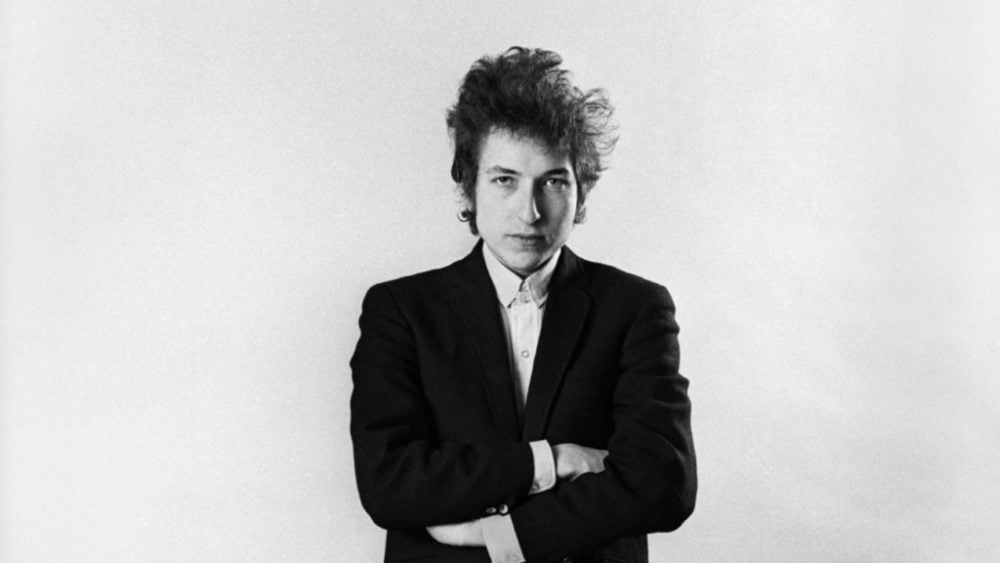
Examining the setlist for the first Bob Dylan concert at Carnegie Hall in 1961

Bob Dylan may have been born a genius, but we may have never known if he hadn’t found the idyllic conduit of folk music. After an adolescent attachment to classic 1950s rock ‘n’ roll, Dylan became aware of a more word-dense and expressive musical style. While many folk artists turned Dylan’s head, none quite met the life-changing impact of Woody Guthrie.
Dylan’s interest in Guthrie and the wider folk scene led him to New York City in January 1961, following a college dropout and a few run-ins with his father, who saw safety in a traditional career path. Item one on Dylan’s bucket list was to find Guthrie, who, at the time, held the status of divine entity to the young troubadour.
Sadly, by the early-’60s, Guthrie had been taken ill with congenital Huntington’s disease. The pioneering anti-fascist protest singer wasn’t without good company, though. Guthrie was joined at his bedside by his number one fan, who would play some of his folk covers and originals while gleaning as much wisdom as he could from the master.
It was around this time that Dylan would write one of his first folk songs titled ‘Song to Woody’, which based its structure on Guthrie’s own song, ‘1939 Massacre’. It’s difficult to pinpoint an exact pivotal moment that led to Dylan’s unprecedented success as a musician, but Autumn 1961 is probably a good point to place a flag.
After meeting Guthrie and circling the New York folk circuit, which mainly consisted of small cafes, Dylan had his big break when scouted by Columbia Records’ John Hammond. Hammond saw something in Dylan’s raw, youthful style that few others could and fellow executives ridiculed him at the time. “The vice president of Columbia Records said just right off, the most horrible thing he’d ever heard in his life,” Hammond would later recall. “Hammond’s folly.”
With his new signing confirmed, Hammond didn’t hang about and booked a concert for the young hopeful at The Carnegie Chapter Hall, a small annexe attached to the main, more famous Carnegie Hall, just days later, on November 4th, 1961.
Despite the ostensible locational disappointment, Dylan appeared at the smaller Carnegie Hall venue to greet an audience of just 53 and 147 empty seats. It’s uncertain why the concert was quite so intimate, but the rushed booking and lack of promotion probably played a hand. Furthermore, a $2 entry could have been enough to turn punters away at the time, especially as Dylan hadn’t yet released any official records.
Dylan’s first concert at the Carnegie Chapter Hall marked an exciting moment in the young folkie’s genesis. With Blues covers of the likes of Leadbelly, Bessie Smith, John Lair and Bukka White, Dylan brought a folk shade to some of his earlier influences which he tessellated with his more recent folk education.
Upon studying the setlist below, Dylan’s allegiance is immediately apparent, with three Guthrie covers and ‘Song to Woody’ taking the limelight. Crucially, the list shows some of the earliest signs of Dylan’s songwriting prowess. ‘Song to Woody’, ‘Man On The Street’, ‘Talkin’ Bear Mountain Picnic Blues’ and ‘Talkin’ New York’ were all innovative originals derived from traditional folk structures and lyrical patterns. ‘Talkin’ New York’ was Dylan’s latest concoction at the time and received its first recorded airing at the Chapter Hall.
The crutch of folk forbears was important in Dylan’s development, but his unique style began to gestate as he gained confidence during his second album in 1963.
Just a couple of weeks after the concert at Chapel Hall, Dylan hit the studio at Columbia on 7th Avenue, New York City, to record his eponymous 1962 debut album. Sharing six tracks, including two Dylan originals, with the Carnegie setlist, Bob Dylan brought refinement to a selection of folk and blues re-imaginations marking the beginning of Dylan’s extraordinary studio output.
Bob Dylan live at Carnegie Chapter Hall 1961 – setlist
- ‘Pretty Peggy-O’ (traditional)
- ‘In The Pines’ (Huddie “Leadbelly” Leadbetter)
- ‘Gospel Plow’ (traditional)
- ‘1913 Massacre’ (Woody Guthrie)
- ‘Backwater Blues’ (Bessie Smith)
- ‘A Long Time A-Growin’ (traditional)
- ‘Fixin’ To Die’ (Bukka White)
- ‘Talkin’ Bear Mountain Picnic Massacre Blues’
- ‘Man On The Street’
- ‘This Land Is Your Land’ (Woody Guthrie)
- ‘Talking Merchant Marine’ (Woody Guthrie)
- ‘Black Cross’ (Lord Buckley)
- ‘Freight Train Blues’ (John Lair)
- ‘Song To Woody’
- ‘Talkin’ New York’
Listen to the live recording from Bob Dylan’s set at Carnegie Chapter Hall in November 1961 below. ‘Pretty Peggy-O’ and ‘This Land Is Your Land’ were cut from the recording due to copyright laws, but both were subsequently released on The Bootleg Series Vol. 7.

Never Miss A Tale
The Far Out Bob Dylan Newsletter
All the latest stories about Bob Dylan from the independent voice of culture.
Straight to your inbox.