


The secret to James Dean Bradfield’s guitar playing

James Dean Bradfield of the Manic Street Preachers is the best guitarist of his generation, and that is a hill I will die on. The famously modest Bradfield would probably hunt me down for sport if he ever heard me say it, but that’s a risk I’m willing to take, especially when he came to prominence at a time so averse to the idea of guitar heroes.
British rock in the 1990s was a weird time for the concept. One would assume that, since it was the last time guitar music was considered the biggest, most important music in the country, that there’d be loads of them about. However, that’s not strictly speaking the case. To be clear, there were loads of great guitar players. Graham Coxon, Bernard Butler, Jonny Greenwood, the list goes on.
However, there is a big difference between being a good guitarist and a guitar hero. Coxon would probably set himself on fire before setting aside a minute-long period of a song dedicated simply to shredding his ever-present Telecaster. Greenwood would probably go full ‘Creep’ and make bursts of angry guitar noise until you went away. Butler could shred with the best of them, but was always too busy plotting to murder Brett Anderson to ever actually do it.
Then you had JDB. A man so obsessed with Slash that he willed himself into learning Appetite For Destruction in its entirety within months of getting the record. Smash cut to a few years later, and he’s noodling the solo to ‘Motorcycle Emptiness’ on Top Of The Pops, a love letter to Guns N’ Roses’ softer moments if there ever was one.
What makes James Dean Bradfield the soul of the Manic Street Preachers?
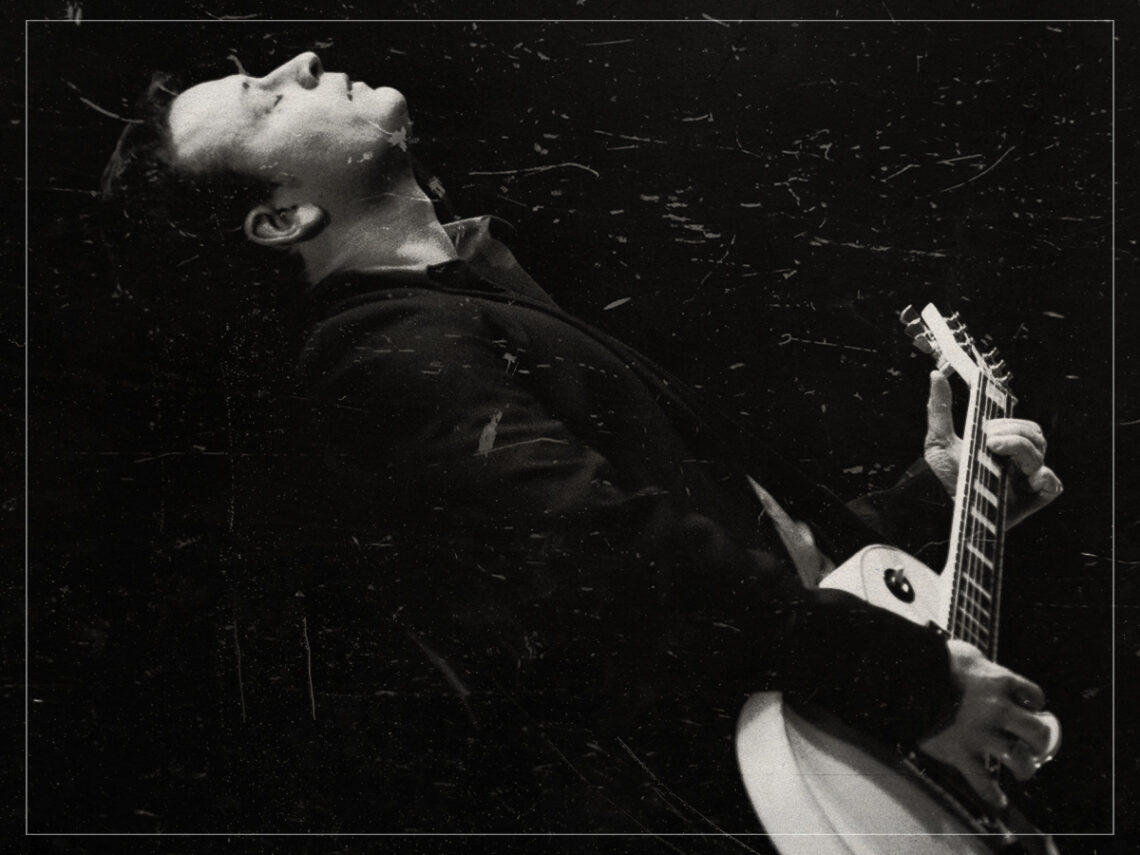
While the quintessential image of the Manic Street Preachers’ guitar icon is of him with his holy white Gibson Les Paul slung accross his shoulders, shredding through ‘Motown Junk’ and ‘You Love Us’, that’s only one part of what makes him such an icon. The truth is, that’s the secret to his guitar wizardry. That, despite being a shredder equal to anyone you might mention, James Dean Bradfield is a multi-dimensional guitarist who can more or less turn his hand to any kind of guitar music.
I mean any too. Just take a look at his typical warm-up routine that he detailed in an interview with Guitar World. “I always do the [instrumental] passage from Stevie Wonder’s ‘Sir Duke’, and the old jazz tune ‘Sweet Georgia Brown’, the Harlem Globetrotters’ theme,” he said. “I do that because it has passing jazz stuff in it which warms your hands. And I’ve got my own version of Randy Rhoads’ ‘Crazy Train’ solo and ‘Lonely Is The Night’ by Billy Squier – I always play that riff and tweak my sound around that. Then when [the Manics] get together we usually warm up with ‘You Love Us’.“
To recap, that’s a funk number, into a jazz tune, into a shredding heavy metal guitar solo, into a chiming power-pop riff, followed by their thrashing punk-pop classic. That’s the true secret to Bradfield’s guitar playing: he didn’t settle for one style; he’s that good at all of them. After the hard rock style of the band’s early work, you’ve got the chiming arena rock hooks of Everything Must Go, the funk licks of ‘Kevin Carter’, the Keith Levine style shards of post-punk noise on Journal For Plague Lovers and Futurology, among countless others.
He also delivers the goods unplugged as well. On nearly all the Manics’ records, there’s a song like ‘Small Black Flowers That Grow In The Sky’ or ‘This Joke Sport Severed’, where Bradfield shows what he can do acoustically as well. That said, the best example of this is almost certainly on Rewind The Film, a whole album built around the band’s love of the Bruce Springsteen record Nebraska, one that seeks to strip back their sound the way that The Boss did on his stark masterpiece.
The key here is that Bradfield is not being a dilettante. He’s not learning guitar tricks for the sake of learning guitar tricks. For every dimension to his guitar playing, there’s an album where the whole band immerse themselves in that sound. Thus, in discovering the secret to James Dean Bradfield’s guitar playing, you also discover the secret to the Manic Street Preachers as a band. They have the enviable ability to switch their sound dramatically with every album and yet still remain, unmistakably, the Manic Street Preachers.
