


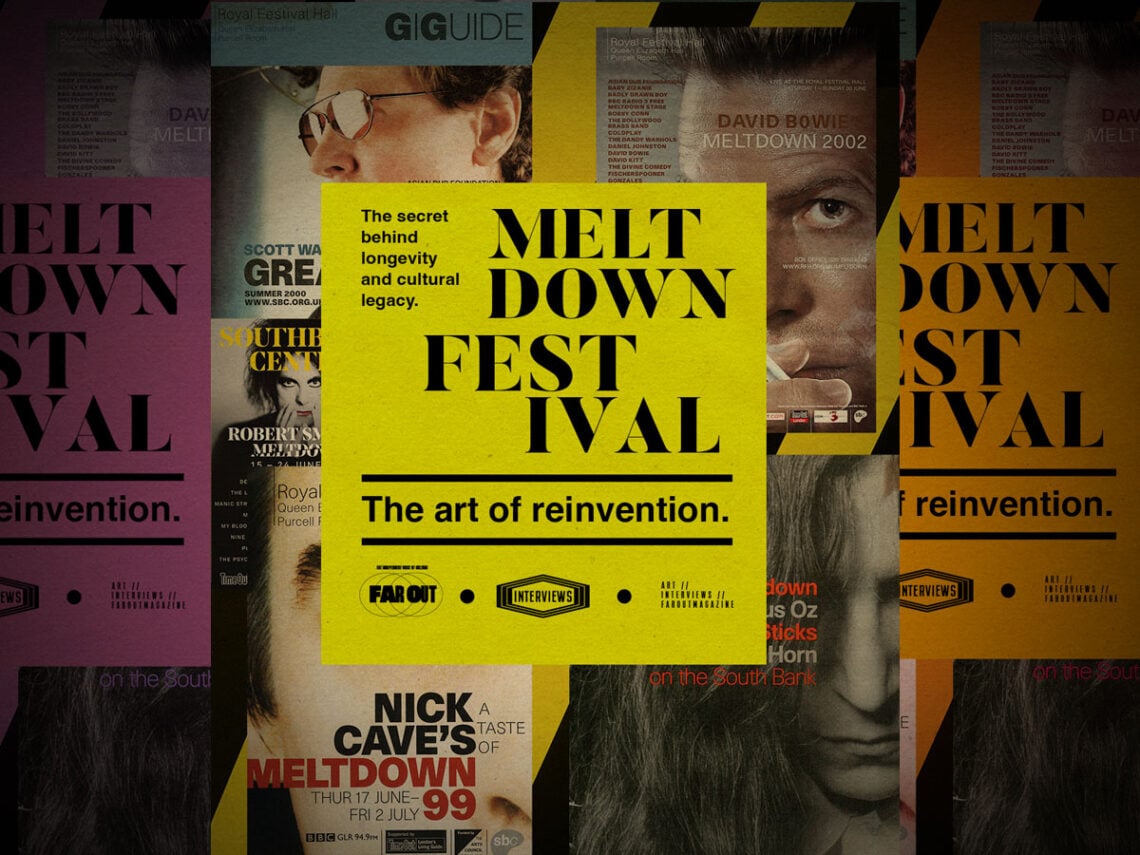
The art of reinvention: The secret behind Meltdown festival’s longevity and cultural legacy

Anyone who’s ever bought tickets to a festival will understand the chaos that comes with being an attendee – and that’s without taking on the responsibilities of planning one yourself. Over the past few years, we’ve seen a handful of flagship festivals disappear into the hands of different challenges, from funding to lack of demand, making the landscape more competitive than ever.
Over 100 UK festivals have been cancelled since 2019, while some favourites, like Wide Awake, have announced a “break”, which puts into perspective the mammoth task of running one that not only succeeds in its first run but in the years to come. While we still have the likes of LIDO, All Points East, and more to choose from, it points out that even the most established players are struggling with longevity.
Some, however, seem more immune than others, which also calls attention to the fact that, when it comes down to it, success in the festival landscape comes from a handful of different threads, one of which is cultural relevance and constant reinvention of the formula. In 1993, Southbank Centre launched Meltdown festival, the longest-running artist-curated festival, which bridges the gap between music, art, performance and film in the local community.
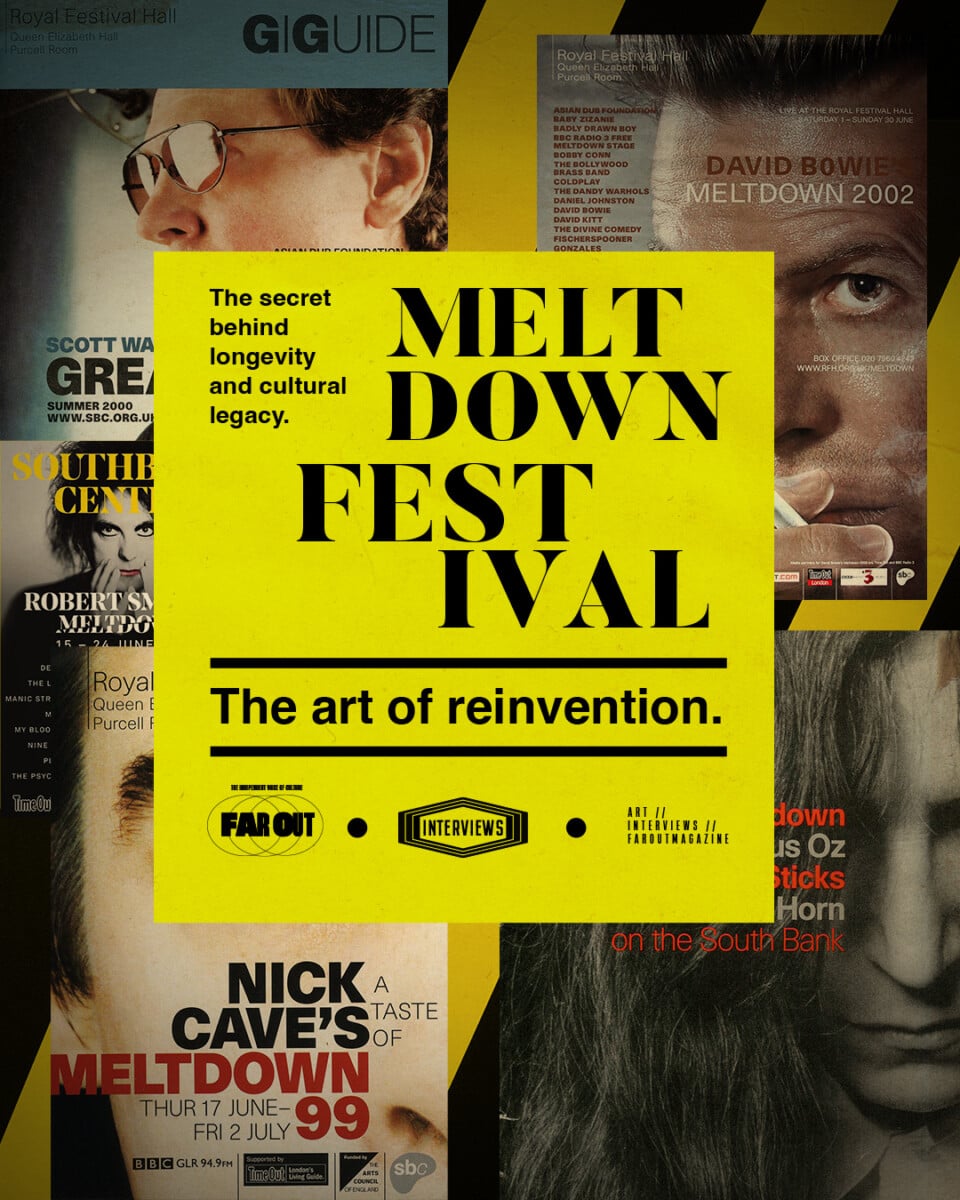
Over its 31-year run, Meltdown has been led by some of the most iconic names in music, including David Bowie, Yoko Ono, John Peel, Robert Smith, David Byrne and more. It has also witnessed some of the most legendary musical moments in history, like the Elvis Costello-curated 1995 edition, which marked Jeff Buckley’s final ever performance in the UK.
Peel marked the first DJ in 1998 with a lineup consisting of Damon Albarn, The Jesus and Mary Chain, Sonic Youth, and more. In 2004, Morrissey coordinated a reunion of the New York Dolls, while other stalwards of the industry, including Nina Simone, Ray Davies, Grace Jones, Iggy Pop, Siouxsie Sioux, and a host of others, have graced the coveted lineup over the years, celebrating a fusion of all genres, from rock and pop to jazz and classical, and everything in between.
Suffice it to say, therefore, that Meltdown, for what it’s worth, is the festival. And while several others struggle to keep above water, this year – a milestone edition marking the Southbank Centre’s 75th anniversary – will see a special event with global megastar Harry Styles at the helm. Appearing in the middle of the singer’s Together Together Wembley residency, Styles’ Meltdown will no doubt be one of the festival’s biggest years yet, spanning 11 days of music community and all that Meltdown has to offer.
Discussing the festival’s shifting identity with Far Out and explaining what sets it apart from other initiatives in the current climate, Jane Beese, Head of Contemporary Music at the Southbank Centre, describes Meltdown as a reflection of its “cultural moment”, offering “a unique invitation to the greatest artists of our time”. She explains that, since its inception in 1993, it has maintained its core identity, with artists “at the top of their game” making the festival their own.
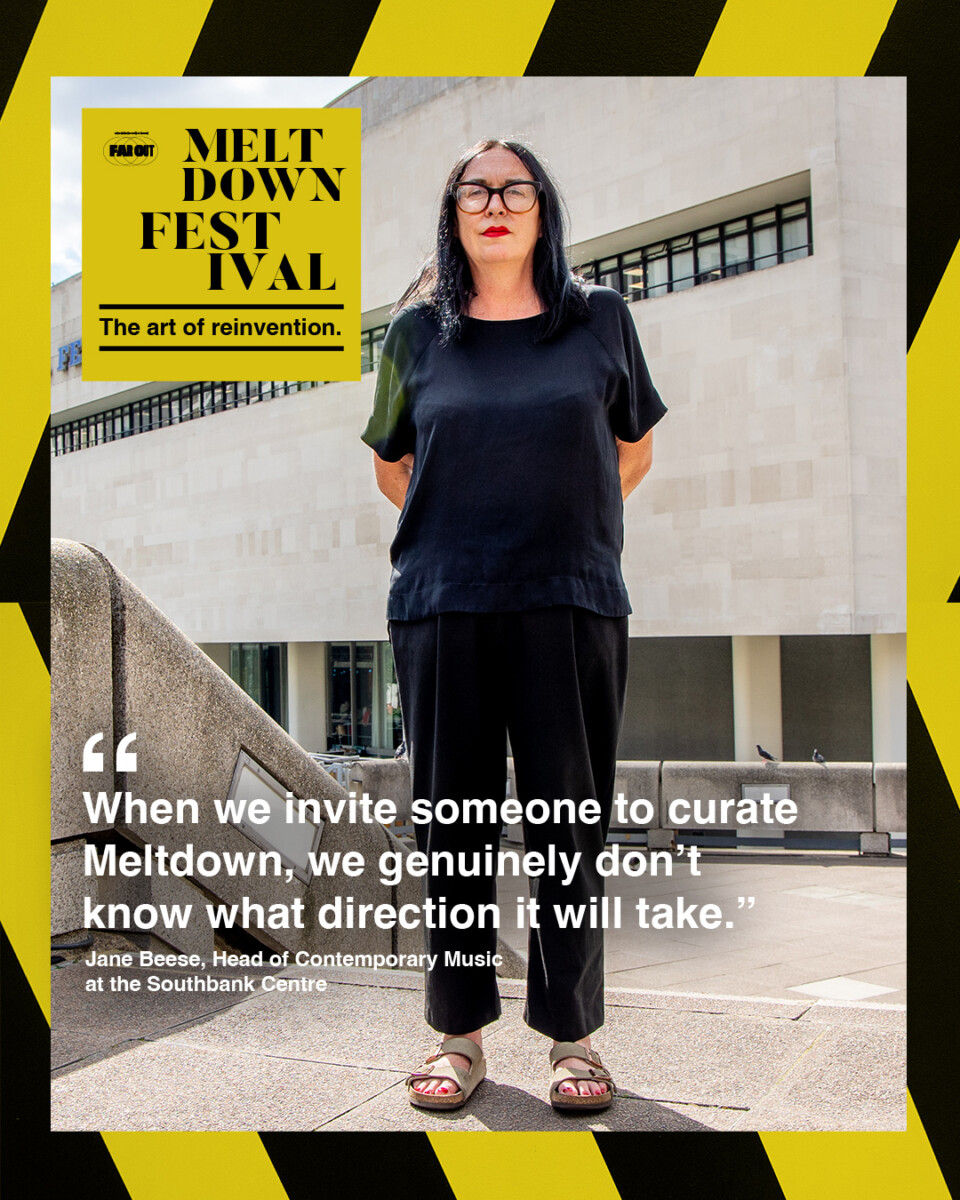
Each year, therefore, there has been a natural evolution and reshuffling of the Meltdown formula – something that Beese credits partially to its “feeling fresh” for three decades. She also claims this to be the most exciting part: the unpredictability that comes with different artists taking the reins year on year. “When we invite someone to curate Meltdown, we genuinely don’t know what direction it will take,” says Beese.
“One year it might lean into visual art, as it did with David Bowie’s Meltdown, where an installation of works from his favourite artists was on his Bowieart site. On Patti Smith’s Meltdown, spoken word and literature were an integral part of the festival offering; performance and dance were a focus for David Byrne, while James Lavelle’s curatorship incorporated an archival display of memorabilia from his legendary Mo’ Wax label.”
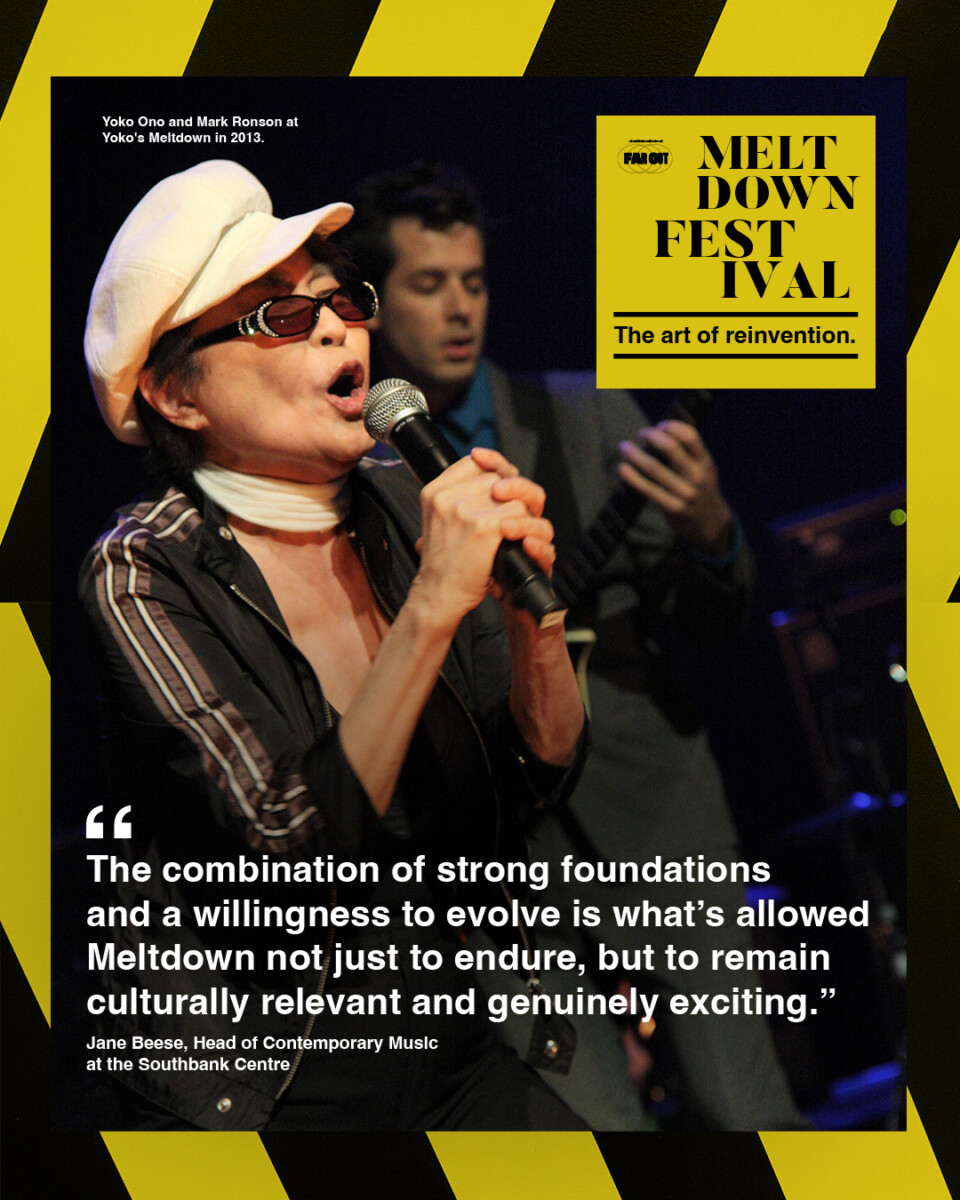
She continues, “Another year it might lean into club culture or orchestral reinterpretation, underground scenes or global sounds. Some curators, like Yoko Ono and Grace Jones, have featured in the line-ups for previous Meltdowns, and that alone brings a really interesting sense of purpose and perspective to their own curation.”
Another aspect she touches upon is that different artists bring their own interests, musical or otherwise, as well as their own unique communities. While these shifts might present their own challenges – and often, they do – that’s the whole point, as it ensures that no two editions ever feel the same. Ultimately, therefore, it’s built on risk-taking, which, in today’s climate, can be a scary concept.
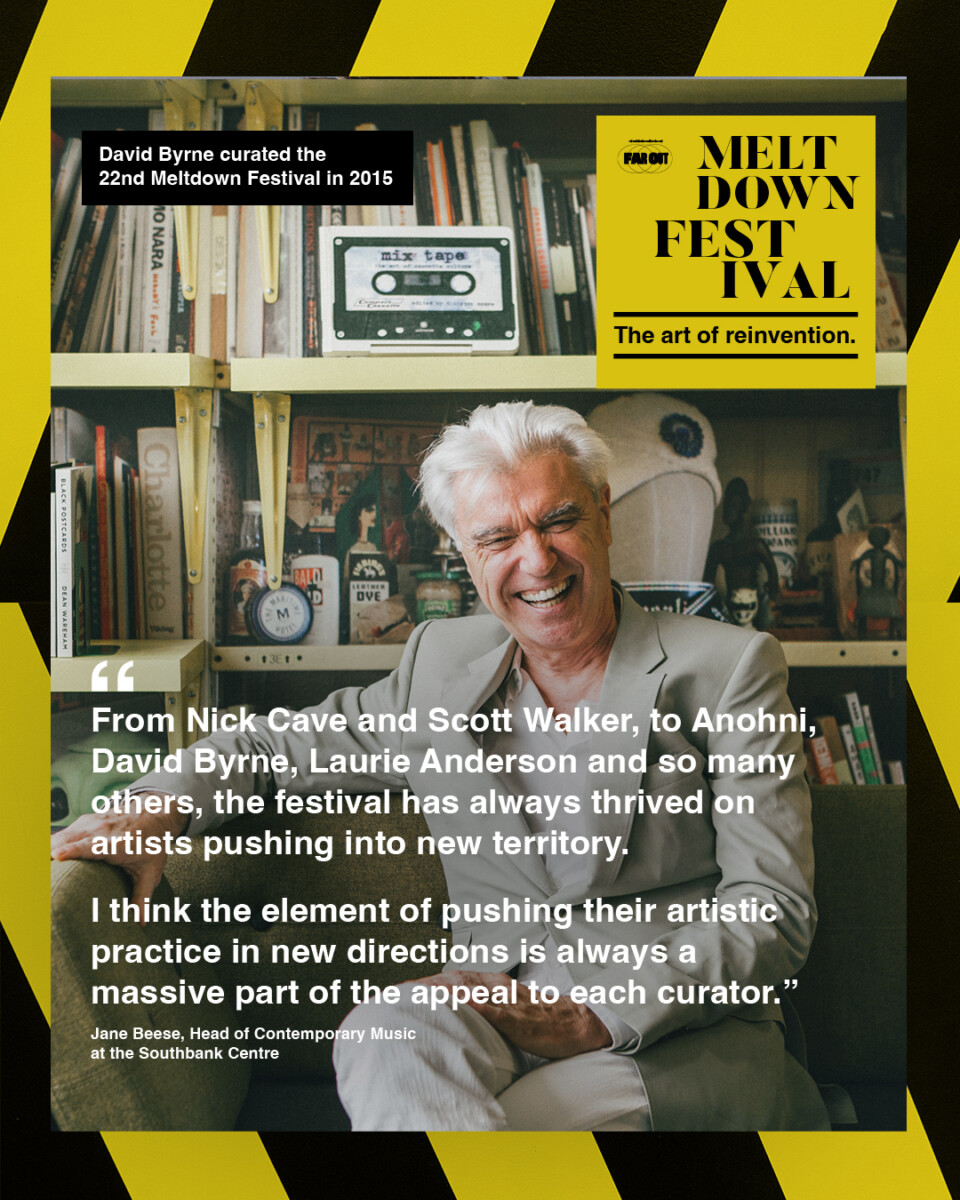
However, that’s what its history is built around, and one of the main reasons why it continues to thrive. “From Nick Cave and Scott Walker, to Anohni, David Byrne, Laurie Anderson and so many others, the festival has always thrived on artists pushing into new territory,” says Beese. “I think the element of pushing their artistic practice in new directions is always a massive part of the appeal to each curator.”
As such, Beese explains that innovation doesn’t sit “in opposition” to Meltdown’s legacy. Rather, it is its legacy. “What we’re careful about is protecting the integrity of the offer: the genuine creative freedom and collaboration, and the openness of the site. As long as those principles remain intact, each curator can take us somewhere unexpected without feeling constrained by what’s come before,” she says.
As 2026 marks the Southbank Centre’s 74th anniversary, Beese explains that the milestone will be less about altering or changing anything about Meltdown but amplifying what it’s already about. Another aspect will be looking forward and taking in the cultural demands of the current landscape, like what it takes to succeed and continue to champion “young people, curiosity, creative freedom and experimentation” in the local community.
On what, specifically, this might look like, Beese explains, “You’ll see a continued emphasis on participatory and free public programming, and on interdisciplinary collaboration across the site. 40% of what we do at the Southbank Centre is free, which can really democraticise and open up the ways people interact with our venues and programming.”
Of course, a major pull this year is the involvement of Harry Styles, a new venture for the singer, whose fourth studio album, Kiss All The Time. Disco, Occasionally marks one of the year’s most highly anticipated releases, followed by one of his most ambitious tour runs to date. Styles will also no doubt bring his personal interests and community to the project, giving it his own unique touch.
As Styles said in a press release following the announcement, he aims to share “the music and art that I love” and to celebrate “the rich history of the venue”. He highlighted their shared belief that “music is a vital part of life” that “brings us together”, with the Southbank Centre having been at the “heart” of this community by providing “easy access to great music” for the past few decades.
“If we think of young British artists who are currently shaping contemporary culture, in and beyond the realm of music, there’s probably no one doing that quite like Harry Styles,” says Beese. “What’s compelling about Harry Styles is the breadth of his artistic world. His influences stretch across pop, soul, rock, electronic music and into underground and emerging scenes, and he’s an artist whose cultural impact moves beyond music into fashion, film and visual language.”
“That interdisciplinary reach feels particularly resonant in our anniversary year,” she continues. “Meltdown isn’t just about concerts – it’s about atmosphere, collaboration, surprise encounters across the site. Harry’s generous instinct for collaboration and his openness to different creative communities make him a very natural fit for that.”
She also says that there is something powerful about an artist of Styles’ “global stature” focusing on “an arts centre and trying a brand new great venture, powered by a belief that easy access to great music is vital and a real force for good.” That “generosity and openness” is not only the spirit of Meltdown but what’s kept it going for as long as it has.
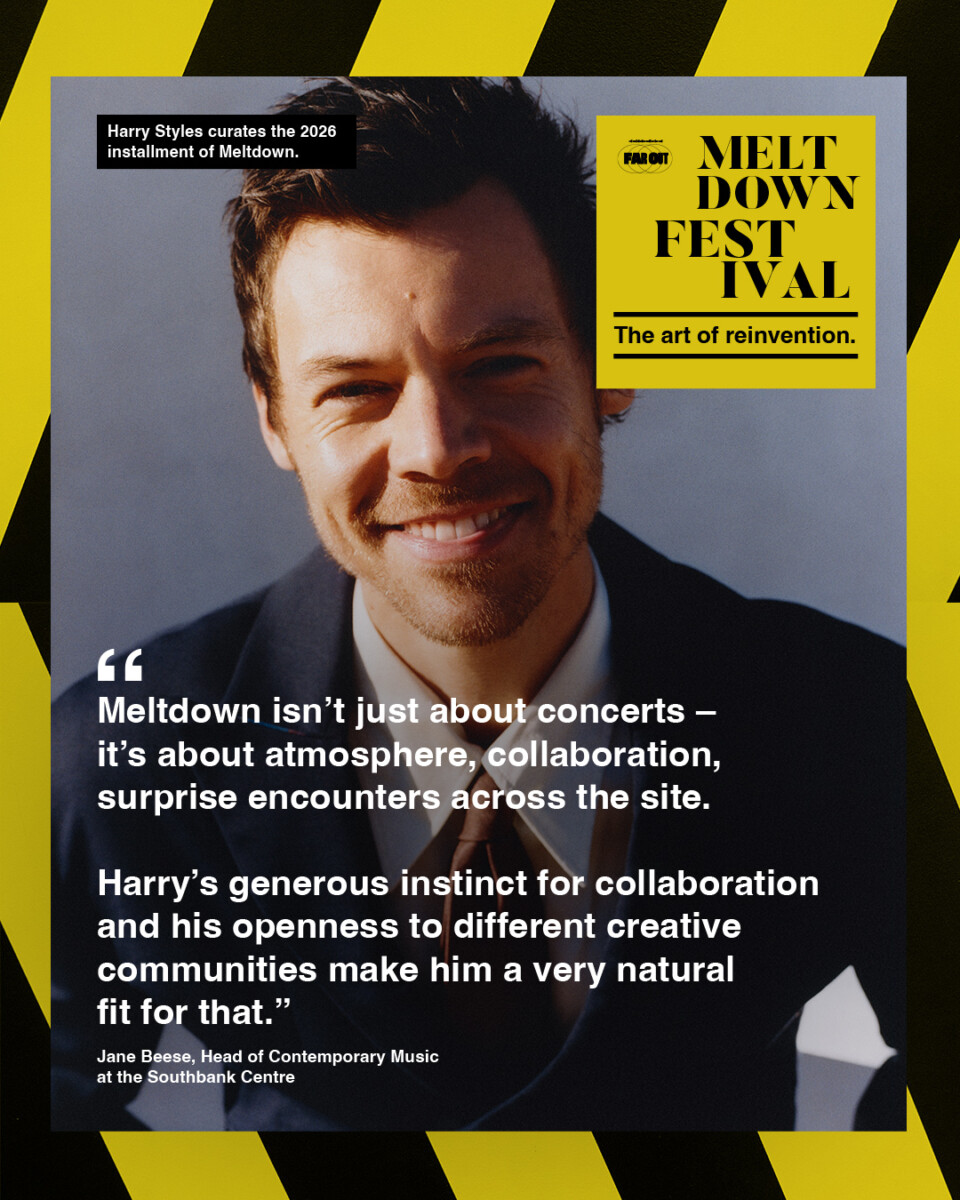
One of the many questions that people will think about this partnership is how it initially came about. With a major year in the works for Styles, how does Meltdown fit into his broader efforts, both as an artist and community leader? “Conversations around Meltdown always begin with thinking about who feels culturally current, interesting and aligned with our values at that particular moment,” says Beese. “Harry was someone we felt embodied both artistic ambition and a genuine belief in music as a connective force.”
“When we began talking, it quickly became clear that he understood the depth of what Meltdown represents – not simply headlining a festival, but shaping its creative identity across the whole site,” she says. “From there, it’s been the collaborative process we undertake with every curator: exchanging ideas, exploring influences, imagining how the spaces might be transformed. It evolves organically and collaboratively, step by step, and the process of working with Harry this year has been fantastic.”
For the lucky few who manage to bag themselves tickets, this year’s edition of Meltdown will be their first. And this isn’t just any festival – it is one built on its own unique vision, curated by different artists who each have placed their own spin on it. So it’s also a means of getting under the skin of those at the helm while also celebrating the fact that they’re a part of something truly special.
According to Beese, the best word here is “curiosity”. Meltdown is an “opportunity” to “peek into the record collection and personal interests of the curator,” she explains, which leads to greater musical enjoyment and interesting “cultural discoveries”. Some people might attend to see their favourite artist, and in the process, discover something completely different or unexpected, like a “DJ set on the terrace, a workshop in one of our foyers, or a collaboration they didn’t know they needed to witness”.
As we’ve established, it’s also a festival based on icons and visionaries. “Aside from the curators themselves, many are surprised to know the line-ups have featured Nina Simone, a reunion of the New York Dolls, and Jeff Buckley’s final performance in the UK,” says Beese. “Under the guest curatorship each summer, some really incredible moments occur on our Southbank Centre stages. There’s a shared sense that something unique is unfolding, often in ways that will never be repeated. This year will be an opportunity to see Harry’s artistic world brought to life in a way no one will have seen before.”
With a handful of festivals struggling to sustain events year on year, Meltdown’s secret becomes clear – going strong for as long as it has comes down to a variety of different strengths, including its basic framework (artist-curated) and its creative freedom. “I think, in part, it comes down to clarity of purpose and flexibility of the model,” says Beese.
“The purpose – offering artists genuine creative freedom and audiences genuine access – has remained consistent,” she continues. “The form changes every year. Because the festival is artist-curated, it never becomes formulaic. It’s renewed annually through a different creative lens. And because it sits within the Southbank Centre, with its year-round communities, resident orchestras and commitment to free public space, it’s rooted in something bigger than a single moment in the calendar.”
She concludes, “That combination of strong foundations and a willingness to evolve is what’s allowed Meltdown not just to endure, but to remain culturally relevant and genuinely exciting.”
