


The scientific inaccuracies of Danny Boyle and Alex Garland movie ‘Sunshine’

The filmography of English director Danny Boyle has admittedly swung around in terms of its consistency of quality. Sure, there are some brilliant works of cinema that have come from the Lancashire-born director, including Trainspotting and 28 Days Laters, but there have also been some dodgy efforts, like 127 Hours and Yesterday.
Sitting somewhere in the middle of Boyle’s back catalogue is his 2007 science fiction psychological thriller Sunshine, written by the filmmaker’s frequent collaborator Alex Garland, known for his novel The Beach, the screenplay for 28 Days Later, as well as his own directorial efforts, Ex Machina, Men and Civil War.
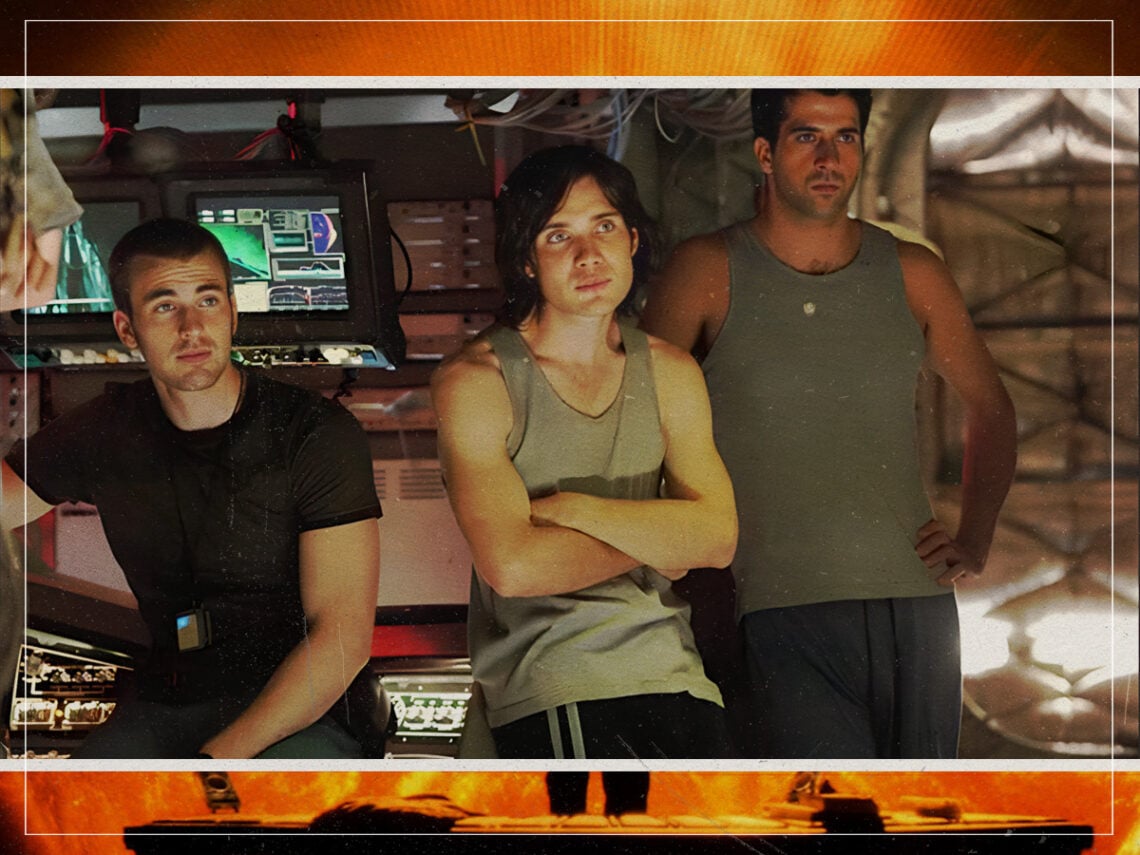
Sunshine takes place in the year 2057 and tells of a group of astronauts who are sent on a deadly mission to reignite the dying sun. Starring Cillian Murphy, Chris Evans, Rose Byrne, Michelle Yeoh, Benedict Wong, and Mark Strong, Boyle and Garland’s 2007 effort was relatively well-received upon release, even though it failed to earn back its $40million budget at the box office.
In addition to Sunshine’s commercial disappointment, the film was criticised for its handling of science, with several claims of inaccuracy. Garland had been drawn to writing the film after reading an article about the sun’s death and thought it would be interesting to put the future of humankind on the shoulders of just one person.
Of course, neither Garland nor Boyle are scientists themselves, so they hired the help of a number of Nasa employees and astrophysicists, including Brian Cox, who advised the best way to tell the story. Cox told Garland and Boyle to reduce the kind of nuclear device sent to reignite the sun from the mass of the moon to the size of Manhattan.
Still, even with Cox’s advice, other scientists felt that the theory behind Sunshine was utterly wrong. Oxford’s Dr Chris Lintott told The Guardian shortly after the film’s release, “From a scientist’s point of view, it’s complete rubbish. The science of the plot is a bit ridiculous. They never explain why the sun has gone out, and I’d love to know how their bomb was supposed to work.”
At the core of Sunshine’s historical inaccuracies was the commonly held understanding that the sun has around five billion years left before it exhausts its nuclear fuel and enters a red giant phase. In addition, even a hefty nuclear bomb would not emit enough energy to reignite the sun after it had prospectively dimmed.
Furthermore, the film’s spacecraft would simply not be able to get close to the sun even if it were mounted with advanced protective shielding. Finally, gravity was not given the utmost attention as the astronauts made their journey, with an absent rotating section needed to allow walking and movement onboard the spacecraft.
Still, despite the scientific criticisms, Cox felt that there ought to have been some leeway for Garland and Boyle to tell their story. On the DVD commentary, he noted, “Sunshine is not a documentary. It’s trying to just, in an hour and forty minutes, get across a feeling of what it’s like – not only to be a scientist, because obviously there’s much more in it than that. So, I found it interesting to watch the kind of people that get upset because the gravity is wrong.”
It’s an interesting battle between artistry and science when it comes to Danny Boyle’s Sunshine, and it shows a clear divide between those who want their science fiction movies to be entertaining and those who want them to be scientifically accurate. All in all, the 2007 film wasn’t quite either and suffered on both fronts, scientifically ropey and with a narratively stuttering end product.
