


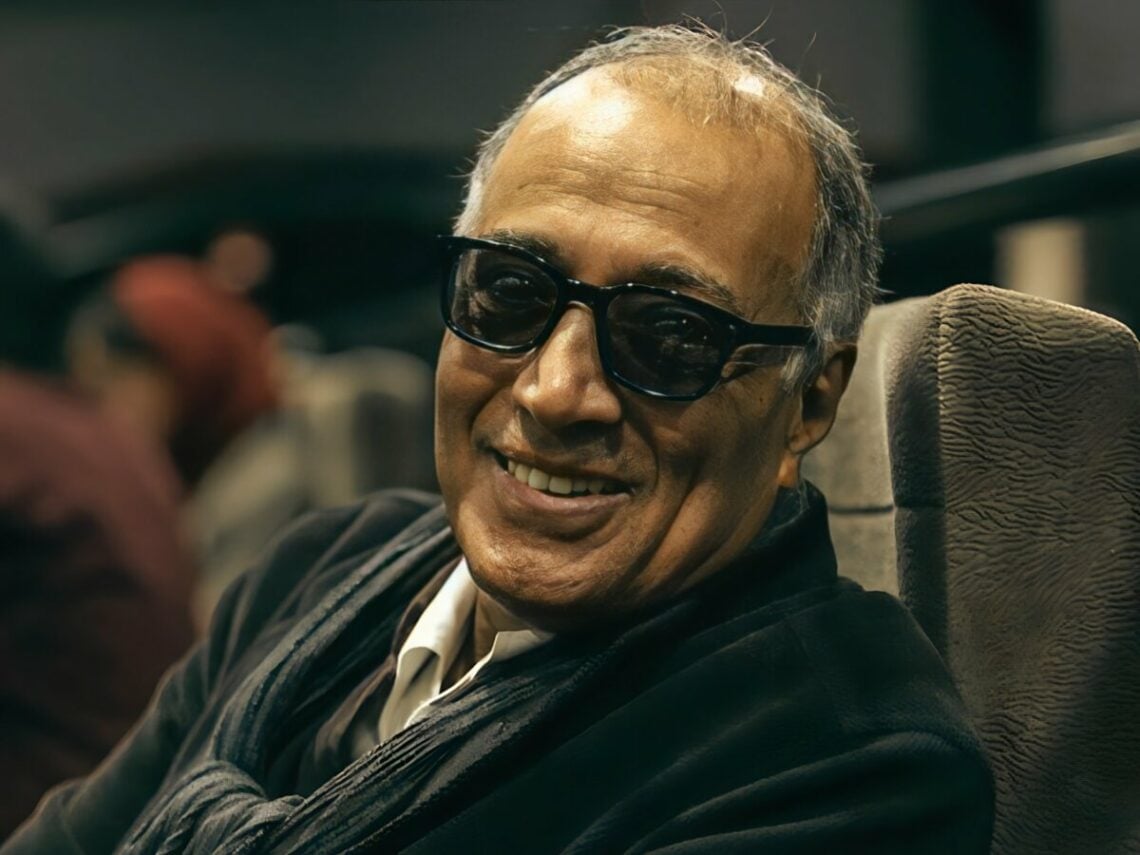
The scene that took Abbas Kiarostami 17 years to realise

There’s something very special about the work of Iranian cinema icon Abbas Kiarostami. Admired greatly by many of his fellow filmmakers, most notably Martin Scorsese, the Tehran-born director has established himself as one of the most acclaimed figures in his country for his works that explore the deeper complexities of the human experience.
Kiarostami came to international attention for his stunning docufiction film Close-Up, Where Is The Friend’s Home? and his Koker trilogy, before going on to draw further acclaim for The Wind Will Carry Us and the Palme d’Or winning Taste of Cherry. Naturally, many of Kiarostami’s works take place in his native Iran, but he has ventured outside the country on a number of occasions to deliver equally impressive pieces of cinema.
In 2010, he released Certified Copy, which was filmed in Italy, while in 2012, Someone in Love saw the director set out to Japan to make a film with Rin Takanashi, Tadashi Okuno, and Ryo Kase. Kiarostami’s final film served as a touching farewell to his career of genuine excellence as it featured a scene that he had been trying to work out for nearly two decades.
The film focuses on a young Japanese woman by the name of Akiko, who works as a part-time escort while she is studying. One evening at work, she is sent to meet an elderly professor, but rather than having a typical client-escort experience, Takashi treats her with kindness and helps her with her personal issues.
However, as the story unfolds, Akiko’s boyfriend becomes somewhat jealous, until he starts to believe that Takashi is her grandfather and not her client. In an interview with Filmmaker, Kiarostami had spoken of how the newfound granddaughter role of Akiko is learned through Takashi, which is contrasted with an earlier scene in which she drives past her grandmother on a number of occasions.
The director had admitted that he really wanted to make the scene work, so much so that he had been working on it for several years but never quite knew how to make it arrive on screen. “You cannot imagine how important this sequence has been in the process of making this film,” Kiarostami noted, “In most of my films, there’s usually one scene, one shot or one sequence that haunts me and I just go and make the film because I want to see this sequence happen.”
“This is what happened with this sequence,” the filmmaker added. “Seventeen years ago, when the idea of the film was triggered, the only reason why I wanted to make this film was to make this sequence. I wanted to have one single shot of this girl driving three times around the roundabout, and us seeing the grandmother from a closer and closer distance, and us finally having a clue as to who she is”.
The “crucial sequence of the film” was “abandoned” by Kiarostami because of the lack of roundabouts in Japan, but finally, he decided to make it with the sequence edited. Some directors are driven by a wider narrative or even just a theme, but when it came to Kiarostami making Like Someone in Love, he seemed to have a burning desire to make a single sequence, one that would go on to represent the entire film. The only thing was that it took him 17 years to make it.
