


The scene that Quentin Tarantino called a “true masterpiece” and how it shaped his movies: “My head is a sponge”

A lover of movies from everywhere, from Japan to Jakarta, American filmmaker Quentin Tarantino often discusses his passion for world cinema, and his sincerity makes the director worth listening to.
His devotion to cinema worldwide no doubt comes from his time working in a video store throughout his youth. The teenage creative put together an invaluable database of knowledge that has since been used throughout his 11 feature films, from Reservoir Dogs to Once Upon a Time in Hollywood.
Learning the craft from the sheer makeup of cinema itself, Tarantino preferred to watch and learn from the masters of the art form, becoming a student of such filmmakers as Martin Scorsese, Akira Kurosawa and Sergio Leone, rather than enrolling in film school. This decision would not only colour his career moves but shape his legacy. Tarantino’s work is not defined by education in any formal capacity, but sheer adoration for his medium and a near-encyclopaedic appreciation for it.
Speaking to The Talks about his ability to retain such knowledge, he comments: “[My] head is a sponge. I listen to what everyone says, I watch little idiosyncratic behaviour, people tell me a joke and I remember it. People tell me an interesting story in their life and I remember it”.
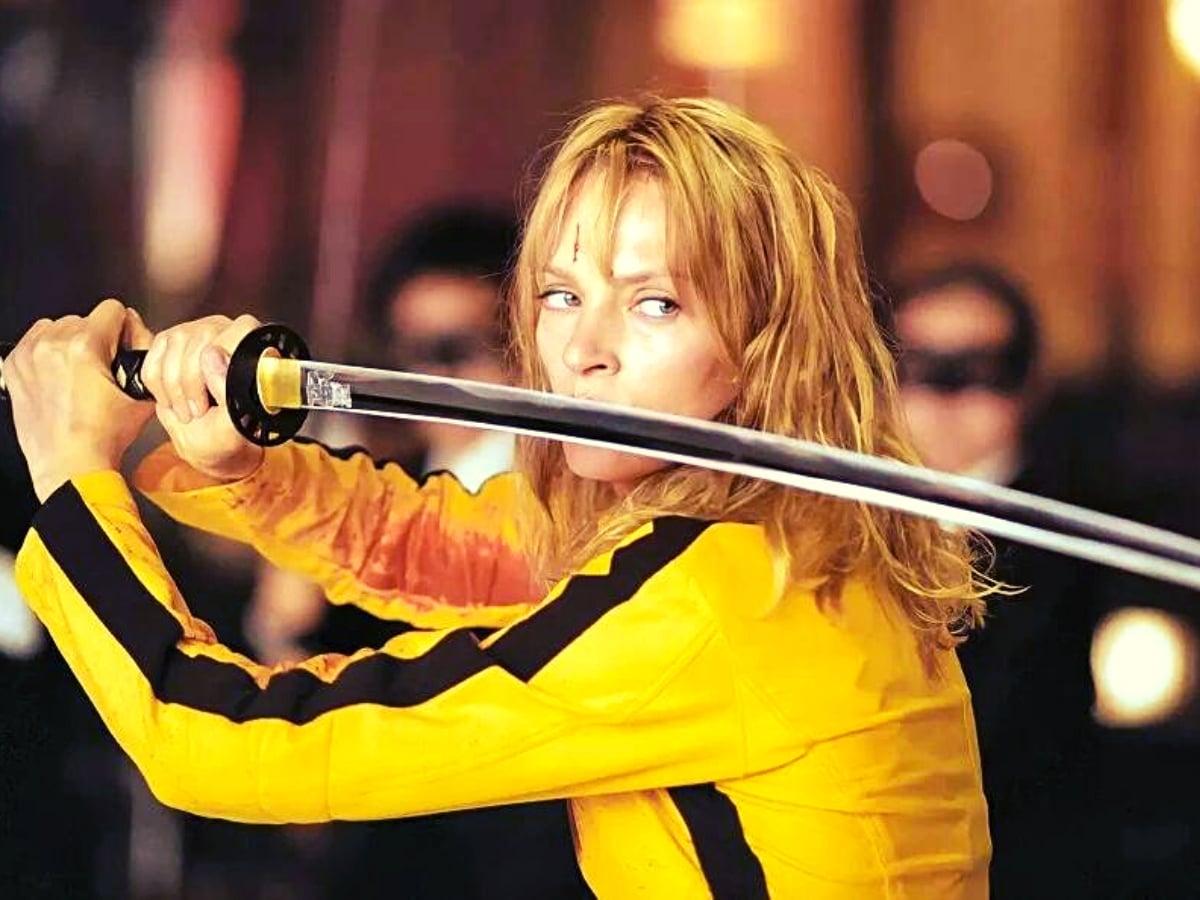
As a result, the celebrated American filmmaker has become proficient in almost every single genre he sets out to champion, with much of his inspiration coming from Asian and Japanese cinema. From the violent classics that inspired 2003’s Kill Bill to the romance of early samurai classics that informed the tone of The Hateful Eight, Tarantino’s love for Asian cinema is no industry secret.
Having previously discussed his love for Kinji Fukasaku’s Battle Royale as well as the work of Takashi Miike, even appearing in the filmmaker’s 2007 flick Sukiyaki Western Django, Tarantino is also a passionate fan of the work of director and actor Takeshi Kitano.
It is Kitano’s seminal 1993 yakuza movie Sonatine that Tarantino holds a particular love for, releasing an introduction to the movie for the distribution company Rolling Thunder. Calling the movie “a slightly different take on the standard yakuza film,” Tarantino gushes over Sonatine’s quality, praising Kitano for his role as the writer, producer, director, editor and star of the subversive genre film.
The film, which is something of a crime-comedy hybrid, follows the story of Aniki Murakawa (Kitano) and his gang of yakuza who are sent from Tokyo to Okinawa to help end a gang war. When this turf war further escalates, Murakawa and his team are forced to retreat to the beach and lay low until they can launch their attack, leaving them with plenty of free time on their hands.
Left to their own devices, the gang becomes childlike, finding joy in playing puerile pranks and more violent games involving firearms, one of which is Russian Roulette. Playing the game with two of his gang members on the beach, Murakawa takes turns firing toward both people before putting the gun to his own temple and firing. Though after each shot results in nothing but a dull click, it becomes clear that the protagonist never loaded the gun with love rounds at all.
A fantastic scene that is excellently composed by Kitano, the moment is one of many in the film that leaves the audience in awe of Sonatine’s peculiar majesty. Evidently, Tarantino agrees, too, telling the viewer in his outro for the film, “The whole Russian Roulette scene is one of the most funny and surprisingly shocking scenes I’ve ever seen and I think that’s a true masterpiece scene”.
This delicate balance between violence and vaudevillian laughter is what has been speckled throughout Tarantino’s entire filmography. Without the balance between hilarious and horrific, the filmmaker would never have realised his position as one of the finest directors in modern moviemaking history.

Never Miss A Take
The Far Out Quentin Tarantino Newsletter
All the latest Quentin Tarantino content from the independent voice of culture.
Straight to your inbox.