


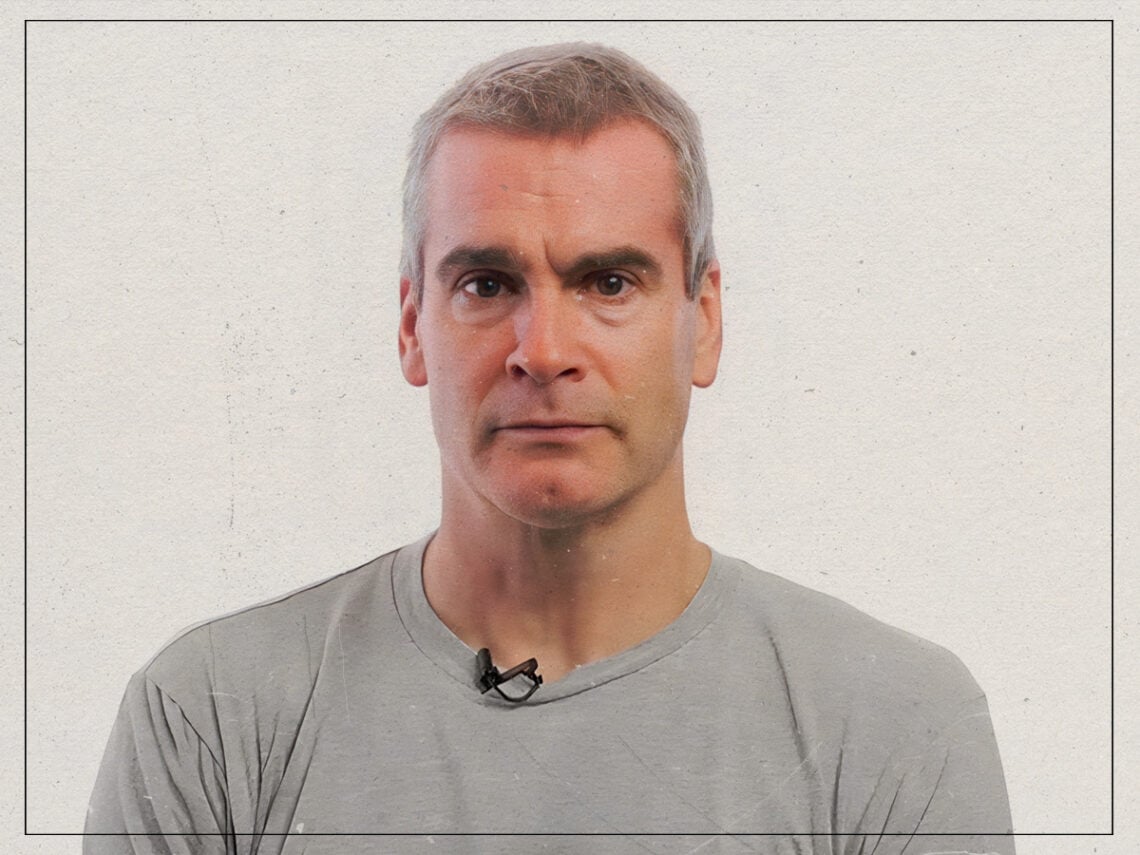
The scariest rock star Henry Rollins ever encountered: “Punk rock judge of the scene”

I’m sure there is a generation of pearl-clutching parents who would simply label punk rock as scary. Loud, abrasive and in your face, I’m sure on the surface it’s viewed as a pretty baseless art form to them, reserved for nothing more than anger and disdain. Of course, we know that a simple peeling back of the first layer reveals so much more than that.
It was always about nonconformism, but in an authentic sense. Punk was a soundtrack, no, a siren call for those sleepwalking into a life controlled by the system. Its anger was directed towards bureaucratic powers, but, for its listeners, it concealed warmth, community and inspiration.
That essence of the genre made its characters all the more compelling. Take Henry Rollins, for example, beginning his anti-establishment creative endeavours with Californian punk band Black Flag, before developing into a renowned spoken word performer and shifting into comedy. And his success in all three disciplines has gone to prove that punk can be no one thing. It can incite sweaty rage in a gig one minute while sparking fits of laughter the next. Whatever the genre thought of Rollins—some seem to think he sold out—he’s dedicated a career to proving it’s an attitude and idea, built in connection to its community.
While Rollins’ career moved towards giggles and guffaws, and saw him holding a microphone with a wry smile, there’s no doubt that if he found his groove again with Black Flag, the threatening glint in his eye would return. His performances knew how to veer on the side of intimidation, for he learnt that from the very best. But there was one unlikely musician, whom he labelled one of the scariest rock stars he’d ever met.
Frontman of Circle One, John Macias, was a mainstay of the Californian punk rock scene in the 1980s and 1990s. He was the very definition of the sort of lost soul that the hardcore punk community enveloped. Struggling from crippling mental health issues and feeling on the outskirts of normal society, the camaraderie of the disillusioned within the genre’s burgeoning scenes was one where he finally felt some understanding and was able to put that into his own words with Circle One.
In fact, he became such a spiritual component of hardcore that Rollins labelled him the “punk rock judge of the scene”, someone who his peers would look up to, yes, but, more importantly, someone who would regularly break up internal squabbles. Because, behind what Rollins considered intimidating eyes was someone who deeply cared about the meaning of punk rock’s resistance.
Macias’ life was one of tragedy, becoming a martyr for the very cause he spoke about in his songs. In 1991, at just 29, Macias was shot dead by police on Santa Monica pier after they were called to an altercation involving the frontman and two other civilians. While police claim Macias was covering himself up with a jacket so as to imply he was armed, it transpired that he was, in fact, unarmed, and his death became a tragedy that sent shockwaves through the punk community.
