


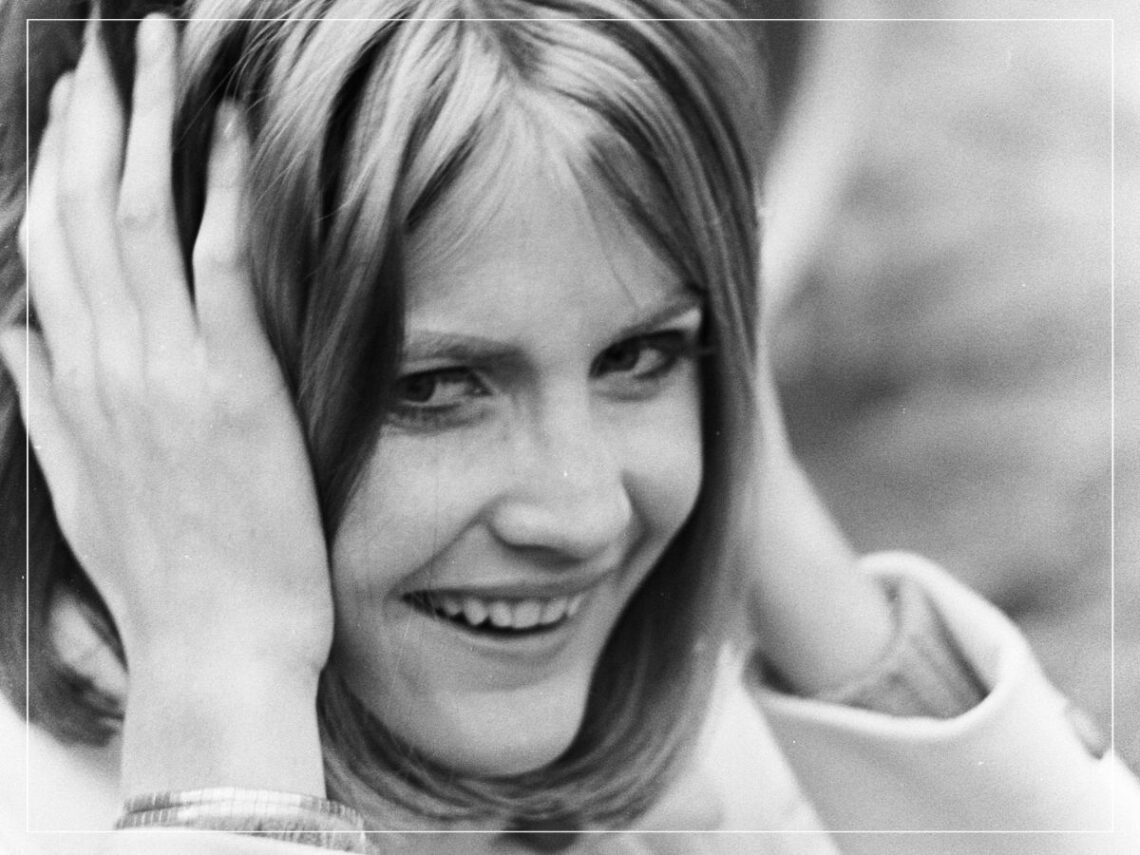
How a love scandal led to Sandie Shaw’s manic comeback with ‘Puppet on a String’

If you’re an artist, some of the major accolades you might end up chasing as a means of adding some credence to your output are a Grammy Award, a Brit Award, or maybe even the Mercury Prize, but for some, the big night of the year is undoubtedly the Eurovision Song Contest.
Now plagued by controversy more than ever, what was once a celebration of European pop music has now descended into a farcical display of geopolitical alliances rearing their heads in the ugliest ways. No longer are we simply able to enjoy it for the campy shenanigans it so frequently serves us; we just have to simply lay back and accept the fact that Denmark, Sweden and Norway are all going to tactically vote for each other no matter what bullshit they’ve entered into the competition.
The phrase ‘Le Royaume-Uni, nul points’ will no doubt cause some people in the UK to have nightmares, and given that we’ve not been the kindest neighbours to many of our European compatriots, that’s totally justifiable. However, we’ve not always been unsuccessful as a nation in the contest, and the first of our victories came all the way back in 1967, in only the 12th edition of the format.
Having first made a splash in the UK charts in 1964 with the release of her version of Bacharach and David’s ‘(There’s) Always Something There To Remind Me’, Sandie Shaw felt like a safe bet for the UK to submit as their entry for the contest, and given her previous chart success on home soil, it felt as though she was destined to break the nation’s duck when it came to triumphing over the rampant successes of the France, Luxembourg and the Netherlands.
However, despite eventually cruising to victory with ‘Puppet on a String’, she was nearly denied the opportunity to compete, and even more surprisingly, it wasn’t as a result of the country’s blazé approach to international relations that almost ended up sabotaging her moment in the spotlight.
One day before the contest, it became known to the executives at the BBC that Shaw had been embroiled in a scandalous extra-marital affair, and so as not to damage their reputation, they strongly considered axing Shaw’s appearance at the eleventh hour. During an appearance on BBC Radio 4’s Desert Island Discs in 2010, Shaw confirmed that her involvement as the third party in the breakup of model Veronica Sands and television executive Douglas Murdoch brought her dangerously close to being barred from the competition.
“The BBC wanted to fire me, because I had a divorce scandal at the time, which had come out just before the contest,” Shaw later explained. “They didn’t think it was the right image, and so it was incredibly unpleasant.” However, while they eventually relented and allowed the then 20-year-old Shaw to compete, she noted that the atmosphere behind the scenes on the day of the contest had a tension you could cut with a knife.
“I was only young, and to have all of that going on backstage, it was very hard,” she continued. “I had to hold all that in when I was singing.” Of course, when her victory came by a significant margin, with the song acquiring over double the amount of votes that the Republic of Ireland received in second place, everyone who wanted her axed began to suddenly change their tune. “Afterwards, they were all over me like a rash.”
As embarrassing as this furore was for the BBC, which almost shot itself in the foot by banning Shaw from entering, Shaw would go on to have a string of successful hits across Europe in the following years. However, at the time of her victory, she wasn’t really in a position to see the positive side of things.
“I didn’t feel like celebrating to be honest, I was just so exhausted by the whole thing,” she added. “I got locked out of my room, so I just lay down in my fur coat with the champagne and fell asleep.”
