


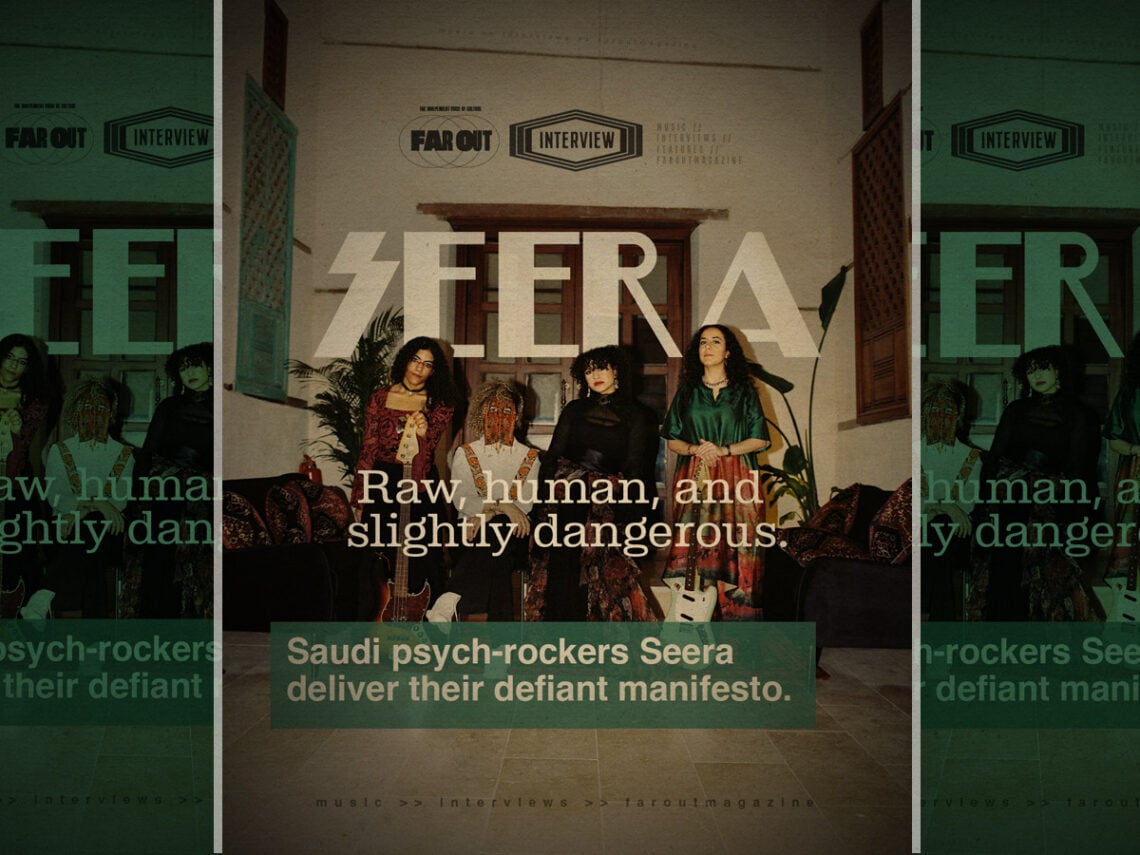
Raw, human, and slightly dangerous: Saudi psych-rockers Seera deliver their defiant manifesto

While it’s not always visible to the Western world, there’s a treasure trove of music out there to be discovered in all corners of the globe that holds the power to defy expectations and provide something that lies firmly outside of your zone of convention.
Understandably, you might be the sort of person who rolls their eyes when your overzealous tastemaker friend pipes up and says something along the lines of, ‘Oh, you’ve just got to listen to this amazing drone-folk outfit from Belize that I just discovered’. But, while their desire to be perceived as different from the rest of the crowd might seem pretentious, there are times when you might find yourself putting together a similar string of words and genre-descriptors and realise that it comes from a place of both passion and intrigue.
If I were to tell you that one of the most vital bands you should be listening to at the moment are an all-girl psychedelic rock band from Saudi Arabia, I’d totally understand the scoffing. Historically, the Middle Eastern Kingdom isn’t known for its adoption of Western styles such as this, and until recently, there were significant social barriers that would have prevented women from expressing themselves in such a fashion.
Yet, herein lie some of the key reasons why the story of Seera is such a fascinating one, and while the defiant nature of their existence is one thing to be lauded, the fact that they’re producing a totally unique perspective on psychedelic rock without any fear of constraint is an even greater reason to be tuned into their activity.
After releasing their debut album, 2024’s Al Mojallad Al Awal [lit Volume One], to small but positive acclaim, the Riyadh-based band subsequently had an extraordinary year in 2025, where they embarked on their first European tour, including a remarkable London debut at the Southbank Centre in collaboration with BBC Introducing.
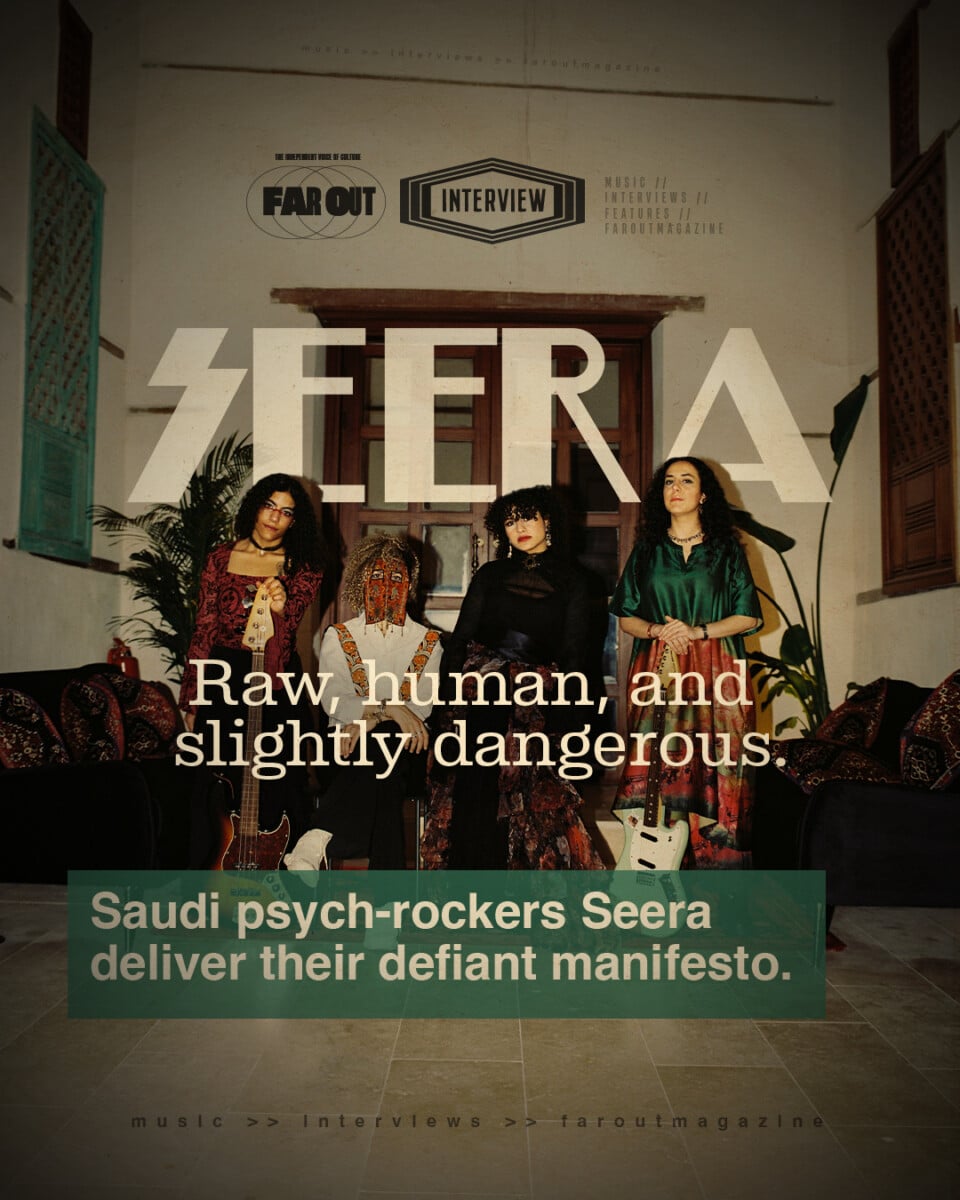
Consisting of sisters Nora and Meesh on keys and bass respectively, guitarist Haya, and a masked drummer who prefers to be referred to as ‘Thing’, the band have now delivered a new EP, Sarab [lit Mirage], that is set to help them further define their trajectory and further propel them into the limelight outside of their home country. While it’s a remarkable record that shows an immense amount of growth in the past two years, the band insist they’re only getting started.
“We bonded over experimental sounds, darker themes, and a shared need to make something that’s raw,” Nora recalls of the earliest stages of forming the band in 2022. “Since then, we’ve been planting the seed slowly, figuring things out as we go, and hoping to eventually make it out of the bedroom musician phase and into something bigger.”
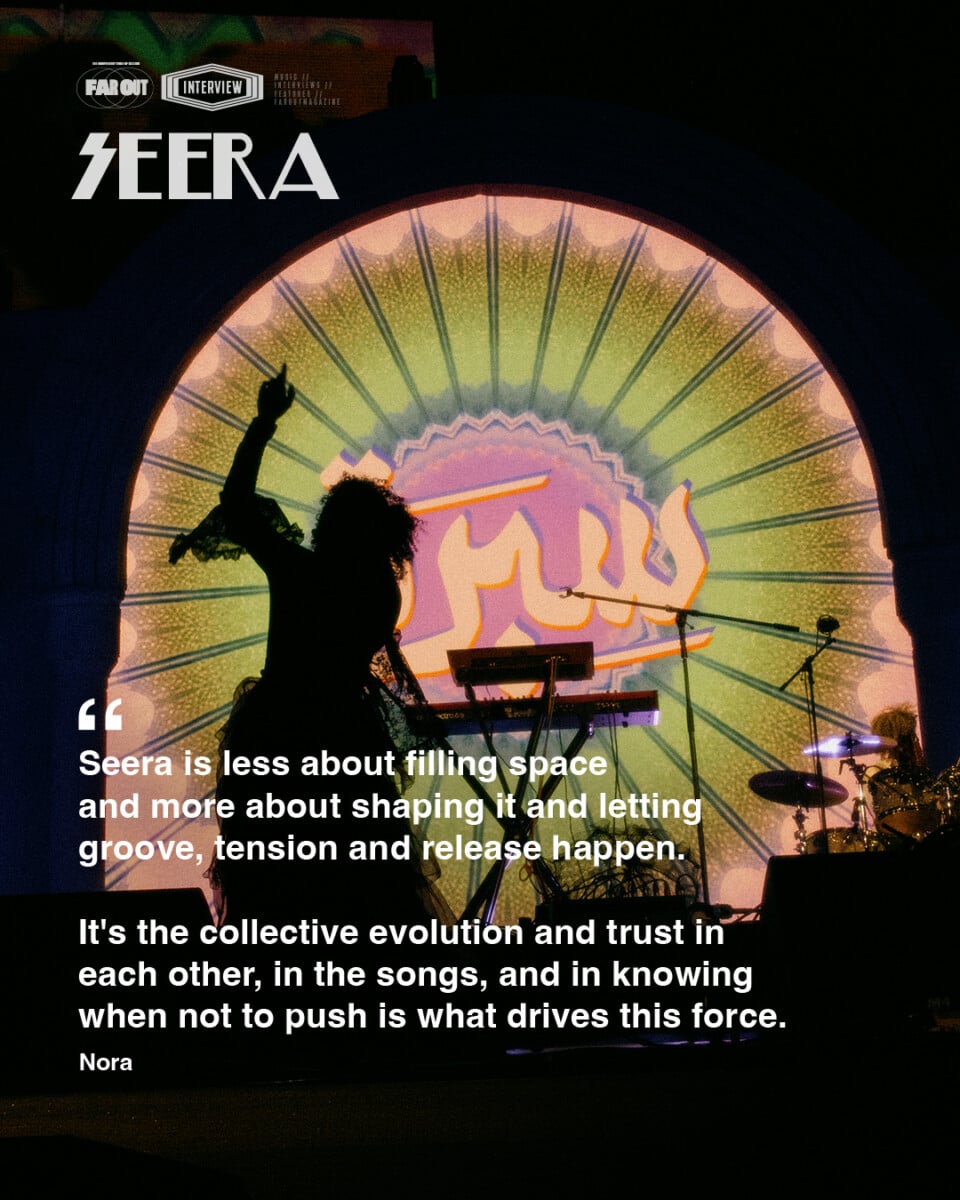
Thing is quick to reinforce this sentiment, stating that while recording Sarab, they began to recognise more of a clear identity emerging in their sound, and are considerably more comfortable knowing where boundaries can become flexible rather than stationary. “Since the debut album, we’ve had time to sit with who we are rather than rush to define it,” she explains. “The new EP feels more focused. Seera is less about filling space and more about shaping it and letting groove, tension and release happen. It’s the collective evolution and trust in each other, in the songs, and in knowing when not to push is what drives this force.”
Nora also believes that a desire not to simply follow any strict pre-existing parameters of psychedelic rock or Arabic traditional music is what has galvanised them to take a more daring approach. “We’ve expanded our sound by giving ourselves permission to stay curious,” she adds, “Letting go of fixed ideas of what we should sound like and following instinct instead. We’re drawn to experimentation, exploring odd time signatures, and telling stories through ethereal melodies.”
As the band explain, many of the themes on Sarab explore personal hardship, feeling as though you’ve lost yourself, and then being able to regain a sense of confidence in your identity again, which in turn reflects the journey of self-discovery that they’ve been on as a group in order to find their sound. “There’s a strong sense of rebirth and reflection,” Nora declares, “And a return to childhood as a way of reconnecting with parts of yourself that get buried over time.” Given that the word ‘seera’ translates as ‘story’ or ‘journey’, this feels like an incredibly appropriate way of delivering something reflective of their name.

While one of the main boundaries that any band from the non-Anglophone world has to overcome when trying to capture the attention of Western audiences is the language barrier, a lack of understanding of the vocals is sometimes what the listener will use as a subconscious obstacle for engaging fully with the music. However, when vocal cadences and delivery are utilised in a way that feels curious to the ears of a non-native speaker and are then supported by the strength of the music, then these obstacles begin to evaporate.
For the band, poetry from their home country and the surrounding Arab world has been a constant source of inspiration, and for Nora, who provides vocals and handles the lyrical content, she’s constantly searching for ways to be faithful to these traditions while putting her own individualistic stamp on them. “I’m drawn to the way Arabic poetry holds emotion with restraint,” she notes. “Saudi voices such as Sami Al-Malki were especially important to me during moments when I felt lost for words. Poetry and rhythm have always been part of Saudi history, and carrying that into loud distorted music feels powerful, a source of pride.”
In terms of navigating one’s way around the language barrier, Nora also protests that it shouldn’t be a reason to be hesitant about exploring their music. “The emotion is already there, speaking for itself,” she definitively declares. “Words are just trying to make sense of that emotion. How they are delivered, and the music that accompanies them, are the real story. I’ve seen people connect deeply to the emotions in the music without understanding a single word of Arabic, the feeling is there, fully present. Emotion carries its own language, and that’s what people respond to.”
As for how this all slots into the existing frame of alternative Saudi Arabian music, Seera are adamant that while the scene has been quietly thriving, they’re not deliberately seeking out ways in which they can be ‘part of’ something larger. “There has always been an underground rock and metal scene here, sometimes out of sight,” Nora confirms, before adding that the current state is at its healthiest. “What’s exciting now is seeing more bands step into the open, performing, releasing original music, and keeping heavy music alive. Artists are fusing global sounds with local identity in ways that feel unfiltered. It’s a movement growing slowly from the inside out.”
Thing, on the other hand, is keen to stress that this doesn’t mean that they’ll ever bow to anyone’s expectations of what the larger Saudi music scene should offer. “We don’t think much about fitting in, but we focus on doing the work honestly,” she argues. “If that disrupts something, it’s probably because we’re not chasing what’s trending. We are drawn to feel over flash, and that naturally puts us slightly out of step with fast-moving cycles.”
One of the starkest examples of their refusal to play safe can be seen in the track ‘Akhir Sarkha’, which was created as a collaboration between the band and EarthSonic, a non-profit organisation focused on telling stories of climate change through a variety of voices, whether that be musicians, scientists or indigenous peoples. Thing attests to the fact that the band have only ever chosen to collaborate with people or groups whose values they align with, and that they have a strict policy on “no yes-people and no vanity projects”, making the decision to pursue this particular collaboration a no-brainer.
“EarthSonic’s approach to sound as something connected to place, environment, and human experience is very much aligned with how we already think about music, so, naturally, we fit,” the drummer enthuses. “Their initiative treats sound as something that connects people back to place, and that’s rare in a scene obsessed with visibility over meaning.”
There’s plenty for the band to look forward to in terms of achieving their overall goals and setting new ones for themselves, and the vision that they seem to have developed over a short period of time is something that they seem destined to follow until they feel the need to push it further. “Long-term, Seera is about carving a distinct sonic and cultural space that is regionally rooted, globally fluent, ever-evolving and honest,” Thing concludes. “We are looking at more touring and deeper records that feel like growth in the right feeling and space. Seera wants to stay raw, human, and slightly dangerous. If it ever feels safe, we’ll tear it down and start again. We are in it for longevity.”
