


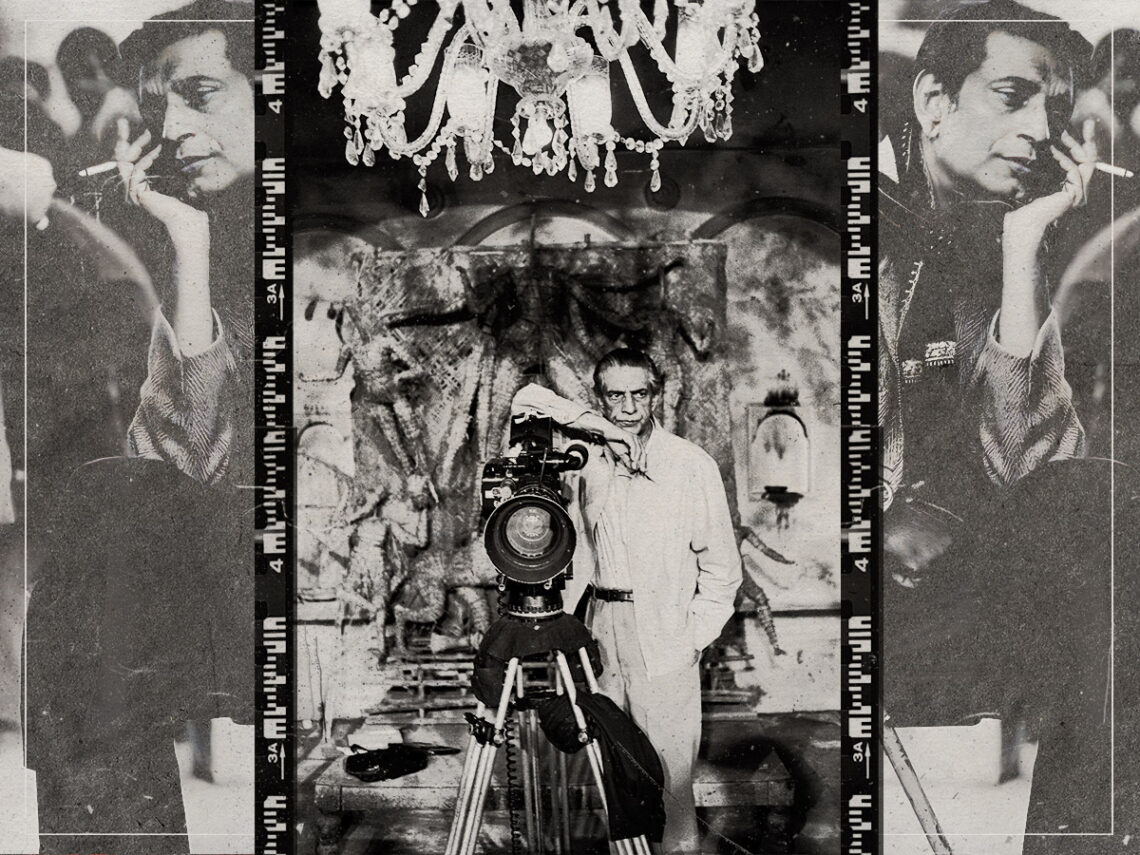
Satyajit Ray: the greatest Indian filmmaker of all time

Becoming renowned as one of the greatest, most influential, and essential filmmakers in the history of cinema is a monumental enough achievement, but that was merely one string on the bow of Satyajit Ray, who proved to be one of the most talented multi-faceted talents the industry has ever seen.
In addition to writing and directing 36 films covering features, documentaries, and shorts, Ray wore countless other hats that included storyboarding his projects, regularly acting as cinematographer, costume designer, sound designer, and art director, in addition to composing the scores for all of his movies from 1961’s Teen Kanya onwards, as well as designing the calligraphy for the opening credits.
Beginning his creative career as a visual designer, artist, and illustrator in the early 1940s, Ray’s love of cinema ultimately inspired him to become a filmmaker. Years before making his directorial debut with Pather Panchali, he’d told legendary director Jean Renoir of his desire to adapt the 1928 novel and was encouraged to follow his dreams by an inspiration who would soon become a peer, as well as someone often cited as a clear influence and inspiration on Ray’s own work.
During a six-month position in London working for advertising agency D.J. Keymer, Ray devoured 99 movies, but it was a screening of Vittorio De Sica’s Bicycle Thieves that saw him walk out of the cinema determined to follow in those directorial footsteps. It wasn’t until 1955 that Pather Panchali was released, but it was nonetheless the template for much of what was to follow by telling a story deeply embedded in Indian culture that Ray connected with on a personal level.
1960’s Devi held societal superstitions under a microscope, while two years later, he broke new ground with Kanchenjungha, his first original screenplay and colour film, which occupied similar narrative and thematic ground to his previous films as a story focused on a local family dealing with the expectations and pressures of class, status, and society. Even when tackling numerous different genres – ranging from fantasy and sci-fi to crime stories and period pieces – Ray’s output would always shine a light on contemporary issues.
Poverty, inequality, the role of the patriarchy, and the consequences – both positive and negative – of following one’s dreams are all prevalent in his filmography, with Ray’s desire to plumb the depths of the human experience for dramatic purposes and exposing the harsh socioeconomic realities faced by both his characters and Indian society at large. It created timeless classics that resonate just as much today as they did during their initial release. Immaculately crafted on a visual and aesthetic level, richly realised on the page, and both identifiable and relatable on a human level, his greatest movies have lost none of their power.
Ray became the first Indian filmmaker to receive an Honorary Academy Award in 1992, with the ceremony occurring less than a month before his death at the age of 70 on April 23rd of that year. Largely credited with introducing social realism into local cinema, he developed a reputation for mastering the art of the coming-of-age story, with a keen eye for detail and a desire to have his films reflect the society in which they were born.
A raft of accolades that encompassed 36 Indian National Film Awards, two Silver Bears, a Golden Bear, and a Golden Lion barely even covers the impact Ray made not just on international cinema but the art form as a whole. In fact, the best measure of his undeniable legacy comes from the sheer volume of legendary directors who unequivocally name him as one of the very best to ever step behind the camera.
Described as one of the “four greats” by Martin Scorsese alongside Akira Kurosawa, Ingmar Bergman, and Federico Fellini, the Taxi Driver and Goodfellas creator paid glittering tribute at a festival celebrating his contributions to cinema, as per The Hatchet: “I remember going to see my first Ray film at 15 and witnessing a whole new world presented visually before my eyes. Without a doubt, in Ray’s films the line between poetry and cinema is dissolved.”
Continuing, Scorsese saw the parallels between them, despite their vastly different upbringings on opposite sides of the globe: “I could appreciate Ray’s work within my own struggles to truly represent the Sicilian heritage which I grew up in,” he noted. “His characters were both distinct and tragic, portraying issues which were still unfolding historically around him. In the end I believe that such work must be preserved, so that the children of the future can see what Ray was visually able to represent.”
Wes Anderson’s The Darjeeling Limited was dedicated to Ray and borrows ‘Charu’s Theme’ from Charaluta, with the distinctive director a lifelong fan: “I had to personally introduce myself to the Satyajit Ray Family and Foundation and convince them that it was worthwhile to digitize all of his master tapes,” he recalled. “I wound up sitting in Calcutta for five days waiting for them to hand them over. But that was one of the great experiences of my life.”
Christopher Nolan, meanwhile, called Pather Panchali “one of the best films ever made” and “an extraordinary piece of work” during a visit to India, one that had him actively setting out to “watch more Indian films in the future”. Even the great Akira Kurosawa had echoed those sentiments on the exact same production, labelling it as “the kind of cinema that flows with the serenity and nobility of a big river,” with the Japanese legend succinctly summing up what Ray meant to him: “Not to have seen the cinema of Ray means existing in the world without seeing the sun or the moon.”
When so many of the most notable names in directorial history fall over themselves to lavish praise on Ray, it offers an insight into how revered he was among his peers and contemporaries. Combining universal themes and a ground-level approach to story and character with complex narratives that might read as simple at first glance, his classical approach that still managed to break new ground established him as a true titan of cinema, with a legacy that stretches far beyond his native India, casting a towering shadow over all of cinema in the process.
