


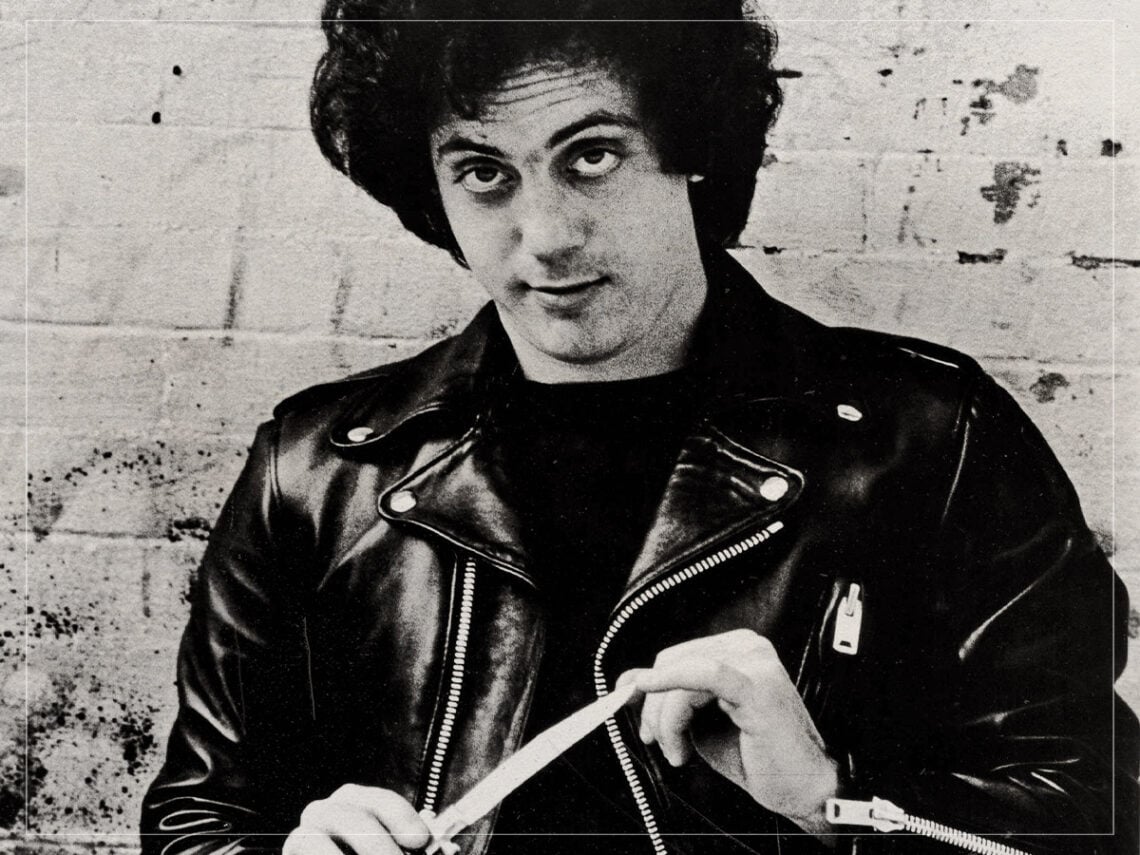
The “sanitised” artists Billy Joel thought the world should forget: “Boring, bullshit guys”

Billy Joel was no teen idol himself, but he certainly grew up in the right era to be constantly surrounded by them.
Indeed, having been born in 1949, Joel experienced the very cusp of rock and roll as it came into the foreground and then took over the world. Yet at the same time, he had his own conflicting interests in music. From the ages of four to 16, he took continuous lessons in classical piano, which undoubtedly shaped him into the artist he was to become.
But even still, with this young and up-and-coming sonic world all around him, the possibilities just couldn’t be ignored. The deeper Joel dived into that rollicking universe, the more diamonds in the rough he continued to discover down at the bottom of the sea. Yet when he lifted his head back above water, armed with his precious treasures, he was less than impressed with what the people were fawning over.
In the late 1950s, rock and roll had given rise to an early form of R&B, with artists such as Jackie Wilson, Otis Redding, Wilson Pickett, and James Brown all at the very forefront of that. Yet what Joel noticed, as the civil rights movement simultaneously began to march in, was that the mainstream masses were reticent to look in that direction, even though they knew it was the next big thing.
“But they weren’t playing that on white radio,” Joel recalled. “Why? ‘Got the kids too sexed up, got them all too excited. They’re gonna want to do that grind dance’,” assuming the voice of an elder or two he may have heard in his time. But their solution was far worse, in his eyes – and it was frankly hard to disagree with him.
“They tried to pretty it up. They tried to sanitise it – they come out with Frankie Avalon, and Fabian, and Bobby Rydell. All of these boring, bullshit guys,” Joel sneered. Some could easily pass this off as jealousy, but coming from a man like that, it was clear that being a teenage heartthrob was never the goal.
He wanted to be like Wilson and all the rest: proper musicians with a point to prove, not following the crowd and never letting people know the next trick up their sleeve. In many ways, it was testament to the popularity and longevity Joel himself would go on to have, since he never wanted to give into the fad or the expectation.
Compared to Avalon, Fabian, Rydell and all the other teen idols, it was clear who came out on top. Even though he shared none of the same background or experiences as those guys, Joel wanted to be part of the R&B crowd, and that vote of inspiration was undoubtedly what kept him on the right path towards rock and roll rapture in his younger days.
Of course, there was nothing wrong with being a teen idol if you wanted to be. But the point was that, in that time, Joel saw something new and exciting right on the sonic doorstep, while everyone else seemed satisfied with just going down the safe and mediocre route. No one ever achieved anything in music by following the crowd, though. By Joel seeing those icons go where no others had gone before, he knew intrinsically what he needed to do.
