


‘Confessions of a Sociopath’: The Samuel Beckett adaptation you’ve never seen

The works of Samuel Beckett aren’t for everyone. Throughout his formidable and extensive oeuvre, Beckett explored the fundamentally scatological nature of the human condition. Unflinchingly incisive and bizarrely funny, Beckett’s literary experiments shaped the trajectory of 20th-century literature in more ways than one.
Due to the elusive intrigue of his writings, it’s incredibly difficult to translate Beckett to other languages as well as other mediums. Although the Irish novelist made just one film during his lifetime, his approach to philosophy and art has influenced countless filmmakers – ranging from Martin McDonagh to Atom Egoyan.
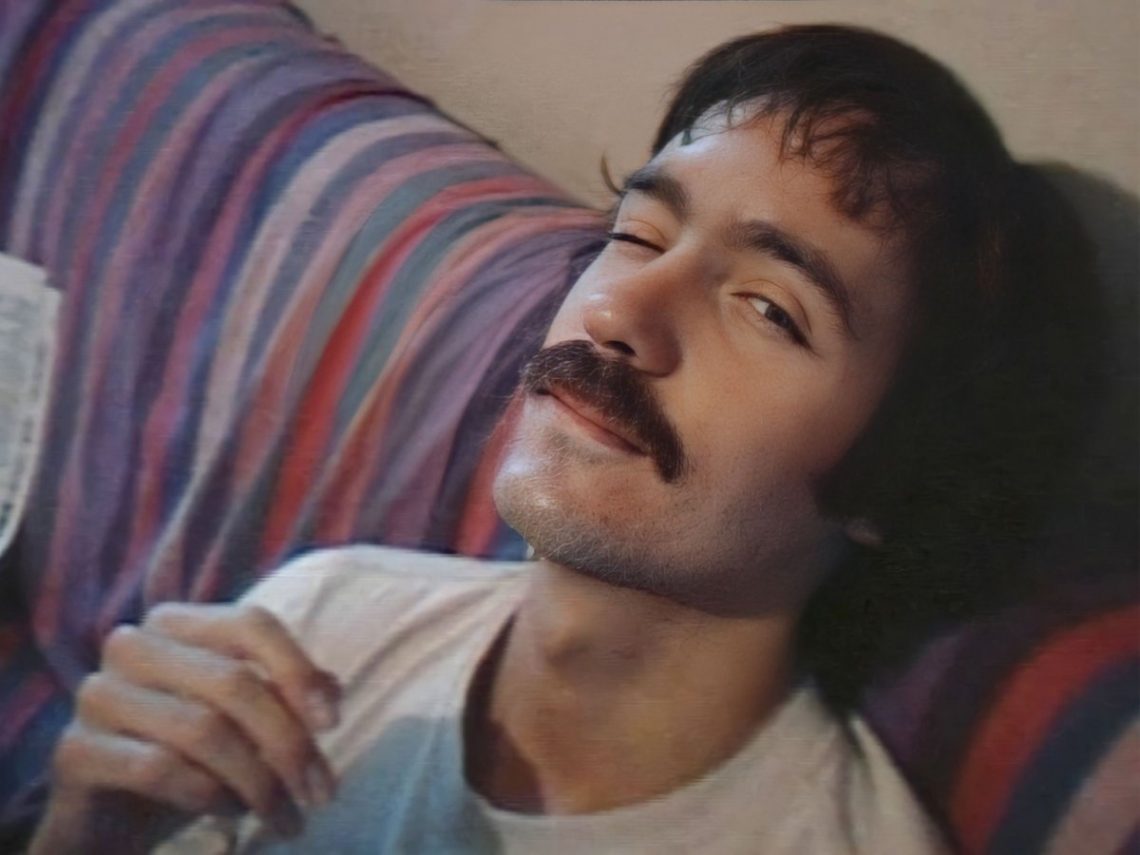
In fact, Egoyan even directed a version of Beckett’s 1958 one-act play titled Krapp’s Last Tape, which featured John Hurt in the titular role. However, there’s another fantastic version of the same play that almost nobody has seen. Directed by the incredibly talented experimental filmmaker Joe Gibbons, it’s called Confessions of a Sociopath.
While Gibbons’ 1985 avant-garde crime comedy Living in the World is the one that is usually talked about, Confessions of a Sociopath is superior in its structure and execution. It features Gibbons in an analogous version of Krapp, a disillusioned man whose lifelong frustrations and substance abuse issues continue to plague him with no end in sight.
Confessions of a Sociopath utilises footage that Gibbons began shooting in 1986, presenting contrasting visions from different periods of his life. A masterful exercise in auto-fiction, the film traces the self-destructive spiral of Gibbons, whose life is systematically destabilised by the potent combination of alcohol, heroin and crime.
During a conversation with Culture, Gibbons was asked to elaborate on the distinction between the persona projected on the screen and his own life. It’s an important point to consider in the context of Confessions of a Sociopath because the film feels raw and real, almost too real for audiences who don’t know that they’re watching a fictionalised art piece.
Gibbons explained: “I naturally adopt a persona when I point the camera at myself. Even though the material is factual, I must adopt a persona. It’s a self-presentation strategy, an artistic persona as well as a protective one: it’s necessary to balance the very revealing personal details with a rather glib presentation. That strategy is also one of the well-documented traits of sociopaths.”
He adds: “The film is all improvisational. It was taken almost entirely from previously existing footage. Ever since I was a teenager, I have been documenting my life on film. Once I was in art school, I realised it could be a form within which I could present my work. When I was twenty-five, I discovered I could naturally mine that rich vein of human behaviour that is considered aberrant, pathological. It’s the stuff of personality disorders and mental illness, but also the source of so much popular entertainment.”
Confessions of a Sociopath is an intelligent and innovative adaptation of Beckett that borrows from the source material’s bottomless pit of misery but manages to make it feel original. For a society that is obsessed with the psychology of sociopaths, this is the perfect anti-film that deconstructs that commercialised mythos.
Watch the film below.
