


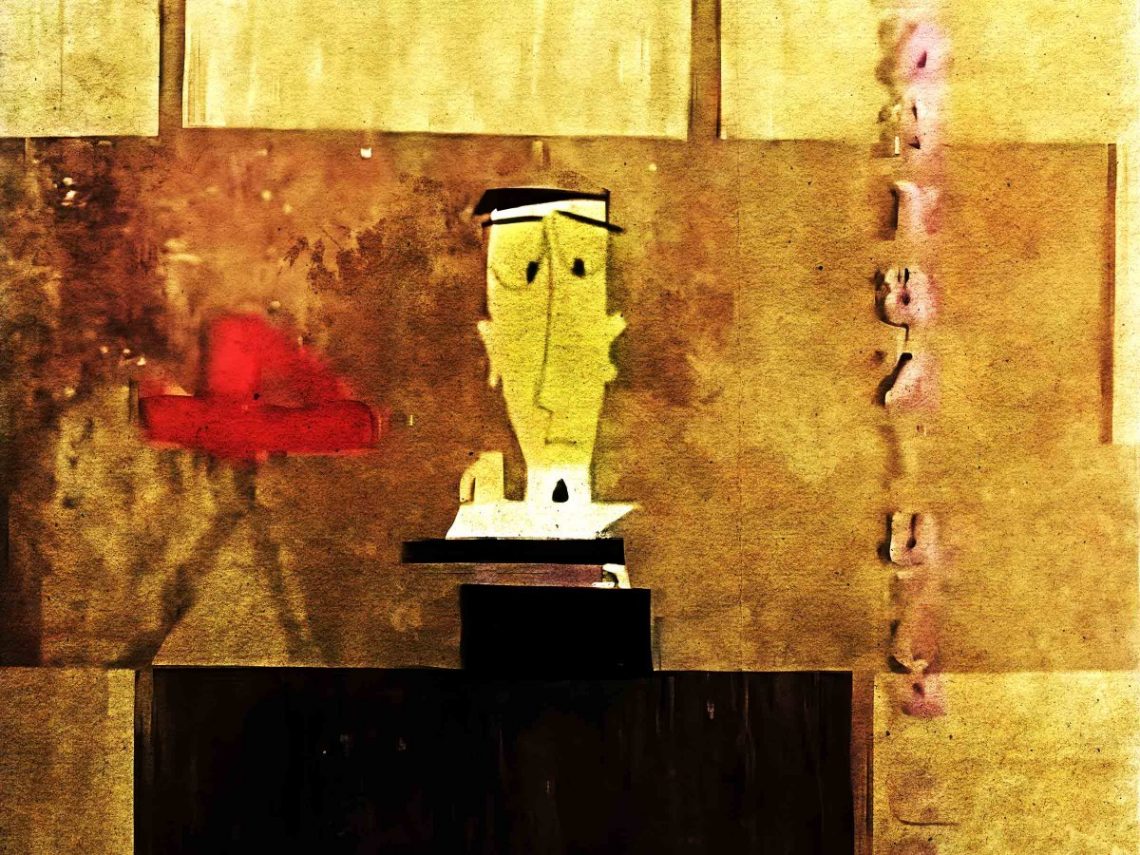
‘Samac’: A psychedelic vision of modern isolation

When we think about films that deal with the idea of alienation in modern society, there is a set of iconic gems that come to mind. Ranging from Fight Club to Her, several movies deal with this incredibly common phenomenon that has become omnipresent in urban spaces. However, you probably haven’t seen anything like Vatroslav Mimica’s 1958 psychedelic masterpiece Samac (often translated as ‘Alone’ or ‘The Loner’).
Mimica is an important figure within the landscape of Croatian cinema whose journey into the world of cinema began during the post-World War II period. Since his background was in medicine, Mimica never really received a formal education in film, but he didn’t believe he needed one. Instead, he took it upon himself to study cinema by analysing every single frame of the works of great directors.
“I analysed classic films by looking at them frame-by-frame on the editing table,” Mimica once claimed (via Central Europe Review). For example, the films of David Lean, from whom I learnt dramaturgy, or Billy Wilder, from whom I learnt mise en scène, he is a great master of mise en scène. So when I did my first feature film, I was not unprepared. Of course, I was not so self-assured in all things, but nobody knew that except myself.”
Samac is one of the most interesting pieces in all of Mimica’s filmography. Presented through an experimental animation style that mirrors the destabilisation of the human psyche within the context of modernity, it tells the story of a young clerk who cannot cope with the monotony of modern life. All he wants to do is run away as far as he can to escape from the drudgery of a meaningless existence.
The opening scene of Samac is simply fascinating, more than enough to justify its classification as a forgotten masterpiece. It shows the protagonist at his desk, bashing the keys of his typewriter while his colleagues do the same in an unrelenting manner. Instead of seeing them as fellow human beings, he can only observe how dehumanised they have become due to a system that treats human beings as machinery.
Mimica handles the depiction of paranoia and depression externally well, using a combination of transgressive visuals and unsettling sound effects to capture the madness of modern life. The world of Samac is unbearably oppressive, especially for the young man who can only see people in boxes – whether the boxes created for them at work or the tiny moving boxes that we call cars.
For those who have experienced depressive episodes and have wanted to shut the entire world out, Samac will hit too close to home. The protagonist deals with the ugliness of the modern world by retreating to the relative calmness of sleep, but when paranoid nightmares infiltrate his psychosphere, he realises there’s nowhere to hide anymore.
Samac was made for the iconic Zagreb Film and became the company’s first project to win an international prize at the Venice Film Festival. However, Mimica had to overcome a lot of obstacles just to present his work to the world. Thankfully, it received a lot of accolades, and he got the recognition he truly deserved.
Mimica recalled: “For my first presentation of an animated film at Cannes, in 1958, we didn’t get official permission to show the films. I’d been in Paris the previous year, and I had very good contacts there. They invited me and our films, of the Zagreb Film School, to be projected at a special screening at Cannes. So, I just smuggled the film to Cannes. It was very risky, but I did it. And if the films hadn’t succeeded, I would have had big problems [with the authorities].”
Looking back on Samac is an exceptionally delightful exercise because of how well it has aged. If you randomly screened it at a festival, almost nobody would be able to tell that this film was made in the late ’50s. Although the relatively “happy” ending doesn’t reflect the reality of those who continue to struggle with the burden of urban isolation, the themes present in Mimica’s film are more relevant than ever before.
Watch the film below.
