


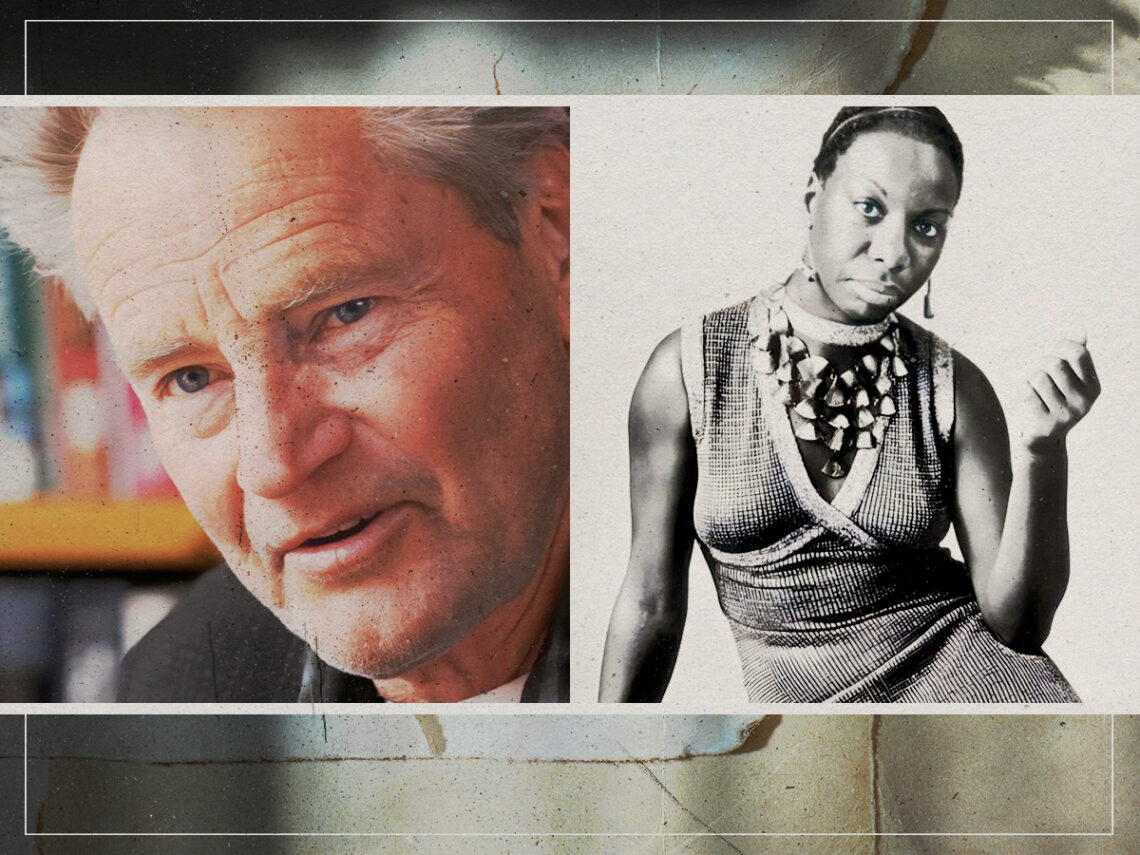
“It always froze me in my tracks”: Sam Shepard on the peak of Nina Simone

There are some great stories of interactions people had with Nina Simone. Both in her music and in her personality, it’s clear she was a formidable force to be reckoned with, seemingly leaving everyone who ran into her with a palpable feeling of total awe. Sam Shepard would have told you that.
A few years ago, Warren Ellis published his book Nina Simone’s Gum, which, while serving as a memoir of his lengthy and interesting career, is mostly a moving tribute to the artist. He calls his moments meeting Dr. Simone, as she liked to be called, and admits that for decades now, he’s been carrying around a chewed piece of her gum like some kind of religious talisman.
“I’d like some champagne, some cocaine and some sausages,” she’d growled to a runner before her show at Nick Cave’s curated Meltdown festival, which he’d somehow managed to get her to play. In Cave and Ellis’ memories of the show, Simone is a terrifying presence that had everyone running around granting her wild requests as quickly as they possibly could. She was getting old and tired, but then she got up on stage, and Cave said it was “one of the greatest things I’ve ever seen”.
When it comes to writer Sam Shepard’s experience with Simone, the same story checks out as the artist’s character is fearsome and fearless, and then when she gets to the stage, completely astounding.
“She was scary, for sure,” Shepard wrote of the singer, but for a while, he seemed to get a peak behind her bravado, meeting Simone in a more intimate space. He was working as a busboy at the Village Gate, where jazz legends would play, and countercultural icons like Patti Smith, Jimi Hendrix and Allen Ginsberg would later flock to and try to soak up the inspiration left behind. From his spot backstage, the writer saw the artist in the moments before she hit the stage and turned her persona on or the moment when she finished her bows and found privacy to be herself again.
“I used to bring Nina Simone ice. She was always nice to me,” he wrote in Motel Chronicles, recounting their run-ins. “She used to call me ‘Daahling’. I used to bring her a whole big grey plastic bus tray full of ice to cool her Scotch.”
“She’d peel off her blonde wig and throw it on the floor,” he continued, as if privy to Simone shaking off public expectations and returning to her natural state. But he saw her on stage too, joining the rest of the crowd in being completely captivated. “Her performance was aimed directly at the throat of a white audience. Then she’d aim for the heart. Then she’d aim for the head,” he wrote. “She was a dead shot in those days.”
As he attempted to keep doing his job while Simone silenced the room with her voice, there was one song that made it almost impossible to work. He said, “I’d be out on the floor collecting Whiskey Sour glasses, and she’d start that rumbling landslide piano with her ghostly voice snaking through the accumulating chords. My eyes would go up to the bandstand and stay there while my hands kept on working.”
As she played ‘You’d Be So Nice to Come Home To’, Shepard’s productivity waned as he admitted, “It always froze me in my tracks.”
Ultimately, Simone’s talent even ends up being an occupational hazard to Shepard, leading to him getting fired after his distraction became dangerous. “I knocked over a candle once while she was singing that song. The hot wax spilled all over a businessman’s suit. I was called into the manager’s office,” he wrote, “I was fired that night.”
