


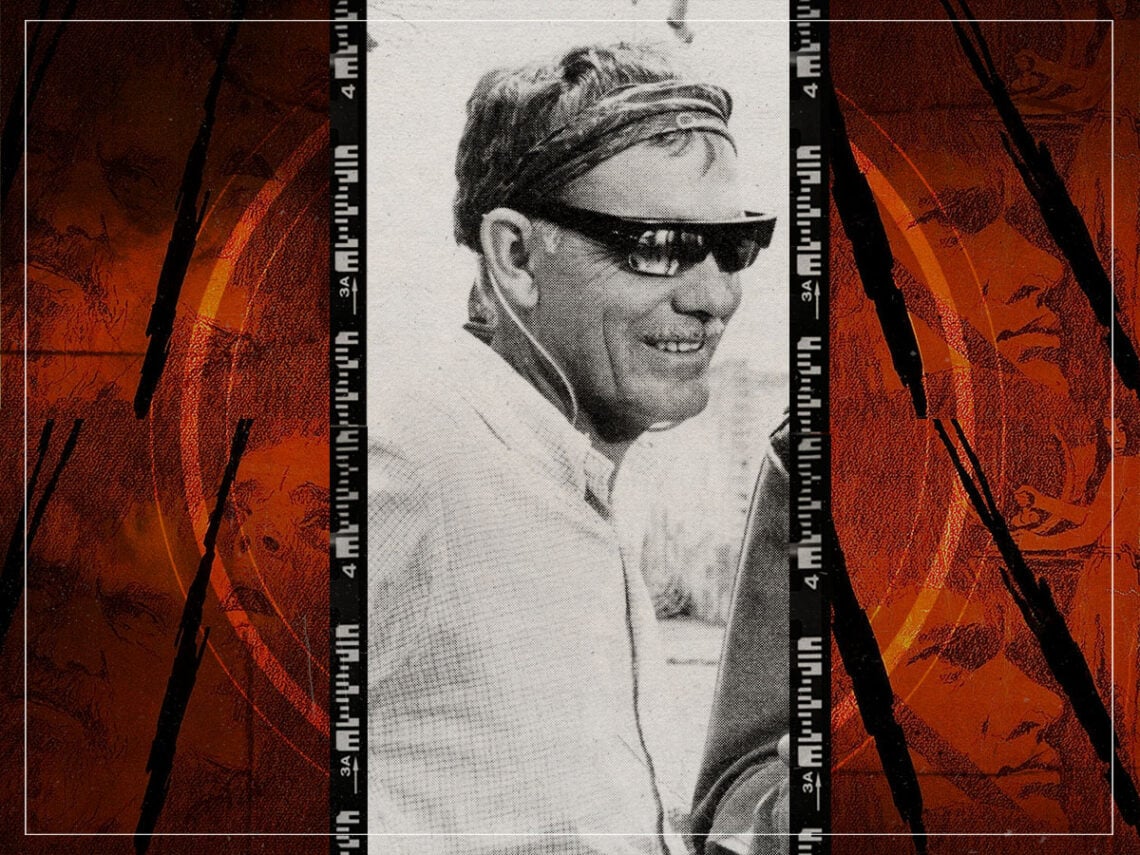
Sam Peckinpah reflects on the controversial violence of ‘The Wild Bunch’: “There is a very, very thin line”

Modern audiences wouldn’t even bat an eyelid at the balletic violence orchestrated by Sam Peckinpah in The Wild Bunch, but at the time, many were up in arms at not only the bullet-riddled shootouts, but the storyline and characters.
A band of aging outlaws struggle to adapt to an ever-changing world that doesn’t seem to have a place for them, with the titular outfit not what anyone would call clean-cut heroes. Organising one final heist to set them up for life, their survival instincts come to the fore as they leave a trail of bodies in their wake in order to ensure they’ve got the best chance of making it out of their last stand alive.
Pushing the envelope for on-screen carnage to levels never seen before, the Motion Picture Association of America initially slapped The Wild Bunch with the dreaded NC-17 rating, which was eventually reduced to a very hard R. It was more than just blood for the sake of blood, though, with Peckinpah inadvertently inspiring generations of filmmakers to come.
Shooting with multiple cameras, switching between regular framerates and slow motion, and incorporating rapid-fire editing served as a watershed moment for not just the action genre but cinema as a whole, with John Woo using The Wild Bunch as the blueprint for his own legendary career staging many of the medium’s greatest-ever shootouts.
This being the 1960s, though, many pearls were clutched, with Peckinpah explaining and justifying the heightened violence to a group of assembled critics following its release, which included Roger Ebert. “We wanted to show violence in real terms,” he said. “Dying is not fun and games. Movies make it look so detached. With The Wild Bunch, people get involved whether they like it or not. They do not have the mild reactions to it.”
Star Ernest Borgnine admitted he “did not read into it all the controversy it seems to have stirred up,” but he did concede the cast “were all repulsed at times” during production. It was an artistic sacrifice he was willing to make, however, because he and the rest of the ensemble “sincerely believed we were achieving something.”
The Wild Bunch is well-established as a classic and has been for over half a century, but Peckinpah felt compelled to address the concerns people had over his film using violence for the sake of violence. “There is a very, very thin line, and we operated as close to it as we dared,” he suggested. “We hope that, for most audiences, we stayed on this side of the line.”
That being said, he was “willing to admit that we may have passed over it at some point,” which is where is censorship troubles arose from. Peckinpah saw the violence as being a cathartic release, even if he did acknowledge how “sometimes the line is hard to find.” That was an understatement, given the divisive reception in 1969, but through a modern lens, The Wild Bunch is nothing less than a work of cinematic genius.
