


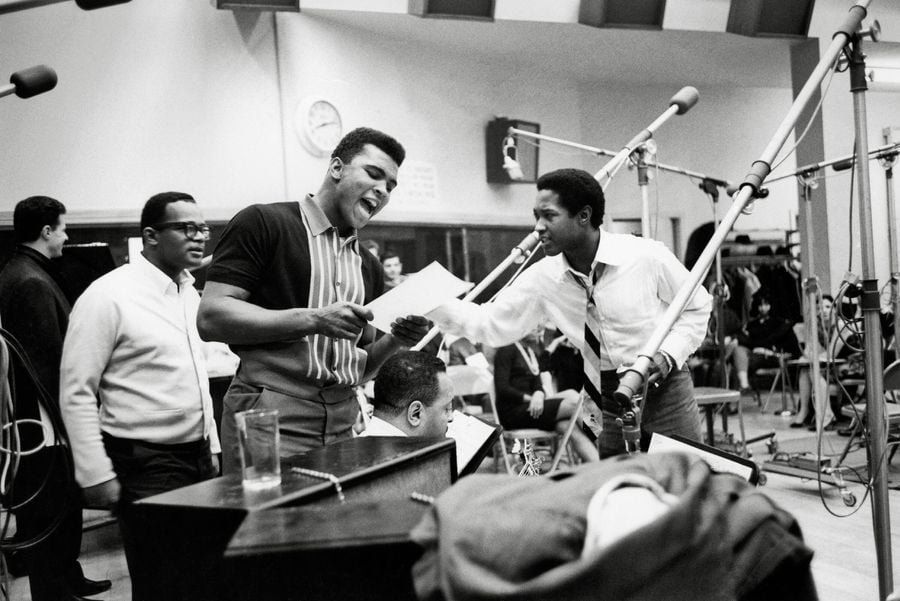
Listen to Sam Cooke’s game-changing isolated vocals on ‘A Change is Gonna Come’

Soul singer Sam Cooke has a voice that could cause the traffic in Saigon City to cease for a moment of awed silence. Bold and bristling, his boyish timbre offers up a sense of vulnerability while the robust underflowing bellow beckons you back through years of wisdom. Many versions have followed his anthemic ‘A Change is Gonna Come’, but for my money, Cooke is the only crooner who sings it like they barely have dominion over the seamless flow of notes—in the best possible way.
The track begins with the opening line: “I was born by the river, in a little tent, and just like that river, I’ve been running ever since.” The river in question is the Mississippi, which makes it perhaps the most profoundly multifaceted motif in music history.
The Mississippi Delta is where modern music benevolently flowed from. Since then, it has graced the world with salvation, but it was one of the most violently racially divided regions in modern history, setting a fluid current of fear in motion amongst the black denizens. Aside from those two notable brushstrokes in the motif, there are myriad more pertaining to the tides of change, the unburdened flow of the soul and so on until the infinities of personal corroborations are all but dried up.
The profundity of the song also pertains to the impetus behind it. Cooke released the track in mid-February 1964, and it would go on to become a Civil Rights anthem, delineating the truth worth fighting for in the virulently tempestuous Freedom Summer of 1964 during which six murders, 29 shootings, 50 bombings and 60 beatings of Civil Rights workers occurred during a bloody 14-week period between mid-June and the end of September.
On June 21st, three Civil Rights workers disappeared. It would subsequently be found that Mississippi law officers murdered them; it would also later come to light that approximately half of Mississippi’s law enforcement officers were associated with the Ku Klux Klan according to Professor Mary King.
At the time, Cooke himself was the victim of racism and constantly turned away from White Only establishments only hours after being celebrated like a king by an audience of all creeds and colours. So, he decided to make a change. When discussing the song with the BBC, L.C. Cooke, Sam’s younger brother and musical collaborator recalled its origins: “I know you know ‘Blowin’ in the Wind’ by Bob Dylan,” he said. “Sam always said a black man should’ve wrote ‘Blowin’ in the Wind’, it was unfair, so he said ‘Nah, if he can write a song like that surely, I can come up with something equally as good’, so he sat down to write ‘A Change Gonna Come’.”
That unbridled sense of liberation rings out in his vocals like a soaring assegai of emotion. That song could’ve cost him his career, and there are conspiracies out there that it, indeed, had a part to play in his end. But everything aside, Cooke sings this call for deliverance with a joyous freedom that forecasts a brighter future with guttural heart.
