


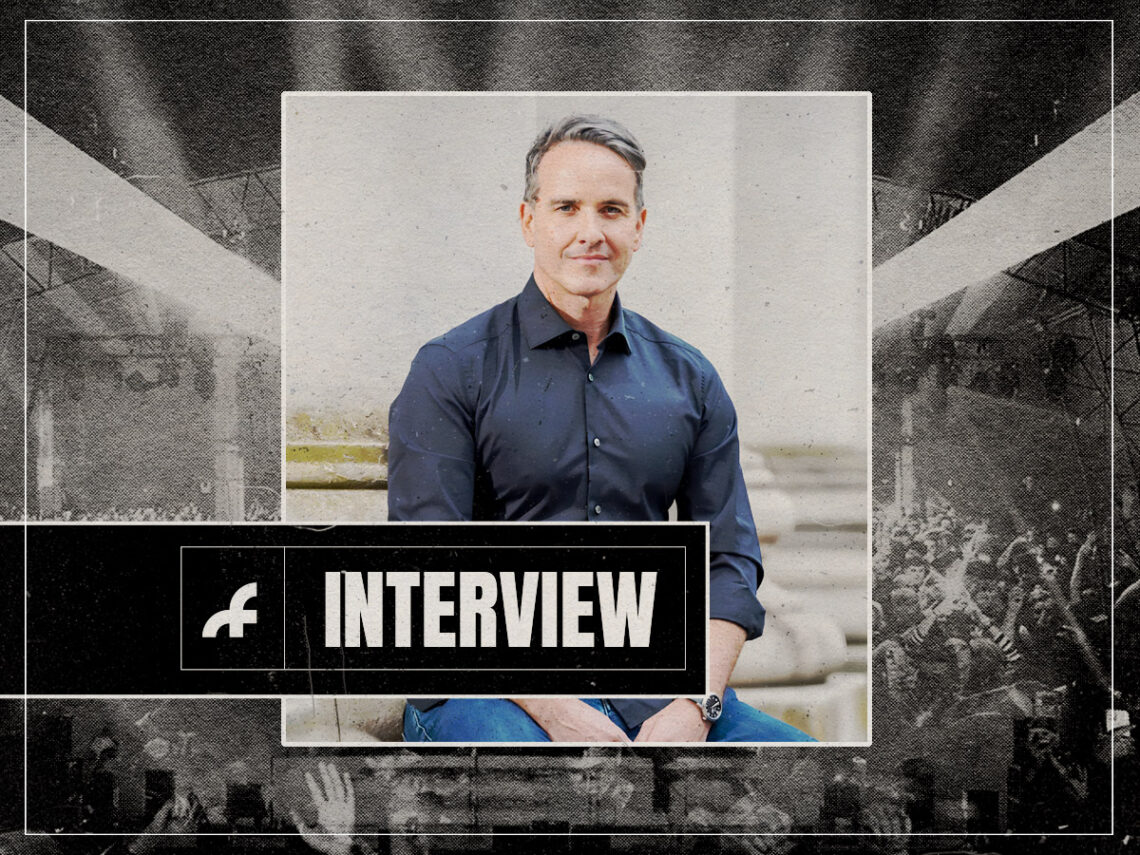
Sacha Lord details how UK nightlife sector can be saved

The hospitality sector in the United Kingdom faces an uncertain future, and millions of jobs are at risk. According to a recent report published by the Night Time Industries Association (NTIA), one nightclub is closing every two days in the UK, and if this trend continues, the entire industry will be extinct by 2030. While the future looks bleak, the success of Manchester provides a glimmer of hope to the rest of the UK. Since 2018, Sacha Lord has been the Night Time Economy Adviser to Andy Burnham, the Mayor of Greater Manchester, and helped make the city a vibrant hub of the north.
Lord rose to national prominence during the Covid-19 pandemic, winning a court case against Matt Hancock to force the government to drop their ‘substantial meal’ rule in 2021 and become the hospitality sector’s de-factor voice.
However, Lord didn’t come out of nowhere; his story is a 30-year journey. Upon leaving the coveted Manchester Grammar School at 18 after failing his A-levels, Lord took an unconventional route by promoting warehouse raves. He eventually took ownership of the iconic Manchester nightclub Sankeys in 2000 before starting The Warehouse Project in 2006 and Parklife four years later, which have grown into cultural institutions.
Nevertheless, his journey has been far from smooth sailing. In the 1990s, the industry was the Wild West, with Lord left with the battle scars to show from a tumultuous three-decade career, which he’s chronicled his career in his new book, Tales From The Dance Floor.
His first entry into the nightlife sector as a promoter came on July 4th, 1994, at The Hacienda. The date is tattooed on his mind, and with the 30th anniversary approaching, the Mancunian decided that now was the perfect time to reflect.
Speaking over Zoom, the affable Lord describes the process as “very therapeutic” but admits it was “challenging” to condense three rollercoaster decades into 300 pages. Although he’s become a public presence over recent years, there are elements of his life that he’s kept personal, such as the complicated relationship with his father that he details in the book. Furthermore, the Warehouse Project has courted controversy since it opened its doors. Lord, who is an advocate for drug testing at events, addresses the death of Nick Bonnie, who passed away in 2013 due to an overdose.
“I’m not going to want to write, ‘We did this, and it was great, and everything was great, and the last 30 years were brilliant because they’ve not been, it’s been a roller coaster,” he passionately explains. “There have been ups and downs, and I have to tell that story for it to be realistic because this book is going to be around now, and I don’t want it to be caressing my ego. I want it to be honest”.
Toward the beginning of his journey, Lord was on the receiving end of a harrowing ordeal that’d typically be enough to make most privately educated people of his background quit the industry. Setting the scene, Lord explains how, in 1995, Manchester was under the rule of “gangs” from Salford, Cheetham Hill and Moss Side.
“Salford were running all the doors and controlled what was going on inside the venue as well; they were very intimidating,” he remembers. “I got a call saying you need to meet Mr Big tomorrow, so I met him. I’ve stood outside on Oldham Street absolutely shitting myself, I would have been 23, and these two big BMWs pulled up. I had to get in the back seat to the first one. He turned around and gave me a bag of £20,000 in cash.”
This was another world to Lord, who was none the wiser as to why Mr Big had requested to meet him and was understandably frightened for his safety. While in the BMW, Lord claims that they instructed him to book Manchester Academy for a New Year’s Eve event, which was confusing for Lord because he was only a “little student promoter”.
As it turns out, it was a case of mistaken identity, and they thought he was DJ Sacha, who they’d seen perform at the Hacienda the weekend before. When Lord alerted them to this fact, “They literally pulled over and threw me over to the payment”.
In 2024, the nightlife sector operates professionally, and the days of drug lords controlling venues are a distant memory. “It really was the Wild West, but now it’s so polished. And I’ll be honest, a lot of those guys that were causing issues back in the day, they are either dead or in prison,” Lord bleakly states.
Lord highlights 2002 as the time when the sector modernised across Britain, not just in Manchester. He labels this time as the “explosion of our nightlife” in the UK, which “happened in steroids” in the city he calls home.

Nevertheless, that boom is over and is currently a testing time for venues across Britain. A cocktail of problems has collided to cause an impending disaster, with the consequences of Brexit, the cost-of-living crisis, and habitual changes caused by the pandemic combining to create a hostile environment for businesses to succeed.
With Parklife festival, Lord has reduced the cost of admission for the second consecutive year because “everybody’s pockets are tight”, especially those who attend the festival in Heaton Park, which attracts predominantly students. Unfortunately, the rest of the sector hasn’t followed their example, but Parklife has “decided to bite the bullet for the next two years”.
Large-scale events, such as Parklife, aren’t struggling with ticket sales, but people are “being far more pickier” with the events they attend and “need a reason”, according to Lord. Part of Warehouse Project’s success has been tapping into this trend, they put on 28 shows across a three-month window and each one is intricately designed to attract different audiences.
Lord is well-aware it’s an expensive event to attend, therefore, most who take a pilgrimage to Mayfield Depot in the winter are likely only going to one or two nights. “If someone comes to the Warehouse Project more than four times a year, I’d be quite surprised,” he admits.
Saving up for a special occasion to see world-class talent and having one big night out a month rather than hitting the tiles every weekend has become the norm among this current generation of younger people, leaving ordinary nightclubs in a perilous position.
Although Manchester is finding ways to adapt, helping it thrive, Lord knows there is still significant work for him and Burnham to do, noting, “People have always called Manchester a 24-hour party city, but how can we be a 24-hour party when the tram stops at half 11?”
Meanwhile, London and its surrounding areas have seen 3,000 night-time venues shut down since the pandemic began in the capital. While it used to be the envy of Britain in this regard, times have changed, and while Lord “used to be quite jealous of pockets of London like Soho,” that’s no longer the case, adding, “Five years ago, every weeknight it would be bouncing, and now it seems to be shut at 10pm, I’ve found it so confusing.”
One ray of light for the millions of people who work in the hospitality sector is the looming general election later this year. Lord, a member of the Labour Party, reveals to Far Out that he’s had the opportunity to meet the party leader, Keir Starmer MP, on three occasions, and has also laid out a plan for the industry with the Shadow Cabinet.
Optimistically, Lord says: “I am so much more confident that we’re going to get help from a Labour government, and quite frankly, we’re getting no help whatsoever now, and I think everybody knows that. Help is on the way, but the one thing they’ve not committed to, and I really hope to do, is a reduction in VAT. We should be looking at 12.5 per cent, and getting 12.5 per cent of something is far better than 20 per cent of nothing, which is a shut business. If they did that, overnight they’ve scored five million votes, so it is a no-brainer.”
While there is room for hope amid the darkness, the VAT cut seems a sensible option that both main political parties willfully choose to ignore. Across Europe, hospitality is treated with the respect it deserves, yet in Britain, we take it for granted, and if this collective mindset continues to prosper, our cities will become full of identikit chains bereft of authentic culture.
Tales from the Dancefloor is available to purchase here.
